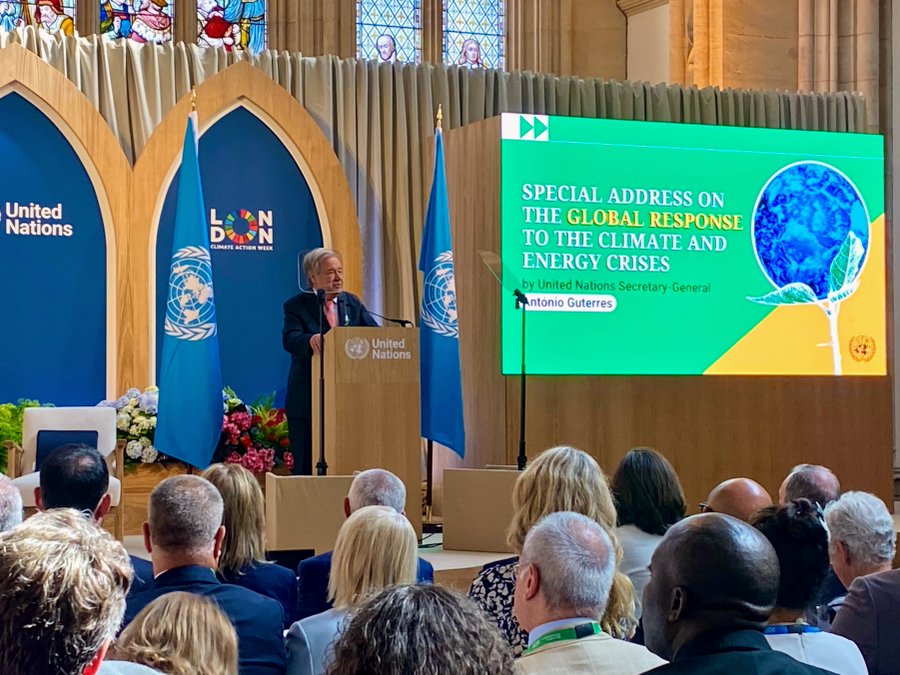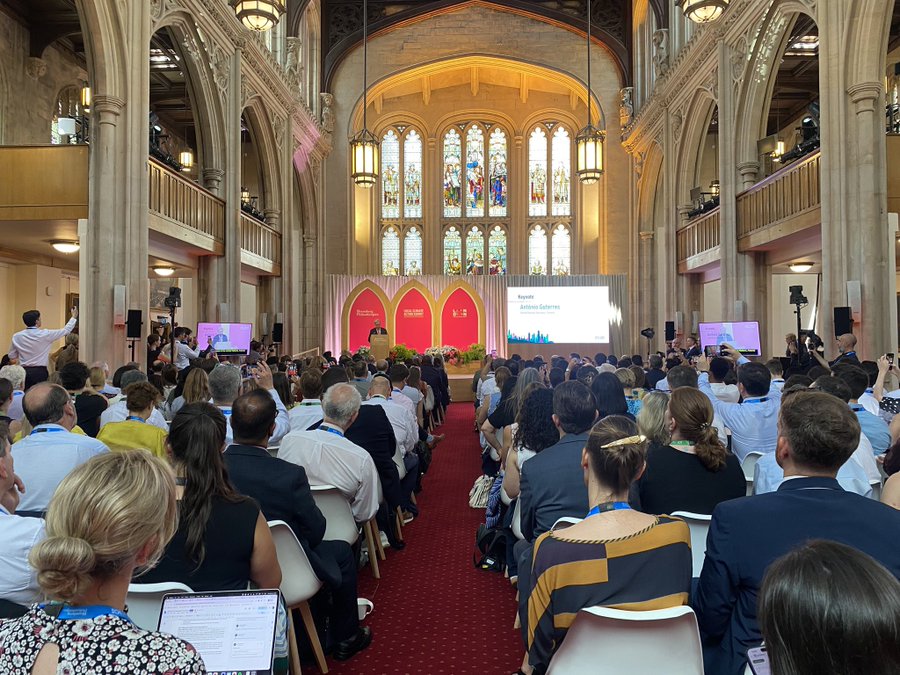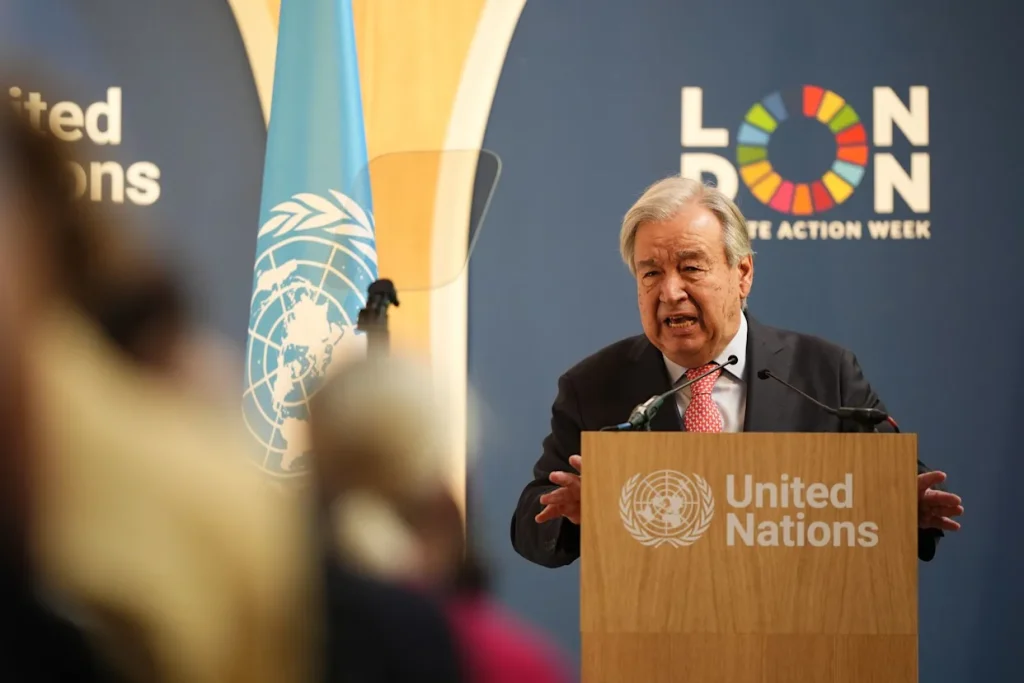

Speaking at London Climate Action Week on Tuesday, Guterres described the situation as a “Tale of Two Crises,” borrowing from Charles Dickens. He said climate change is pushing the planet toward dangerous tipping points, while geopolitical tensions and conflicts have exposed the vulnerability of an energy system reliant on oil, coal and gas.
“We have just lived through the eleven hottest years ever recorded,” Guterres said, warning that climate disasters are becoming more frequent and severe. Scientists now expect average global temperatures to exceed the 1.5°C threshold agreed upon in the Paris Agreement, making it essential to limit the overshoot and bring temperatures back down as quickly as possible.
He cited a new report by the UN Scientific Advisory Board, which warns that unchecked warming could trigger irreversible changes, including the collapse of coral reefs, accelerated melting of Greenland and Antarctic ice sheets, disruptions to ocean currents and the transformation of parts of the Amazon rainforest into savanna.
The UN chief also highlighted a second crisis stemming from instability in the Middle East, which he said has caused one of the biggest energy shocks in decades, affecting food prices, debt levels and economic development, particularly in poorer countries.
According to Guterres, these challenges reveal the shortcomings of a development model built on fossil fuels. “The lesson is clear: this model has no future,” he said.
Despite the risks, Guterres pointed to encouraging signs. Renewable energy has become the cheapest source of new electricity in most parts of the world, with solar power costs falling nearly 90% since 2010 and battery storage prices dropping by 95%.
He outlined seven priorities to address the crises, including accelerating emissions reductions, cutting methane pollution, strengthening energy infrastructure, ensuring artificial intelligence data centres are powered by renewable energy, supporting a just transition for workers and communities, increasing climate adaptation funding and protecting scientific integrity against misinformation.
Among new initiatives announced was a global call to reduce methane emissions, particularly from the oil and gas industry, agriculture and waste sectors. He also proposed an AI Environmental Transparency Initiative, calling on major technology companies to disclose the carbon, water and land impacts of their systems and to run all data centres on renewable energy by 2030.
Guterres stressed that adaptation to climate change should no longer be seen as charity but as a necessity, noting that droughts, storms and heatwaves are already undermining economies and public health.
He criticized the unequal distribution of clean energy investment, noting that Africa possesses 60% of the world’s best solar resources and 30% of critical minerals but receives only 2% of global clean energy investment, while more than 600 million Africans still lack access to electricity.
The Secretary-General called on developed countries to honour their climate finance commitments and mobilize $1.3 trillion annually for developing nations by 2035.
Concluding his remarks, Guterres said the world stands at a pivotal moment.
“We have the enormous opportunity – and responsibility – to turn this Tale of Two Crises into a single story of resolve, fairness and shared progress,” he said. “We can finally turn the page on fossil fuels and write a future powered by renewables and rooted in climate justice.”