
Wangari Maathai, the Kenyan environmentalist and Nobel laureate, dedicated her life to protecting the planet and advocating for human rights. Her journey was not easy. For speaking out against deforestation, government corruption, and the mistreatment of women, she faced harassment, beatings, and imprisonment. Yet, her resolve never faltered. Maathai turned these struggles into fuel for change, planting not just trees but hope for generations.
Wangari Maathai was born on 1 April 1940 and died on 25 September 2011 of cancer.
Her legacy began with the Green Belt Movement, an initiative she founded to empower communities especially women to restore degraded land through tree planting. This work was more than environmental conservation; it was social transformation. Through reforestation, she provided food security, jobs, and a sense of dignity for marginalized communities. Maathai’s vision linked the health of the planet to the well-being of its people.
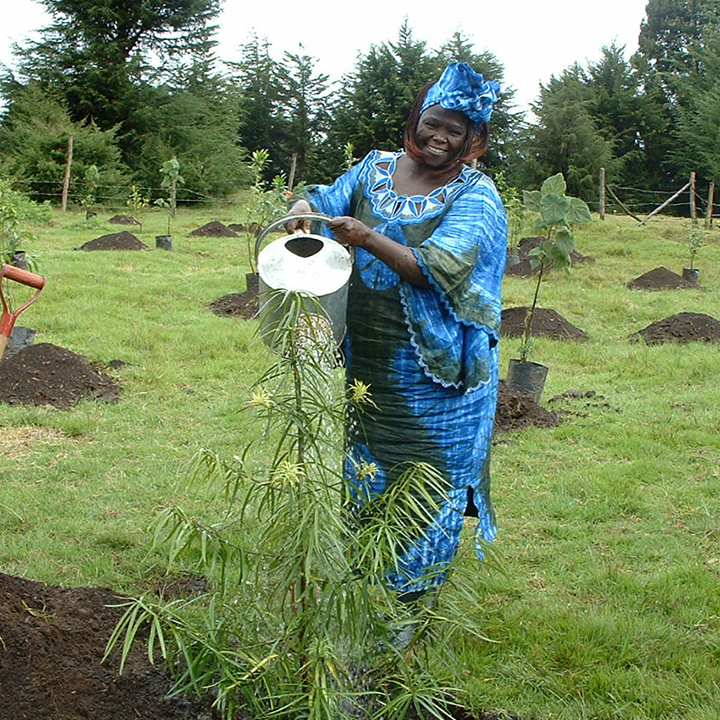
Maathai’s story resonates deeply in a society grappling with climate change and social injustice. She exemplified how one person can challenge powerful institutions while staying committed to principles of justice, equality, and sustainability. Her courage in standing up to authorities reminds people that environmental activism often intersects with broader human rights issues.
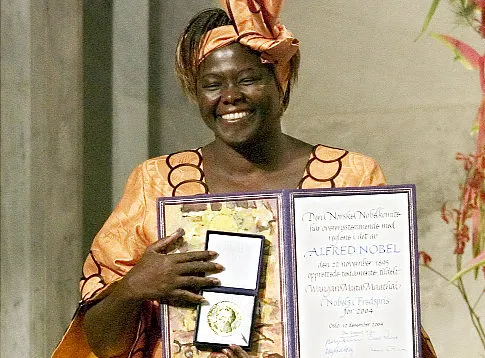
Her recognition was global. In 2004, she became the first African woman to receive the Nobel Peace Prize, cementing her influence on the world stage. But for Maathai, awards were secondary to the real work: educating communities, protecting ecosystems, and advocating for women’s participation in governance and decision-making. She believed that lasting change begins at the grassroots level.
Society continues to find inspiration in her story because it demonstrates resilience in the face of oppression. Maathai’s life encourages individuals to act locally while thinking globally, showing that environmental stewardship is inseparable from social responsibility. Her philosophy reminds us that caring for the Earth is also caring for people.
Today, Wangari Maathai’s legacy lives on through millions of trees planted across Kenya and the countless activists she has inspired. Her life remains a beacon for environmentalists and human rights defenders alike, proving that courage, persistence, and vision can plant seeds of lasting change for both society and the planet.