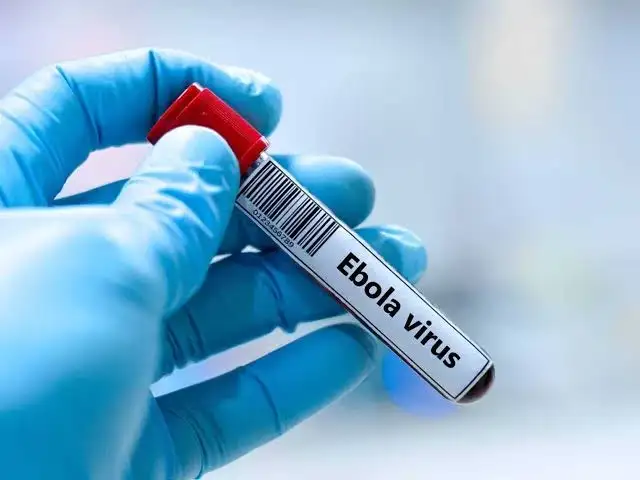

The trial began on Tuesday and aims to assess whether the oral antiviral drug obeldesivir can prevent infection or illness among people who have been exposed to someone infected with the Bundibugyo strain of Ebola.
The study, known as EBO-PEP, will evaluate the drug’s effectiveness in people who have had close contact with confirmed Ebola patients. Obeldesivir is an oral medication developed by the U.S.-based pharmaceutical company Gilead Sciences.
According to the WHO, previous preclinical studies showed that the drug has the potential to combat viruses in the filovirus family, which includes the viruses that cause Ebola.
WHO Director-General Dr. Tedros Adhanom Ghebreyesus described the trial as a major step toward protecting people at high risk of Ebola infection.
“Every major breakthrough begins with hope,” Dr. Tedros said.
He added that if the drug proves effective in preventing infection among exposed individuals, it could become a significant tool in controlling future Ebola outbreaks.
The trial will be conducted in Ituri Province in eastern DRC, where specialized monitoring centers have been established near Ebola treatment facilities to follow up with people exposed to the virus.
WHO expects to enroll about 1,000 participants aged 12 and older. All participants must have been exposed to a confirmed Ebola patient within the previous five days but must not have developed symptoms of the disease.
Participants will be monitored daily for 21 days, with a final medical assessment conducted 42 days after enrollment.
Currently, there is no approved vaccine or specific treatment for the Bundibugyo strain of Ebola.
According to health authorities in the DRC, the outbreak has infected more than 1,960 people and claimed over 700 lives.
The outbreak was officially declared on May 15 following a series of deaths in Ituri Province, in northeastern DRC.
WHO warned that the actual scale of the outbreak could be much larger than official figures suggest. Experts estimate the true number of infections may be two to four times higher than the reported cases.