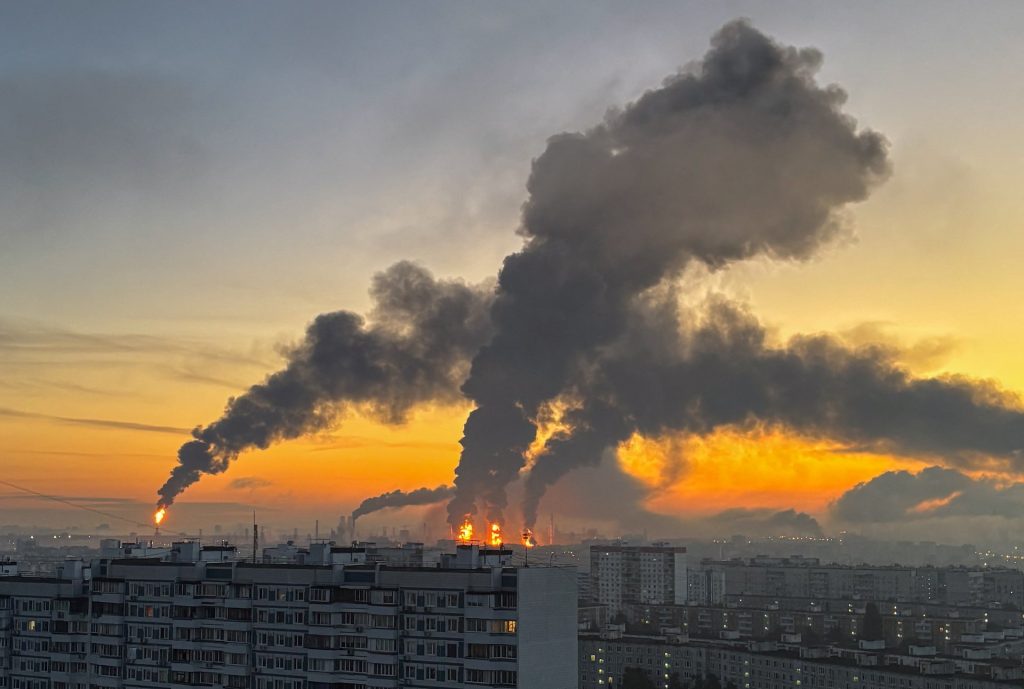

Ukrainian President Volodymyr Zelensky has warned that his country could target Russian heating and energy facilities during the coming winter, saying Ukraine wants to respond to Moscow’s attacks on its own energy infrastructure.
Zelensky said Ukrainians could face another difficult winter because of the continuing war, but warned that Russia could also face pressure as temperatures fall.
He said Ukraine’s aim would not be to destroy Russia’s fuel supplies for their own sake, but to reduce revenues that help finance Moscow’s military campaign.
Russia has repeatedly targeted Ukrainian heating and energy infrastructure during the conflict, causing power and heating problems for civilians, particularly during the colder months.
Zelensky’s comments came as US Secretary of State Marco Rubio said Washington was pushing Russia and Ukraine to stop attacking each other’s energy infrastructure.
The Ukrainian president also highlighted growing cooperation with Western countries on drone technology.
He said Ukraine had signed a security agreement with Australia that includes drones and was also working on a separate drone agreement with Canada.
Drones have become an important part of the war, with both Russia and Ukraine using them to strike military and infrastructure targets far from the front lines.
Zelensky said Ukraine was determined to put pressure on Russia’s economy and reduce the money available to support the war.
He argued that continued international trade with Russia provides Moscow with additional resources to continue fighting.
The warning comes as both sides prepare for another winter of war, with energy infrastructure expected to remain a major target.
Efforts by the United States to encourage an agreement protecting energy facilities could help reduce the impact of attacks on civilians if both sides accept the proposal.
However, Zelensky’s comments show that Ukraine is also preparing to maintain pressure on Russia if attacks continue.
The coming months could therefore bring renewed fighting around energy facilities as both countries seek to protect their own infrastructure while weakening the other side’s ability to sustain the war.