
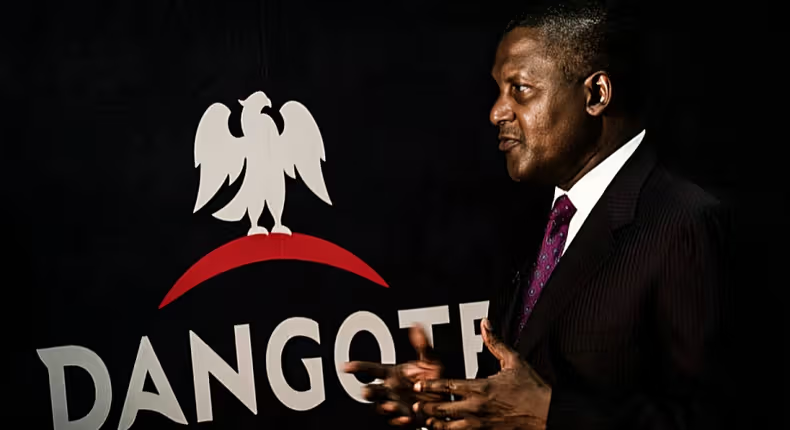

Africa’s largest industrial ambition is entering a new phase, as Aliko Dangote moves to significantly scale up the Dangote Refinery,a project already regarded as a cornerstone of the continent’s energy future.
Speaking in Lagos, Dangote revealed plans to increase the refinery’s production capacity to 1.4 million barrels per day. The expansion, once completed, could position the facility ahead of India’s Jamnagar Refinery, currently considered the largest refinery complex in the world.
The announcement underscores a broader push to elevate Nigeria as a major global refining hub, reducing its reliance on imported petroleum products while strengthening domestic supply chains.
At the height of construction, the expansion is projected to employ up to 95,000 skilled workers, spanning engineers, technicians, and artisans. Industry observers say this could translate into one of the largest job creation drives in Africa’s energy sector in recent years.
Dangote emphasized that the project will prioritize local expertise, fostering knowledge transfer and boosting technical capacity within the country.
He described the recognition as a reflection of ongoing industrial progress, adding that the refinery expansion is expected to demand a large, highly skilled workforce at the peak of construction, speaking during his induction into the Nigerian Academy of Engineering.
Analysts suggest the refinery’s expansion could play a pivotal role in enhancing Nigeria’s fuel independence. By increasing domestic refining output, the country may significantly cut down on fuel imports, easing pressure on foreign exchange reserves and stabilizing supply.
Beyond national benefits, the project is expected to influence regional energy dynamics, potentially positioning Nigeria as a net exporter of refined petroleum products across West Africa and beyond.
The scale of the development is likely to generate spillover benefits across multiple sectors, including manufacturing, logistics, and infrastructure. Increased refining capacity could lower production costs for industries dependent on petroleum products, while also encouraging ancillary investments.
Meanwhile, calls are growing for deeper investments by the Dangote Group. Abdullahi Sule, Governor of Nasarawa State, has urged the conglomerate to expand its footprint in the region, citing vast untapped mineral resources and opportunities for industrial growth.
Speaking at a trade fair, Sule highlighted the potential for collaboration to stimulate small and medium-sized enterprises, aligning with the group’s long-term Vision 2030 investment ambitions, reportedly valued at $100 billion, according to BI Africa reports.
While the expansion signals strong investor confidence in Nigeria’s industrial landscape, experts caution that its long-term success will hinge on several critical factors. Regulatory consistency, infrastructure readiness, and global oil market fluctuations remain key variables that could shape the project’s ultimate impact.
Still, the scale and ambition of the Dangote Refinery expansion reflect a growing determination across Africa to build world-class infrastructure and assert a stronger presence in global energy markets.
As the project moves forward, it stands not only as a symbol of industrial progress but also as a test case for how large-scale investments can transform economies across the continent.


