
He made the remarks during a media forum discussion focused on improving public transportation in Kigali.
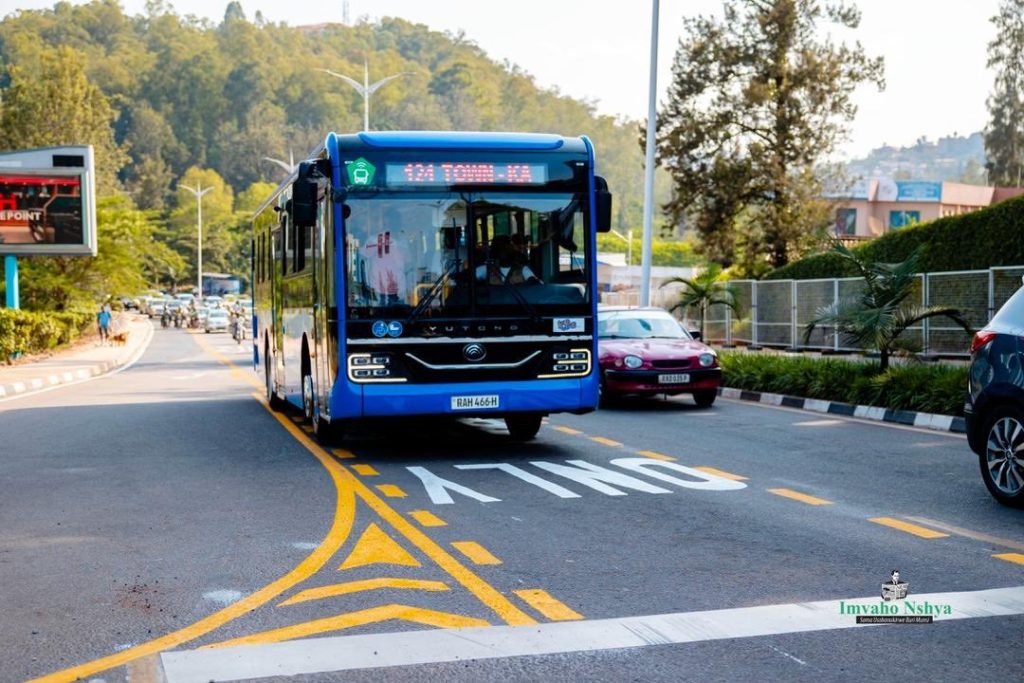
Currently, the City of Kigali has introduced dedicated bus lanes for public transport, while encouraging private car owners to shift toward using buses. This is aimed at optimizing fuel usage amid ongoing tensions in the Middle East, reducing traffic congestion, and improving travel efficiency.
One of the major concerns raised by bus users is the difficulty in accessing real-time information. Passengers often wait long at bus stops without knowing when a bus will arrive, and sometimes buses come already full.
To address this, the new technology is being developed to provide real-time updates on bus movements and capacity. Rukera explained that although the system is already in use internally, it has not yet been officially launched to the public as it is still in the testing phase.
He said: “We have started using this technology, but we haven’t yet introduced it publicly because it is still being tested. As you know, with technology, you must first test it before rolling it out.”
He added: “We operate 320 buses in the city. We can already track where each bus is and how it is moving. The next step is to provide passenger-related data, using artificial intelligence to estimate how many passengers are on board and share that information.”
Rukera also noted that smart bus stop displays have been installed along routes such as Rwandex to Sonatubes and Kacyiru, showing estimated arrival times and passenger loads.
He emphasized that the project has been under development for about six months and builds on existing systems that monitor bus schedules and driver performance. The goal is to make this information accessible not only at bus stops but also through a mobile application for users at home.
He further revealed that Rwanda is working with Waze so that even those without the dedicated app can access nearby bus stop information via the internet.
Transport analyst Egide Karuranga highlighted that adopting such technology will significantly improve public transport efficiency.
He explained that passengers will be able to see, for example, that a bus expected at 12:00 has been delayed to 12:15 and will arrive in five minutes with a certain number of available seats. This could also help prioritize vulnerable groups such as pregnant women and people with disabilities by allowing them to decide whether to board or wait.
Karuranga also suggested improving pedestrian crossing systems, noting that buses often lose time due to frequent stops at crosswalks, which can also be accident-prone.
He stressed that public transport aligns with sustainable development goals, benefiting both the economy and technological advancement.
Traffic Congestion Costs the Economy
Karuranga pointed out that traffic congestion—largely caused by reliance on private cars, has a negative impact on the national economy.
Using estimates, he explained that if a person spends one extra hour in traffic daily, it amounts to about 320 hours per year, equivalent to roughly 40 lost working days. Multiplied across many people, this significantly affects productivity and economic growth.
He also emphasized that using buses reduces fuel consumption, helping the country better manage its petroleum resources.
The spokesperson of the City of Kigali, Emma Claudine Ntirenganya, added that while using public transport is not mandatory for private car owners, it contributes to national benefits.
She stated: “Choosing to take the bus instead of using your personal car is not just beneficial for you, it also benefits the country, especially now, as it helps conserve our fuel reserves for a longer period.”