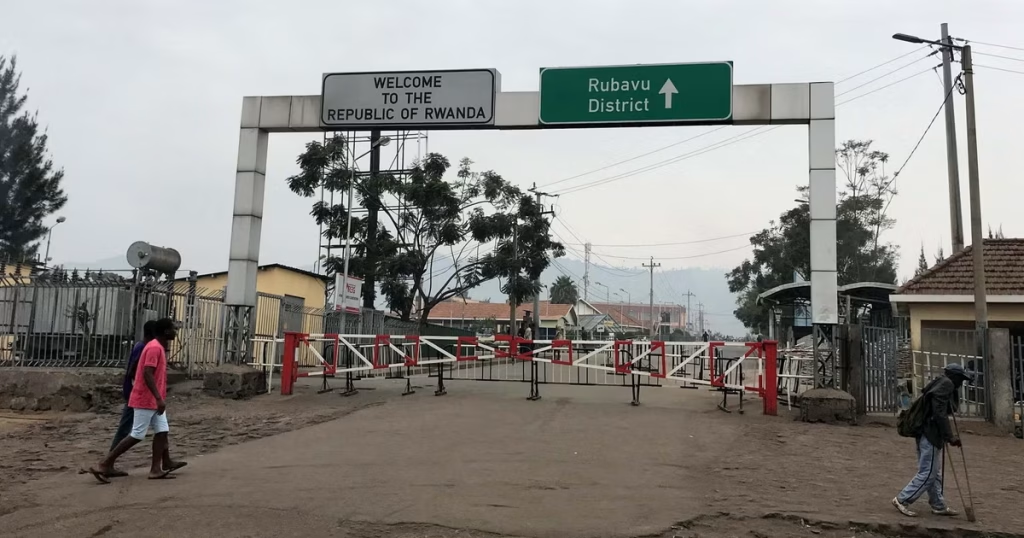

The Mayor of Rubavu District, Prosper Mulindwa, confirmed to IGIHE that the borders have been temporarily closed as a preventive measure against the outbreak.
“The borders connecting Goma and Gisenyi have been temporarily closed in response to the Ebola outbreak. We will continue engaging with our residents to explain why this decision was taken,” he said.
He urged residents to be patient with the changes, emphasizing that protecting their health is the priority.
Health authorities are currently screening Rwandans returning from the Democratic Republic of the Congo as well as Congolese nationals returning home, who are still being allowed to use the borders.
The measure affects users of the Petite Barrière, Grande Barrière, and Kabuhanga border posts.
However, border crossings between Rusizi and Bukavu remain open.
A small-scale cross-border trader, Afissa Uwizeyimana, said she only learned about the decision upon arriving at work.
“We woke up and came to work to deliver goods, only to find the border closed because of the Ebola outbreak in the neighboring country,” she said.
She appealed to authorities to establish strong measures that would allow trade to continue safely, such as organizing traders into groups where only a few people cross on behalf of others to avoid goods going to waste.
Another trader, Emeritha Mukeshimana, who has spent 20 years in cross-border business, said traders are ready to comply with all government health measures but urged authorities to also consider the issue of perishable goods.
Late this week, authorities announced that an Ebola patient had been identified in the Ituri Province. On Saturday, the Africa Centres for Disease Control and Prevention reported that infections had reached 336 cases, with 87 deaths.
On the same day, Uganda confirmed its first Ebola case, and the patient later died in a hospital in Kampala, bringing the total number of deaths linked to the outbreak to 88. Uganda has since identified a second confirmed case.
All infected individuals had recently traveled to DR Congo.
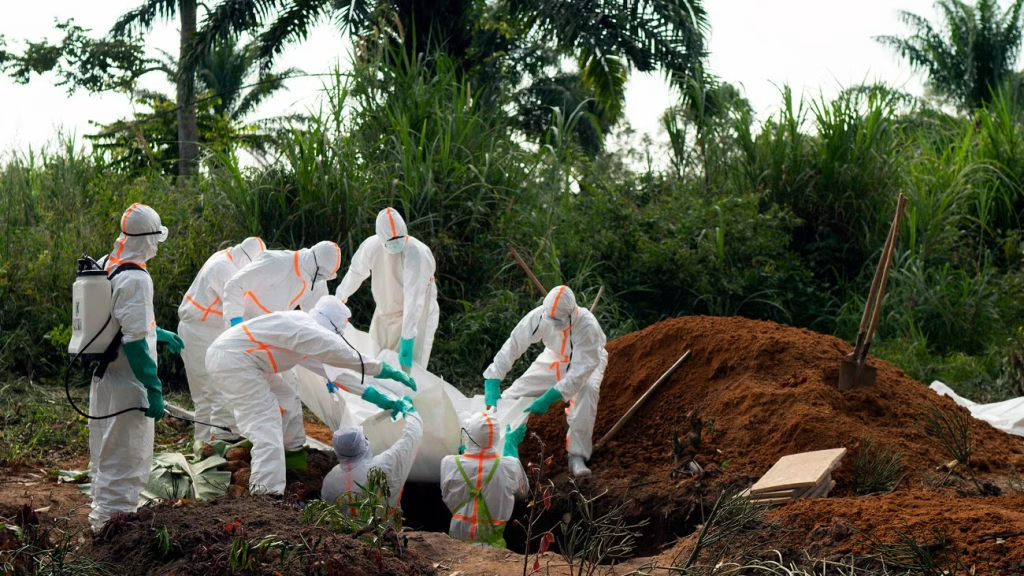
The Ebola strain involved, known as the Bundibugyo virus, was first identified in Uganda between 2007 and 2008, infecting 149 people and killing 37. In 2012, it appeared in DR Congo’s Isiro region, infecting 57 people and killing 29.
The World Health Organization announced that the re-emergence of Ebola in DR Congo and Uganda has become a global concern.
WHO’s declaration means international organizations, governments, and institutions are expected to mobilize resources and strengthen efforts to contain the outbreak. However, WHO Director-General Tedros Adhanom Ghebreyesus emphasized that countries should avoid closing borders.