
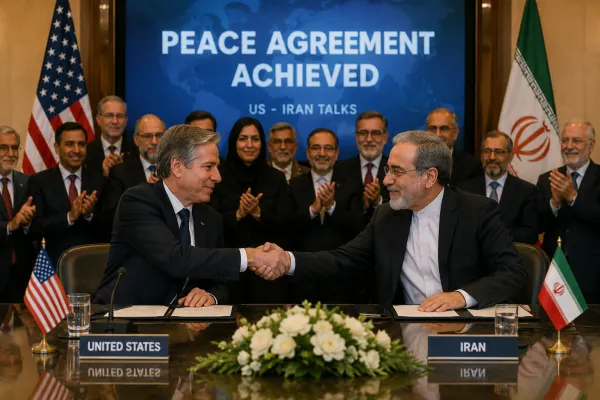

The development comes after recent military confrontations between the two countries. The United States carried out strikes on Iran, while Iran retaliated by attacking American military bases in Kuwait.
According to Reuters, sources familiar with the negotiations said both sides had reached an understanding on a new 60-day truce agreement, but implementation will only proceed if Trump formally approves it.
The proposed agreement is expected to create room for broader negotiations aimed at permanently ending the three-month conflict. Key discussions include measures to stop Iran from pursuing uranium enrichment activities that could be used to develop nuclear weapons.
On several occasions, Trump has said the war was close to ending. However, during a cabinet meeting on May 27, 2026, he stated that he was still dissatisfied with the ongoing talks with Iran and emphasized that Washington was not ready to ease sanctions on Tehran despite Iran’s demands.
In the latest American strikes on Iran, the US reportedly destroyed five Iranian aircraft, missile launch facilities, and naval infrastructure near the Strait of Hormuz in an effort to prevent further attacks on American forces.
Kuwaiti forces also announced that they intercepted and destroyed Iranian missiles launched toward the country.
A US source quoted by Reuters said, “These operations were controlled, entirely defensive, and intended to preserve the ceasefire.”
The Islamic Revolutionary Guard Corps stated that it had targeted American military bases and warned that Washington would face severe consequences if it continued what Iran described as provocations.
Kuwait condemned the attacks and urged Iran to stop actions that could escalate tensions again.
Pakistan’s Ministry of Foreign Affairs, whose government has been mediating between the US and Iran, announced that Foreign Minister Ishaq Dar will meet US Secretary of State Marco Rubio in Washington on May 29, 2026.
The conflict between the United States and Iran began on February 28 and has caused major global economic disruptions, particularly after the closure of routes through which around 20% of the world’s daily oil supply passes, significantly affecting the global economy.


