
The U.S. military’s Central Command (CENTCOM) stated that the latest escalation was triggered by what it described as Iranian provocation after Iran allegedly shot down a U.S. MQ-1 Predator drone that was flying over international waters.
On the morning of June 1, CENTCOM announced that in response to the incident, U.S. military aircraft carried out strikes that destroyed an Iranian air defense system, an underground drone control station, and two drones.
According to the United States, the strikes were conducted in the Goruk area and on Qeshm Island on May 30 and 31, 2026. Washington argued that the Iranian facilities posed a threat to the safety of vessels navigating international waters.
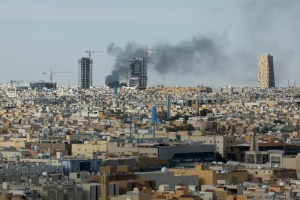
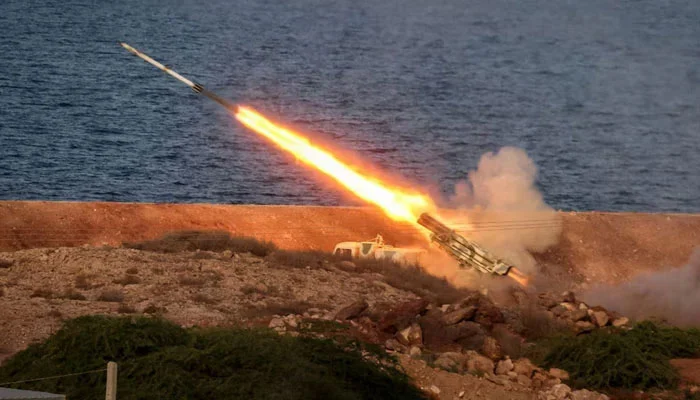
Iran’s Islamic Revolutionary Guard Corps (IRGC) confirmed that U.S. forces had struck a communications tower on Qeshm Island. The IRGC also stated that it launched attacks on U.S. military positions on the morning of June 1.
The IRGC claimed that the targeted U.S. facilities were being used to launch attacks against Iranian territory. However, it did not disclose their exact location, although indications suggest the sites may be in Kuwait.
Earlier on Monday morning, Kuwait’s military announced that its air defense systems had been activated to counter what it described as a major wave of drone and missile attacks originating from Iran.
The 60-day ceasefire agreement had been reached on May 28 during talks between U.S. and Iranian representatives. One of its primary objectives was to facilitate the reopening of the Strait of Hormuz, a critical route for global oil shipments.
On May 29, U.S. President Donald Trump, who was expected to make a final decision regarding the ceasefire, chaired a special national security meeting at the White House. However, no official outcome of the meeting was publicly disclosed.