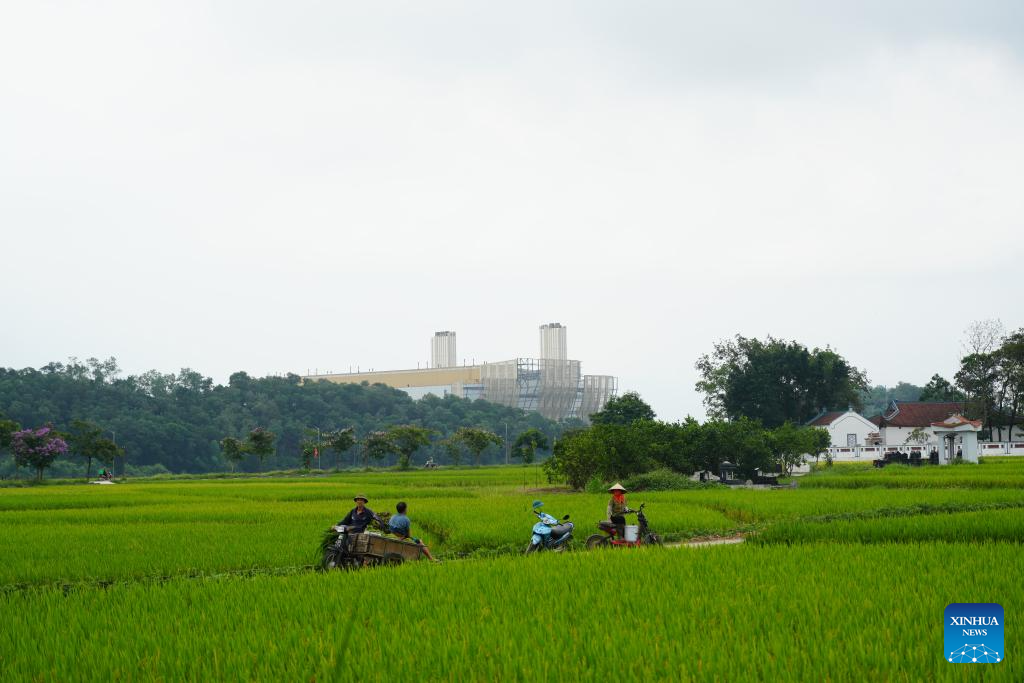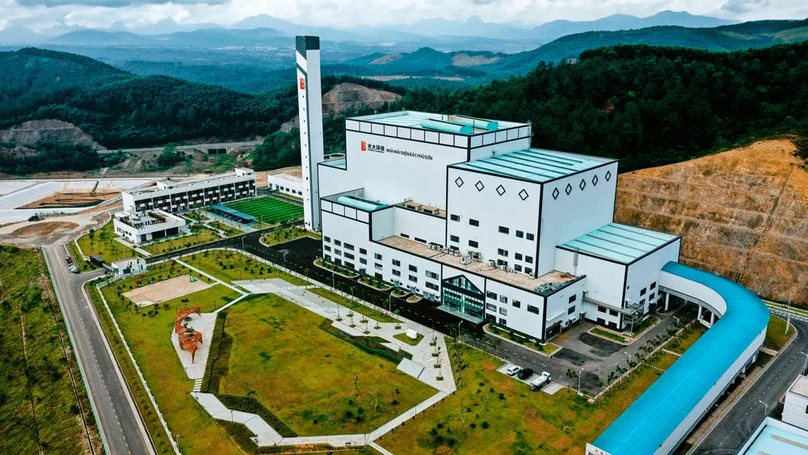

HANOI: A Chinese-invested waste-to-energy plant on the outskirts of Vietnam’s capital is emerging as a key driver of the city’s green transition, helping convert urban waste challenges into opportunities for clean energy production and environmental improvement.
The Soc Son waste-to-energy facility, operated by Hanoi Thien Y Environmental Energy Joint Stock Company, has been fully operational since 2022 and currently processes approximately 5,000 tons of household waste per day. The plant supplies electricity to Vietnam’s national grid, contributing to urban energy demand while significantly reducing dependence on traditional landfill disposal systems.
At the core of the facility is a modern waste treatment process in which municipal waste undergoes controlled fermentation before being incinerated at high temperatures. The heat generated produces steam that powers turbines, enabling efficient electricity generation. Officials describe the system as a practical and scalable model for cities facing rising waste management pressures due to rapid urbanization.
Local communities around the project have reported noticeable environmental improvements. Areas that were once heavily affected by unmanaged waste, unpleasant odors, and pollution have seen significant restoration. Some of the reclaimed land is now being used for agricultural activities, reflecting improved environmental quality and enhanced living conditions.
Residents say the transformation has brought both health and lifestyle benefits, with cleaner surroundings and reduced exposure to waste-related pollution compared to previous years when open dumping was common in the area.
Beyond its environmental impact, the plant has also become an important center for skills development and technical training. Vietnamese students and young engineers in environmental science, safety, and engineering fields are gaining hands-on experience with advanced waste-to-energy technologies, bridging the gap between academic learning and industrial practice.
Engineers working at the facility emphasize the importance of international cooperation in strengthening technical capacity. Collaboration with Chinese experts has supported knowledge exchange, operational improvements, and the development of a skilled local workforce capable of managing complex energy systems.
Authorities in Hanoi have set ambitious long-term goals to modernize the city’s waste management infrastructure. These include achieving higher rates of waste treatment, expanding waste-to-energy capacity, and significantly reducing landfill use as part of a broader urban sustainability strategy.
Experts note that the Soc Son facility reflects a growing regional shift toward integrating environmental protection with renewable energy production. They say such projects demonstrate how rapidly growing cities can align infrastructure development with sustainability goals while supporting economic growth and public welfare.
As Hanoi continues to expand, officials view waste-to-energy initiatives as a cornerstone of the city’s future development pathway, combining innovation, environmental stewardship, and energy security in a single integrated approach.
Source: Xinhua