
Rwanda’s agricultural export sector has recorded a strong weekly performance, generating more than USD 11.8 million from 8,869 metric tons of produce exported between 25–29 May 2026, according to data released by the National Agricultural Export Development Board (NAEB).
The figures reflect the continued expansion of Rwanda’s agro-export industry, which remains a key pillar of the country’s broader economic transformation agenda and its ambition to strengthen export-led growth.
Diversified products drive export performance
Diversified agricultural products remained the top revenue contributors, earning over USD 5.4 million from 6,351 metric tons exported during the reporting period. This category continues to grow as Rwanda strengthens agro-processing capacity and promotes value addition in the agricultural sector.
Officials and trade analysts note that the increasing share of diversified products indicates progress in reducing dependence on traditional export commodities while improving competitiveness in regional and global markets.
Tea and coffee sustain foreign exchange earnings
Rwanda’s long-established export commodities, tea and coffee, continued to perform strongly and remain central to the country’s export earnings.
Tea exports generated USD 3.18 million from 943 metric tons, while coffee brought in USD 1.49 million from 453 metric tons. These crops continue to support rural livelihoods, particularly smallholder farmers engaged in cooperative farming systems across the country’s key production zones.
Despite global price fluctuations, both commodities have maintained stable demand in international markets, reinforcing Rwanda’s reputation for high-quality specialty produce.
The horticulture sector shows a steady upward trend
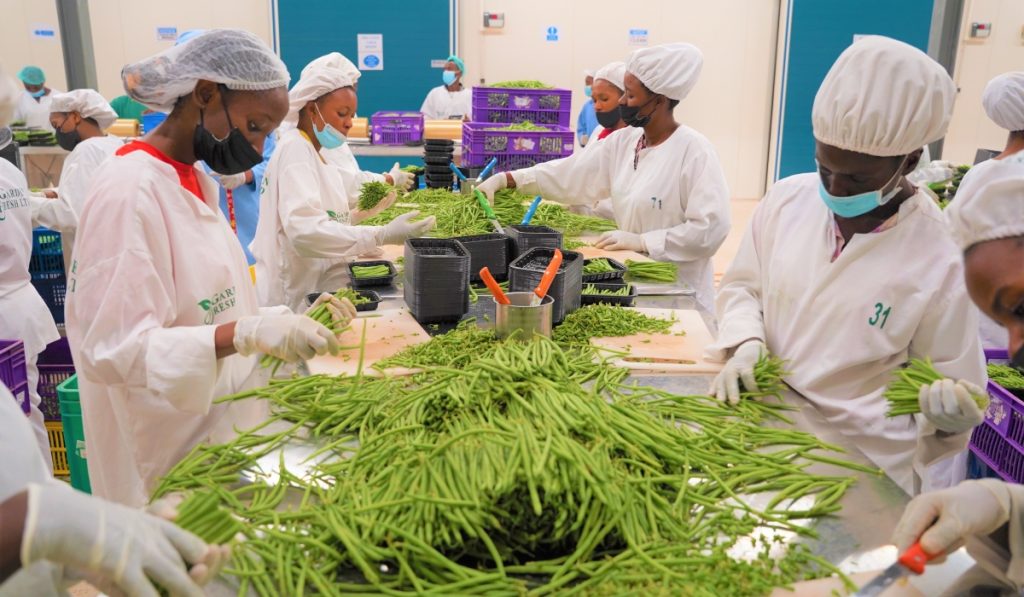
The horticulture industry continued to demonstrate steady growth, with vegetables earning USD 560,783 from 459 metric tons exported to multiple destinations, including Great Britain, the Netherlands, France, and various African markets.
Fruit exports also contributed USD 330,611 from 276 metric tons, with key markets in the United Arab Emirates and neighboring regional economies. Flower exports, though relatively small in volume at 18 metric tons, generated USD 123,573, with shipments reaching Gabon, the Netherlands, and the United Kingdom.
Experts highlight horticulture as one of the fastest-growing segments of Rwanda’s agricultural export portfolio, driven by increased investment in irrigation, cold chain systems, and improved logistics.
Livestock and animal products strengthen the export basket
The livestock sector added USD 717,635 from 369 metric tons of animal products exported mainly to African markets. This segment continues to expand as Rwanda invests in modern livestock production systems and regional trade integration.
The growth of animal-based exports is also seen as part of broader efforts to enhance food security while creating new income streams for rural communities engaged in livestock farming.
Economic implications and rural impact
Economists say the sustained growth in agricultural exports is contributing to improved foreign exchange earnings and reinforcing rural economic development. Increased demand for diversified and value-added products is also encouraging agribusiness investment and strengthening farmer cooperatives.
The performance aligns with Rwanda’s long-term strategy of transforming agriculture from subsistence-based production to a commercially driven, export-oriented sector.
Outlook remains positive
Looking ahead, Rwanda is expected to further expand its agricultural export base through continued investment in quality assurance systems, post-harvest handling, irrigation infrastructure, and agro-processing facilities.
With global demand for high-quality agricultural products continuing to rise, Rwanda’s diversification strategy is expected to enhance its competitiveness in both regional and international markets.
Overall, the latest export figures underscore a steady upward trajectory for the sector, driven by modernization, diversification, and stronger integration into global value chains.