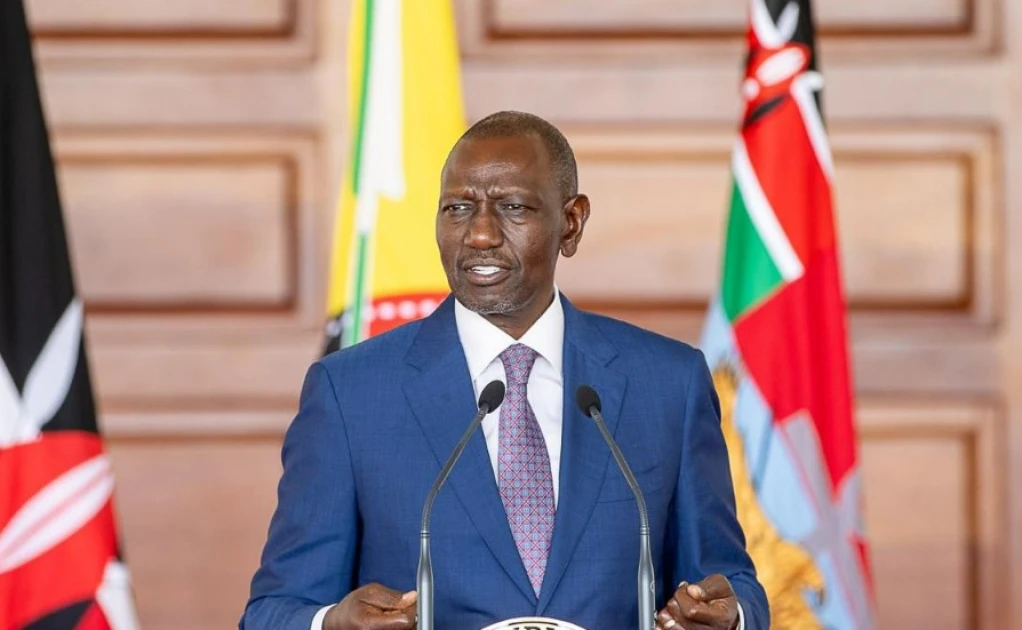

Speaking to journalists on June 4, 2026, during the first day of his visit to South Africa, Ruto said the decision was both responsible and humanitarian.
The proposed facility would be located at a Kenyan military base in Laikipia and would receive U.S. citizens arriving from countries in the region who are suspected of having been exposed to Ebola. They would be placed under observation, quarantined if necessary, and treated by medical personnel.
Although the Kenyan government approved the proposal, it has faced strong opposition from many citizens and civil society groups, including Katiba Institute, which advocates for constitutional governance and the rule of law.
On May 28, 2026, the High Court in Nairobi temporarily halted construction of the facility pending a legal challenge filed by Katiba Institute.
Despite the court’s initial order, the Kenyan government indicated that the project would continue, sparking protests in the town of Nanyuki. Demonstrators marched toward the Laikipia military base on June 1, and clashes reportedly left two people dead.
Following a separate lawsuit filed by lawyers, the High Court of Nairobi issued another order directing that construction of the facility must remain suspended until at least June 20, 2026, while the case is being heard.
Ruto acknowledged that some Kenyans oppose the project but insisted that his government is doing the right thing.
“I can say without hesitation, looking anyone in the eye, that we are doing the right thing,” he said.
He added that it would be unfortunate and shameful for Kenya to reject a request from the United States to build the facility using its own resources.
“If the United States asks, just once, to build such a facility at its own expense and we refuse, we would appear lacking in humanity,” Ruto stated.
The Ebola outbreak has hit the Democratic Republic of the Congo particularly hard, especially in Ituri Province, where more than 360 infections and 62 deaths had been reported as of June 2, 2026.
The disease has also spread to Uganda, where 16 infections and one death have been recorded. No other countries in the region have reported confirmed cases, although the World Health Organization has warned of a risk of further regional spread.
A U.S. citizen working in Ituri contracted Ebola and was later transferred to Germany for treatment. U.S. officials view Kenya as a strategic location for the facility because of its proximity to outbreak-affected areas.