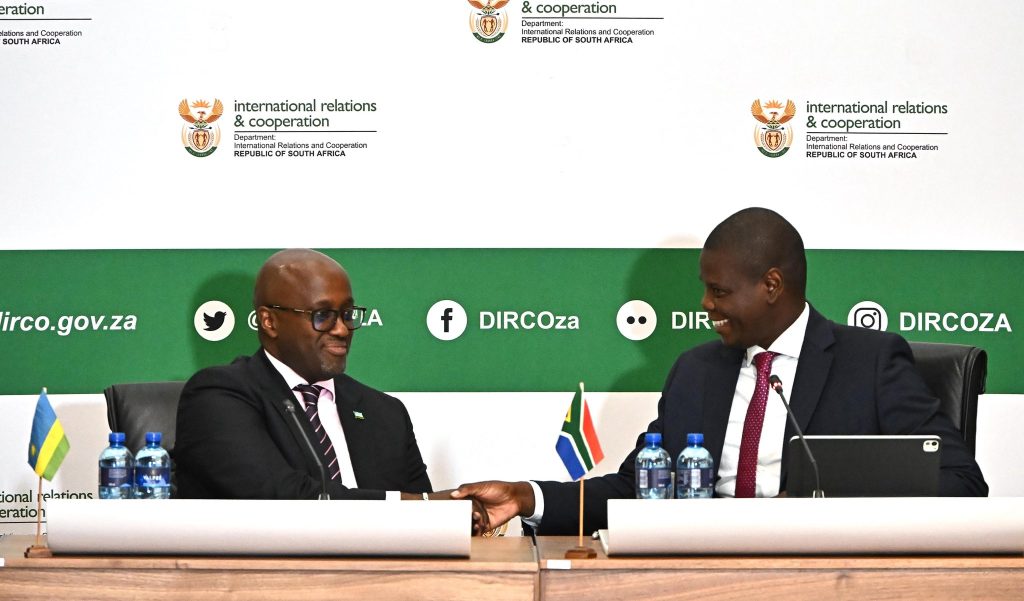

Speaking to South Africa’s SABC News during his visit to Pretoria on June 17, 2026, Nduhungirehe said the trip was aimed at revitalizing bilateral relations that have faced challenges in recent years.
The visit was particularly significant given long-standing tensions between the two countries. Rwanda has repeatedly accused South Africa of hosting individuals and groups allegedly involved in activities aimed at destabilizing Rwanda.
Relations were further strained by South Africa’s military involvement in eastern Democratic Republic of Congo, where South African troops were part of a regional force supporting the Congolese army against the AFC/M23 rebel movement. Rwanda has argued that some actors involved in the conflict pose security threats to the country.
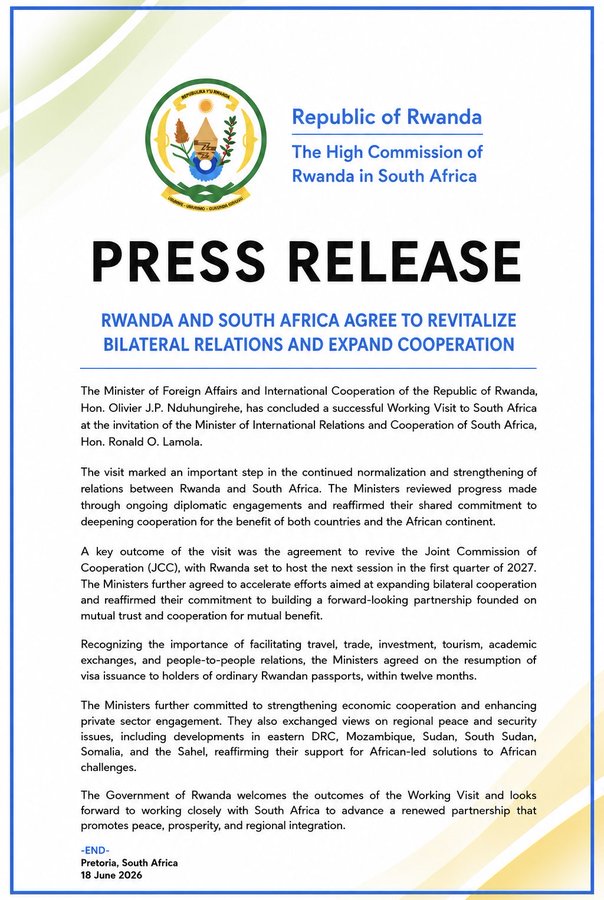
Nduhungirehe said that despite these differences, high-level engagements between the leadership of both nations have continued in search of solutions.
“Since last year, we agreed that this visit to Pretoria would take place in order to address these challenges and explore ways to revive our relations, particularly regarding visas for ordinary passport holders and the resumption of the Joint Commission for Cooperation,” he said.
According to the minister, the commission will review existing agreements, discuss their implementation and identify new areas of cooperation between the two countries.
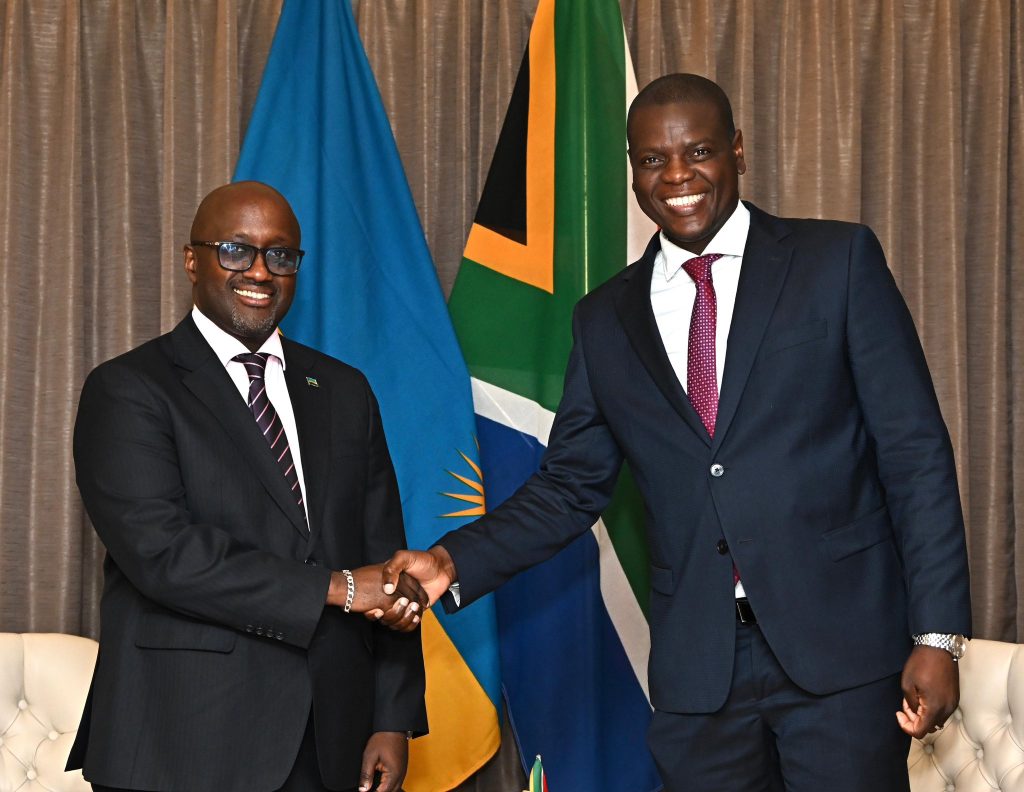
Asked whether he was optimistic about the outcome of his talks with South African Foreign Minister Ronald Lamola, Nduhungirehe said he was encouraged by the decisions reached, especially the agreement to revive the Joint Commission and hold its next meeting in Kigali during the first quarter of next year.
He noted that the mechanism had not convened for around 15 years, making its revival a major milestone in efforts to normalize bilateral relations.
One of the consequences of the strained relationship has been difficulties faced by Rwandan citizens seeking South African visas, despite Pretoria’s broader efforts to facilitate travel for African nationals.
“In our joint statement, we agreed to intensify efforts to restore people-to-people exchanges by resuming the issuance of visas within the next 12 months,” Nduhungirehe said.
The two ministers also discussed peace and security issues on the African continent, including the situation in Mozambique, where Rwandan troops have been deployed since 2021 to help combat insurgents in Cabo Delgado Province.
The operation has contributed to restoring stability in several areas, enabling displaced residents to return home, businesses to reopen and children to go back to school.
“We continue to cooperate with Mozambique, and we know that Mozambique, as Minister Lamola pointed out, is South Africa’s leading trade and investment partner,” Nduhungirehe said.
He added that this shared interest makes it essential for Rwanda and South Africa to exchange information and coordinate efforts aimed at maintaining stability in Mozambique.
The ministers also discussed the security situation in eastern Democratic Republic of Congo, where conflict has persisted for more than three decades.
While diplomatic efforts led by the United States and Qatar are ongoing to end the fighting, Nduhungirehe emphasized the importance of African-led initiatives and the role of the African Union and regional organizations.
“The continent understands the root causes of this crisis, and we believe its role is indispensable,” he said.
He noted that South Africa is expected to assume leadership of a regional mechanism responsible for monitoring peace and security commitments related to the DRC and the Great Lakes region next year.
“We hope South Africa will play a significant role in efforts aimed at achieving lasting peace in eastern DRC and the wider Great Lakes region,” he added.
Nduhungirehe also stressed the importance of direct engagement between Presidents Paul Kagame and Cyril Ramaphosa in strengthening ties between the two countries.
He recalled that a planned visit at the end of last year had been postponed, but noted that the two leaders had met during the 30th commemoration of the 1994 Genocide against the Tutsi and again last year in Brussels during the Global Gateway Summit.
According to the minister, following his latest visit to South Africa, both countries will explore ways to facilitate another meeting between Presidents Kagame and Ramaphosa as part of broader efforts to consolidate and deepen bilateral relations.