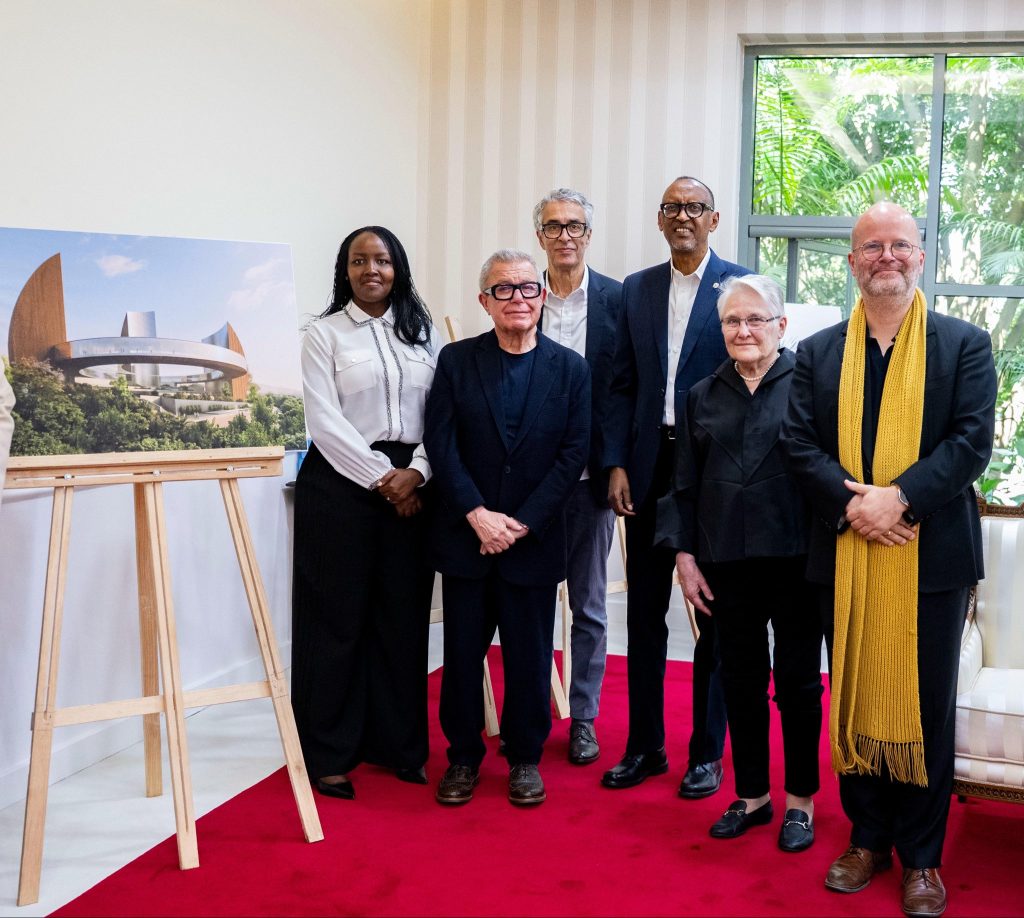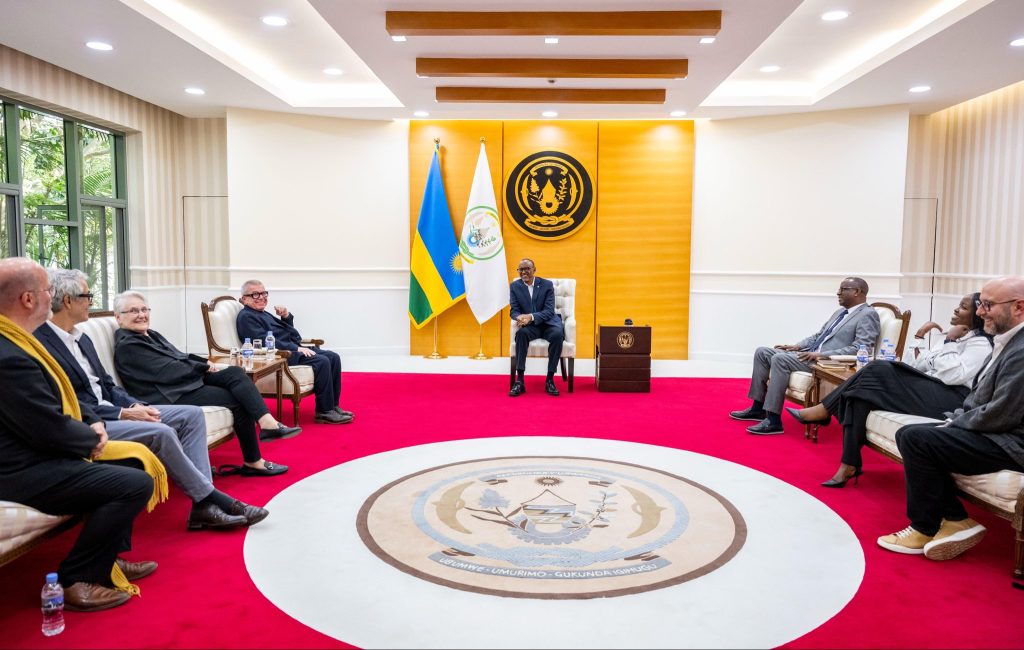

The delegation included Daniel Libeskind and Nina Libeskind, who lead Studio Libeskind, alongside partner Stefan Blach and Holm Keller.
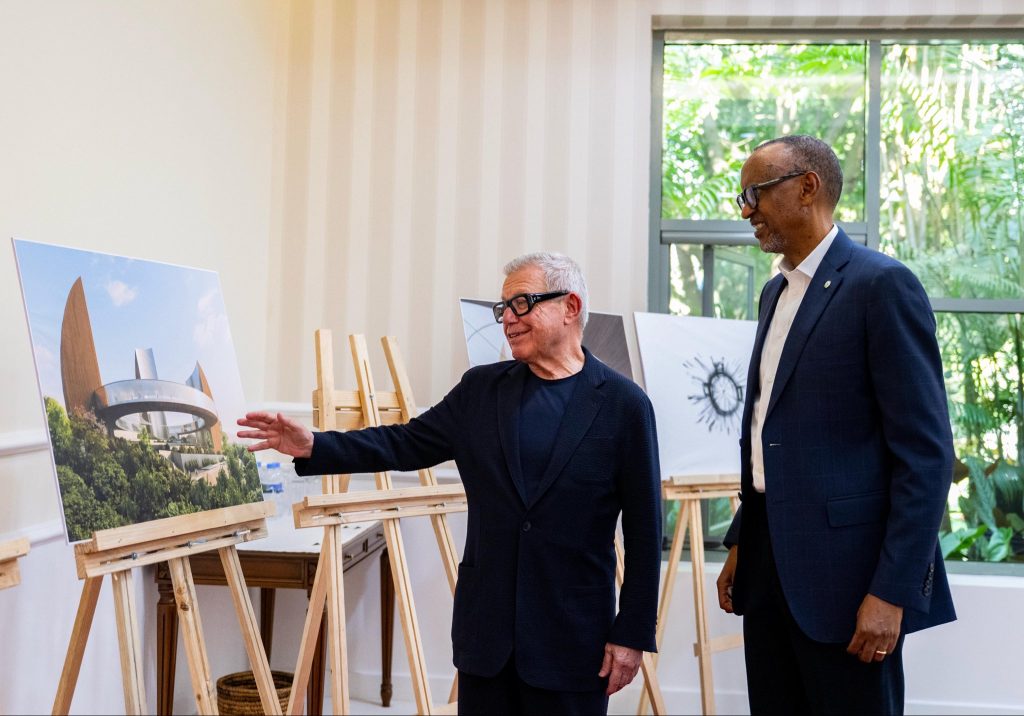
During the meeting, President Kagame and the delegation discussed plans for a landmark monument that will be constructed at the Kigali Genocide Memorial in Gisozi, where more than 250,000 victims of the 1994 Genocide against the Tutsi are laid to rest.
The monument is intended to serve as a powerful symbol of remembrance, education, and reflection, helping visitors better understand the history and consequences of the Genocide against the Tutsi. According to a statement from the Office of the President issued on June 25, 2026, the project is envisioned as a space for remembrance, learning, and reflection enhanced by modern technology.
The new monument is expected to strengthen the memorial’s educational mission by combining innovative architectural design with advanced digital technologies to present Rwanda’s history in a compelling and meaningful way.
Studio Libeskind’s involvement carries particular significance. Daniel Libeskind is internationally renowned for designing memorials, museums, and cultural landmarks that preserve historical memory while inspiring hope for the future. He founded Studio Libeskind with his wife, Nina Libeskind, in 1989, shortly after winning the competition to design the Jewish Museum Berlin, a project that established his global reputation.
Completed in 1999 and opened to the public in 2001, the Jewish Museum Berlin explores the history of Jewish life in Germany and the legacy of the Holocaust through its distinctive architectural design.
Born in Poland in 1946 to Jewish parents who survived the Holocaust, Daniel Libeskind has consistently drawn on his family’s history in his work. His projects often explore the relationship between architecture, memory, history, and resilience.
Libeskind gained further international recognition in 2003 when he was selected to lead the master plan for the redevelopment of the World Trade Center site following the terrorist attacks of September 11, 2001.
His firm has also designed several internationally acclaimed memorial and cultural projects, including the National Holocaust Monument, the Imperial War Museum North, and the Contemporary Jewish Museum.
Studio Libeskind’s philosophy emphasizes creating spaces that acknowledge the past while inspiring future generations. That vision closely aligns with Rwanda’s plans for the new National Genocide Monument.
The monument is expected to reinforce Rwanda’s commitment to preserving the memory of the Genocide against the Tutsi, combating genocide denial and distortion, and educating the international community about the devastating consequences of hatred, division, and destructive leadership.
Once completed, the site is expected to become a major center for remembrance and education, combining history with modern technology to ensure that the lessons of the 1994 Genocide against the Tutsi continue to be understood by younger generations and visitors from around the world.