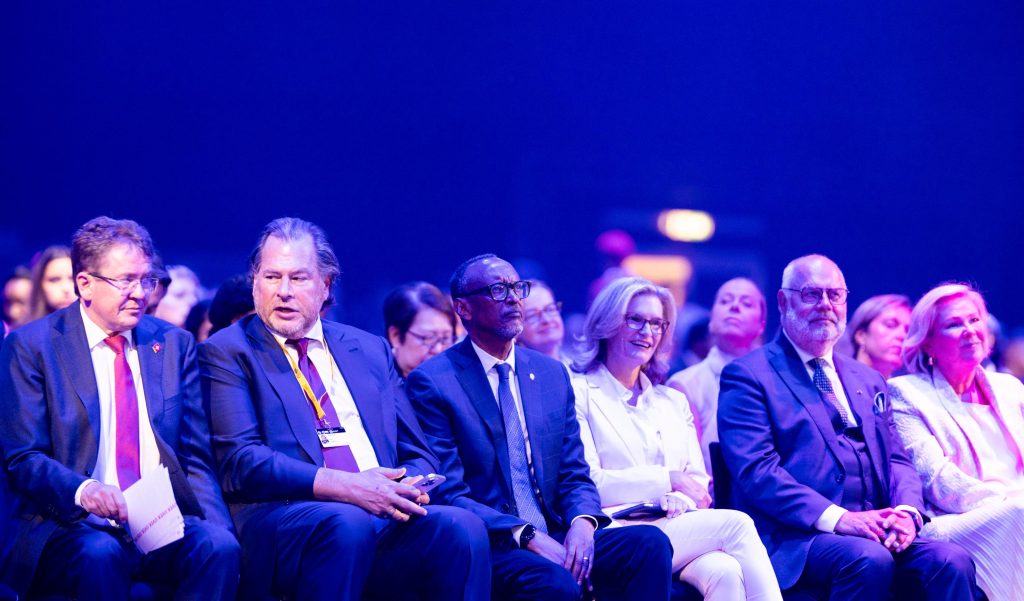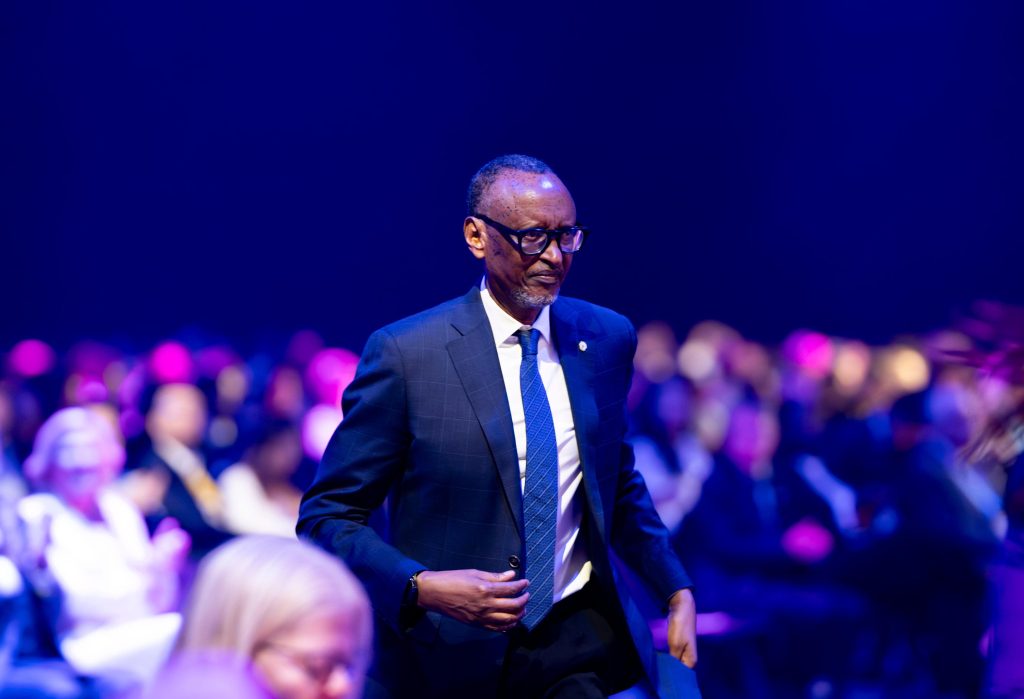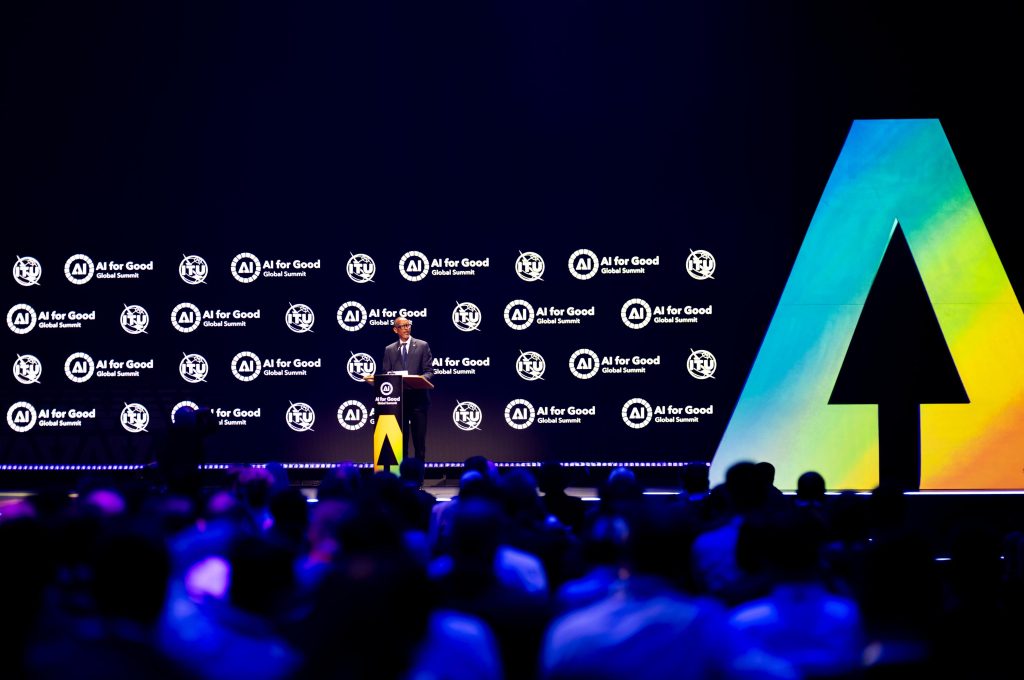
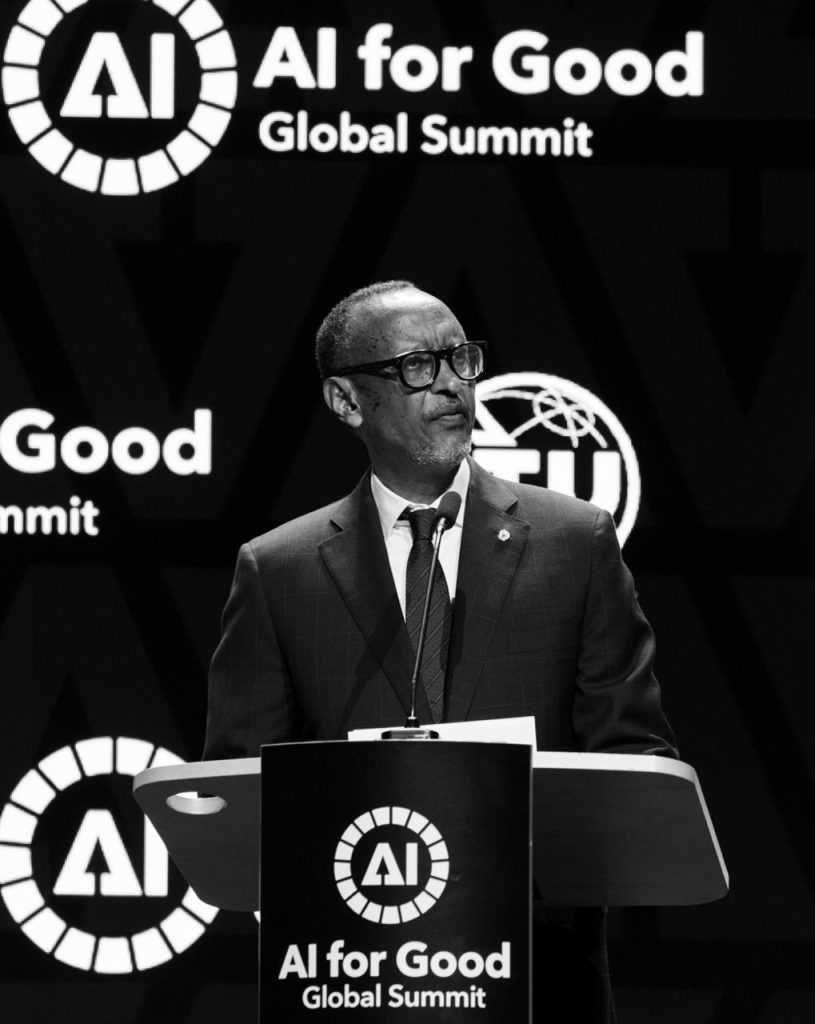

President Paul Kagame is in Geneva, Switzerland, where he is attending the AI for Good Global Summit, an international conference focused on exploring how artificial intelligence (AI) can be used to address some of the world’s most pressing challenges rather than becoming a source of new inequalities among nations and people.
Taking place in Geneva from July 7 to July 10, 2026, the event aims to examine how AI can be harnessed for the benefit of humanity.
President Kagame delivered remarks during the summit’s opening ceremony.
He is also expected to officially launch a new global commission that will bring together government leaders, private sector executives, international organizations, and technology experts to promote the responsible, transparent, and inclusive development and use of artificial intelligence.
President Kagame will serve as one of the commission’s co-chairs alongside Marc Benioff, Chair and CEO of Salesforce.
Other members of the commission include ITU Secretary-General Doreen Bogdan-Martin, who will serve as the commission’s permanent vice-chair, as well as Icelandic President Halla Tómasdóttir and Estonian President Alar Karis.
The commission aims to bridge the gap between AI developers, policymakers, and world leaders by developing a shared vision for the governance and responsible use of artificial intelligence.
Its creation comes at a time when the global debate over AI’s opportunities and risks continues to intensify. Artificial intelligence is already transforming sectors such as healthcare, education, agriculture, public services, disaster response, cybersecurity, and manufacturing.
However, experts also warn that the technology could contribute to the spread of misinformation, cyber threats, widening economic inequality, and leave behind countries that lack the resources or capacity to develop and regulate AI.
A report released ahead of the summit by the United Nations’ Independent International Scientific Panel on Artificial Intelligence found that AI is advancing faster than the ability of science and governments to fully understand and regulate it.
The report noted that as AI systems become increasingly autonomous and capable of performing more complex tasks, stronger international cooperation will be essential to ensure their safe and responsible development.
The newly established commission will focus on building public trust in AI, expanding equitable access to the technology, strengthening digital infrastructure, developing human capacity, and narrowing the technological gap between developed and developing countries.
For Rwanda, President Kagame’s appointment as one of the commission’s leaders carries particular significance. The country has long positioned technology as a key pillar of its development strategy through investments in digital public services, innovation, digital skills, and youth empowerment, making it one of Africa’s emerging leaders in the digital economy.