

Since July 12, the countries reporting Iranian attacks include Qatar, Oman, the United Arab Emirates (UAE), Jordan, Bahrain, and Kuwait. Authorities in those countries said they intercepted Iranian drones and missiles targeting locations hosting US military forces or American facilities.
Iran said its operations were aimed exclusively at US military installations across the region.
According to the Iranian military, its forces struck a military command center and a drone storage facility in Jordan, while also targeting US radar systems and missile infrastructure in Kuwait.
Iran further claimed it attacked aircraft, aerial refueling equipment in Oman, and an aircraft maintenance facility along with a military command center in Qatar.
Qatar said three people, including a child, were injured after falling missile debris struck populated areas. Doha blamed Iran for the incident and said Tehran would be held legally responsible.
The United Arab Emirates said its air defense systems intercepted Iranian drones and missiles, while Bahrain reported shooting down multiple Iranian aerial threats.
Jordan also confirmed intercepting four missiles that entered its airspace, adding that there were no casualties or significant damage.
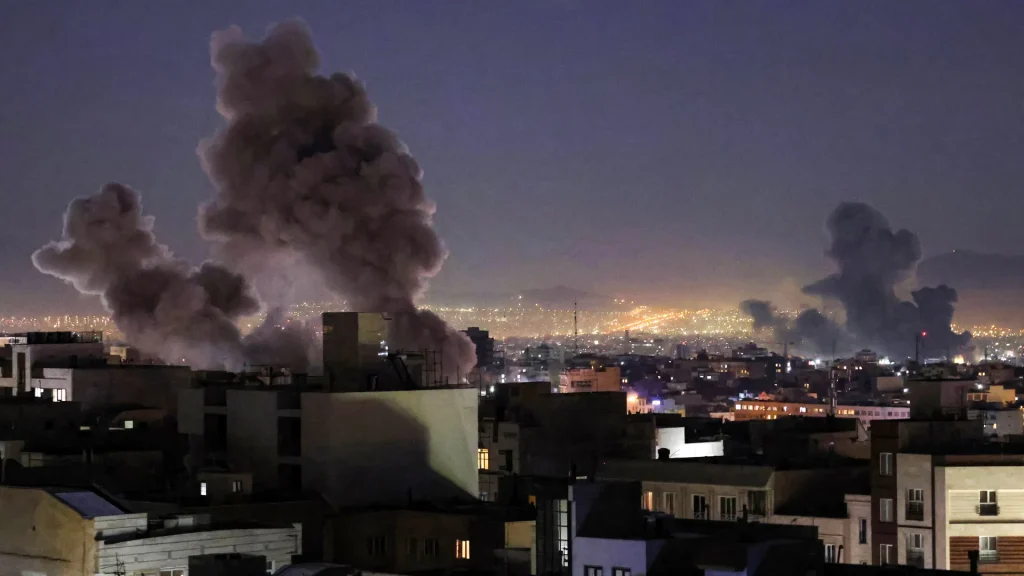
Meanwhile, the United States carried out fresh strikes on several locations inside Iran overnight and into July 13, further escalating the conflict.
Iran Announces Closure of the Strait of Hormuz
As hostilities intensified, Iran announced that it had closed the Strait of Hormuz, one of the world’s most important shipping routes through which nearly 20% of global oil supplies pass each day.
Iranian military officials said the decision followed an incident involving a vessel they claimed had violated navigation rules in the Strait.
However, the United States rejected Iran’s claim, saying Tehran does not have the authority or capability to shut down the strategic waterway. The US Central Command (CENTCOM) said commercial shipping continues to transit the Strait of Hormuz safely.
US President Donald Trump also stated that the Strait remains open to international commercial traffic.
The renewed fighting has already affected global energy markets, with oil prices rising by more than 4% amid growing concerns that prolonged instability around the Strait of Hormuz could disrupt one of the world’s most critical energy supply routes.