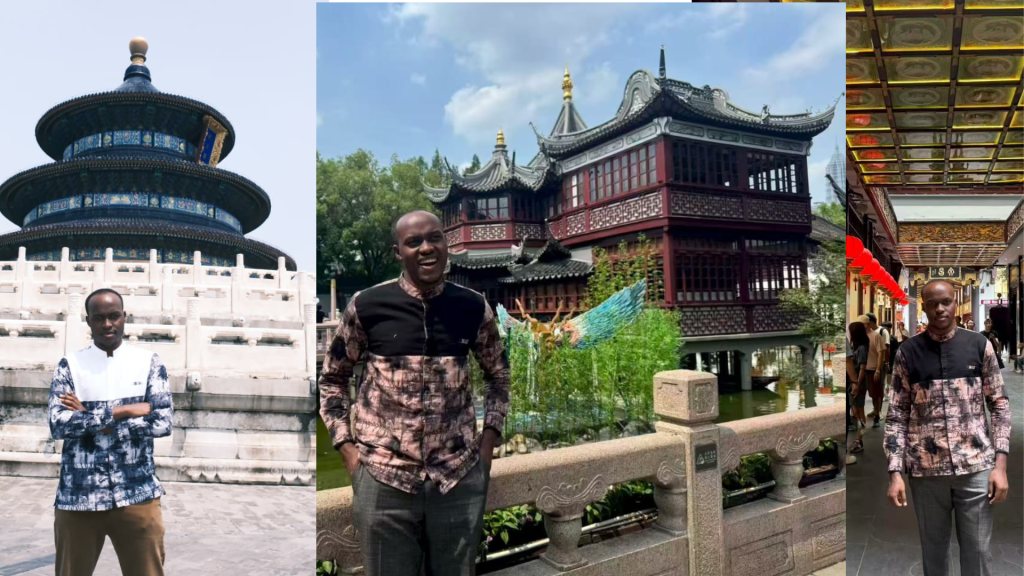

I landed in China on 9 July and departed on 30 July 2026 through Guangzhou Baiyun International Airport. Twenty-one days. Five hundred and four hours. Thirty thousand two hundred and forty minutes—and every moment filled with wonder, discovery, and absolute joy. I have been admiring China from afar, but that is how long it took me to fall in love with this amazing country in person.
Before this trip, I thought I knew China. I had seen its skyscrapers on television, watched videos of its high-speed trains, heard stories about its technology, and, like many people, had formed my own picture of the country. I had grown up watching Kung Fu movies featuring legends like Bruce Lee, Jackie Chan and Donnie Yen. And closer to home, I had even watched Chinese engineers building a road in my own village. Yet, for all these glimpses, China remained a place I knew mostly through a screen, a story, or a distant encounter.
Then I arrived. And I quickly realised that China is one country, but it is also many experiences at once.
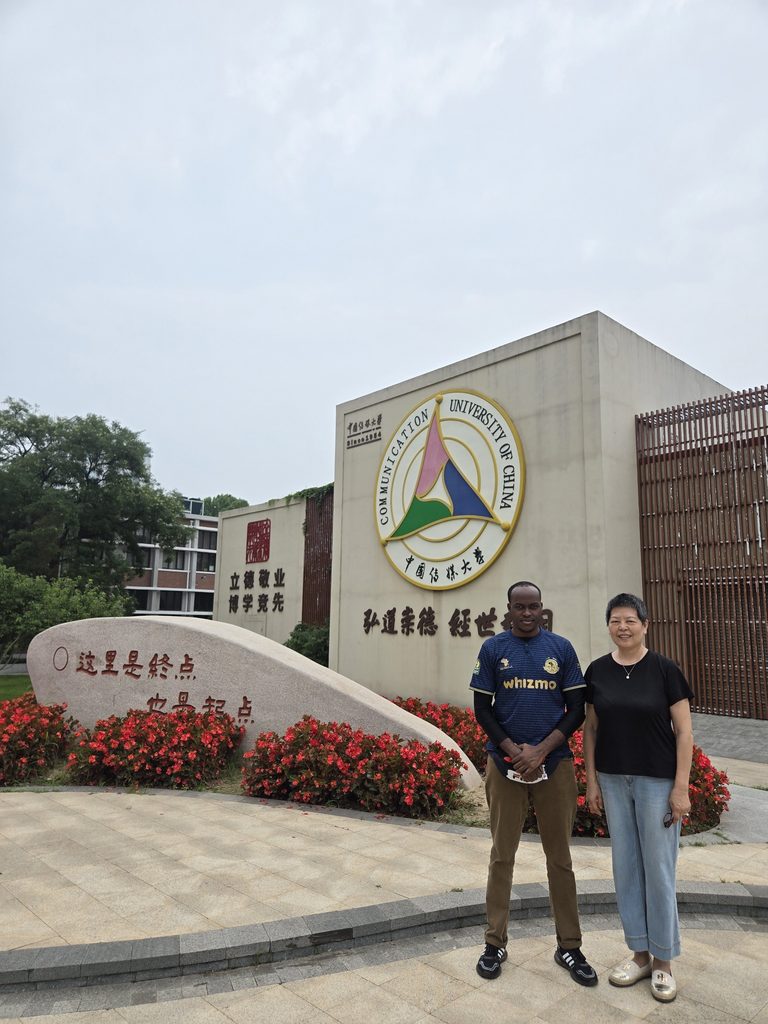
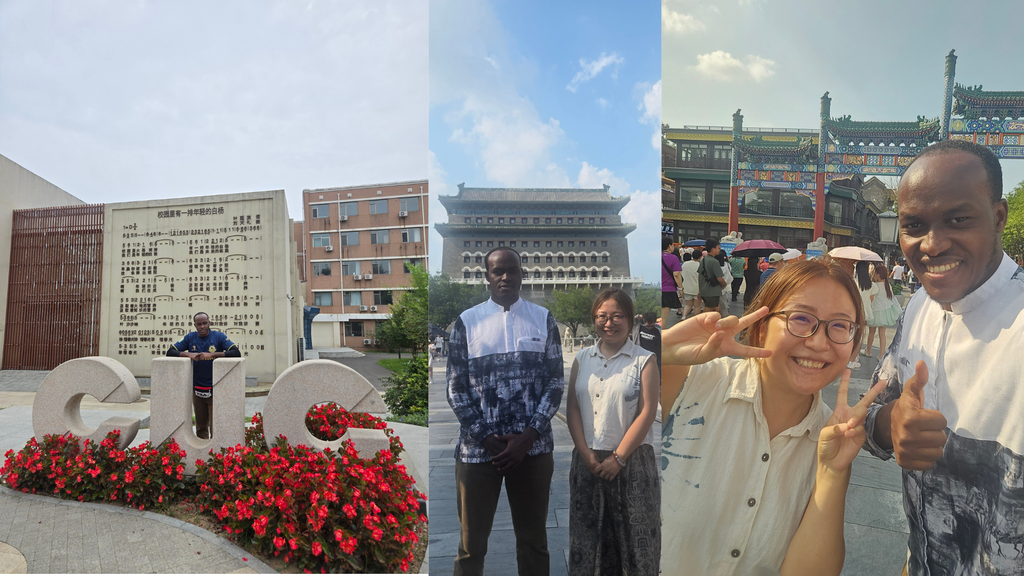
Posing with Prof. Wu Minsu after our conversation at Communication University of China. ©MC
My conversation with Professor Wu Minsu at Communication University of China helped put this into perspective: China may be one country politically, but its provinces and cities carry remarkably distinct cultures, histories, landscapes, cuisines and dialects. Every stop on my journey seemed to reveal a different side of China, in the most positive way. And that was the beauty of the trip.
Guangzhou: Where Africa and China Meet
My journey in China began in Guangzhou, where I experienced something I did not expect: a little taste of Africa. Walking through parts of Guangzhou, particularly around the city’s international communities, I felt surprisingly at home. The city reminded me that China is not simply connected to the world economically; it is also increasingly intertwined with the cultures and lives of people from across the globe.
My hotel experience was another story altogether.
It was exceptionally clean, comfortable and almost entirely digitalised. The room had a huge television and technology seemed to be built into almost every detail.
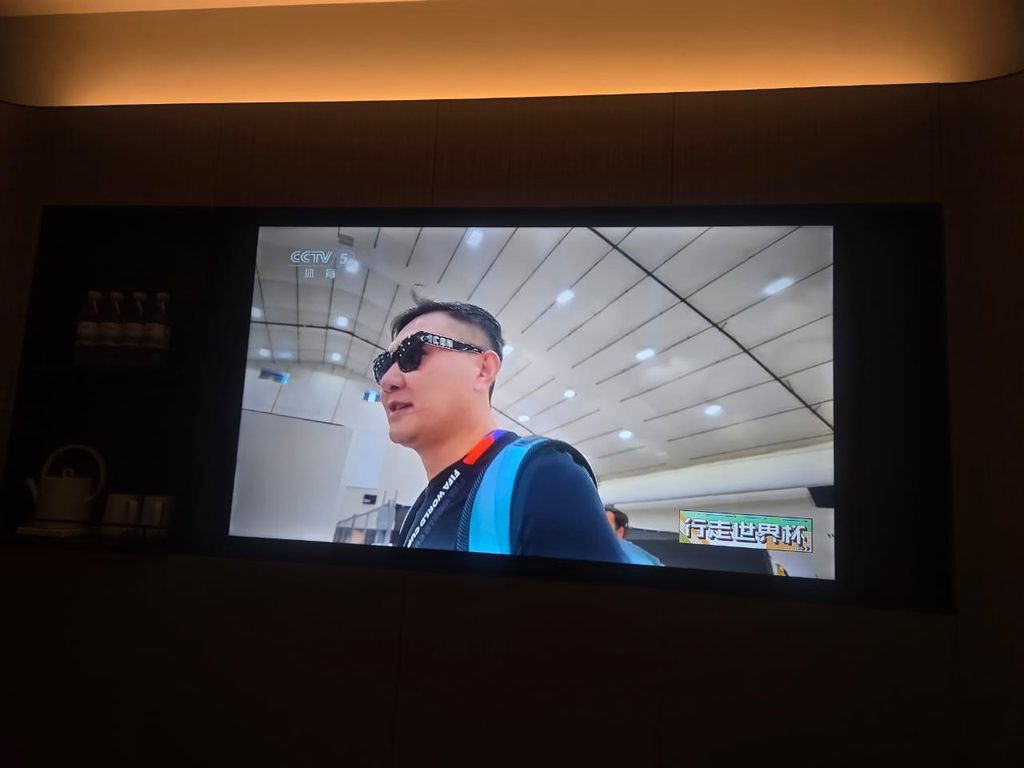
And then came the World Cup. There I was, sometimes watching matches at 3 a.m., half asleep but somehow completely awake because of football. Yeah, I was rooting for Argentina; we didn’t win, but being the second runner-up is not a bad place at all.
Mr. Weng, what an amazing human being.
From hotel pick-ups to airport shuttles and all the efforts that made the stay easy, his hospitality was phenomenal. It was one of those experiences that reminds you that when travelling, sometimes it is not the touristic attractions or the city that you remember most. It is the new people you meet along the way.
Shanghai: Rwanda Meets the World
From Guangzhou, I travelled to Shanghai, where I had the privilege of speaking at Fudan University’s International Summer School, at the invitation of Professor Yin Zhiguang, Professor of International Politics at Fudan University’s School of International Relations and Public Affairs, to whom I remain deeply grateful for the opportunity.
I spoke about Rwanda’s remarkable and rapid transformation from the ashes of the 1994 Genocide against the Tutsi, and about the importance of countries in the Global South working together to exchange home-grown solutions, experiences and even traditional knowledge that may never have made it into academic textbooks.
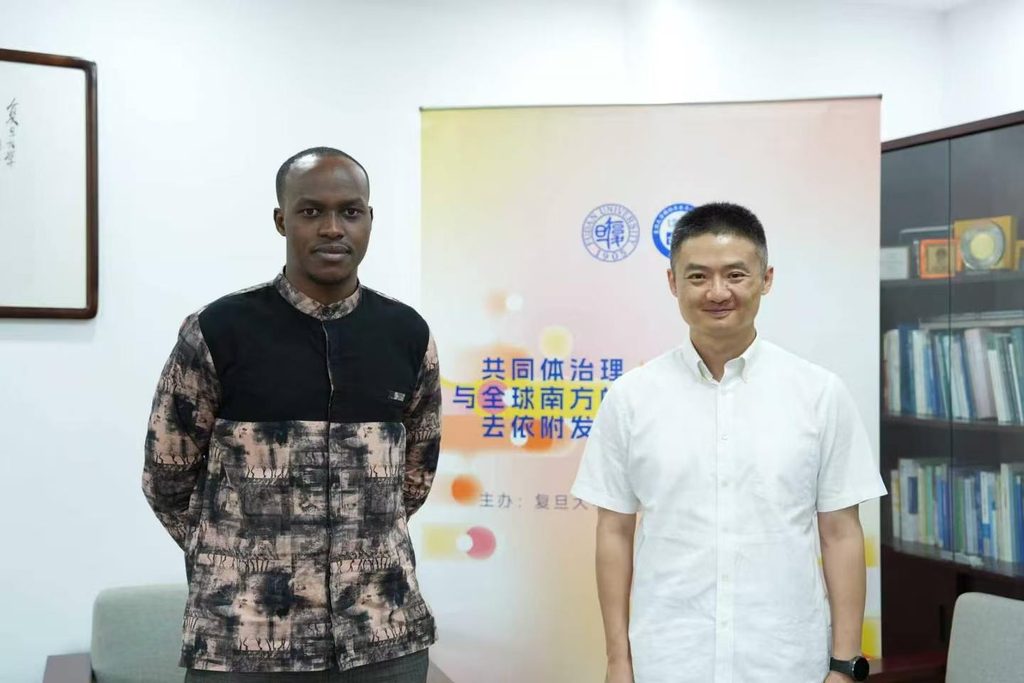
Posing for a photo with the legendary Prof. Yin Zhiguang at Fudan University. © WaveMedia
In Shanghai, one idea kept coming back to me: development should ultimately be judged not only by buildings, roads or impressive statistics, but by the quality of people’s lives. As former Tanzanian President Julius Nyerere argued, development is about people and the totality of their quality of life. That message felt particularly relevant in China, where development is something you can see, touch, and experience in everyday life.
After Fudan, my friend Ang gave me a proper tour of Shanghai. From the beautiful Yu Garden to historic streets and, of course, food, she introduced me to another side of the city. I discovered many dishes I had never imagined existed.
And then I discovered meat with a surprisingly sugary taste. Yes, sugary meat. I am still processing that experience.
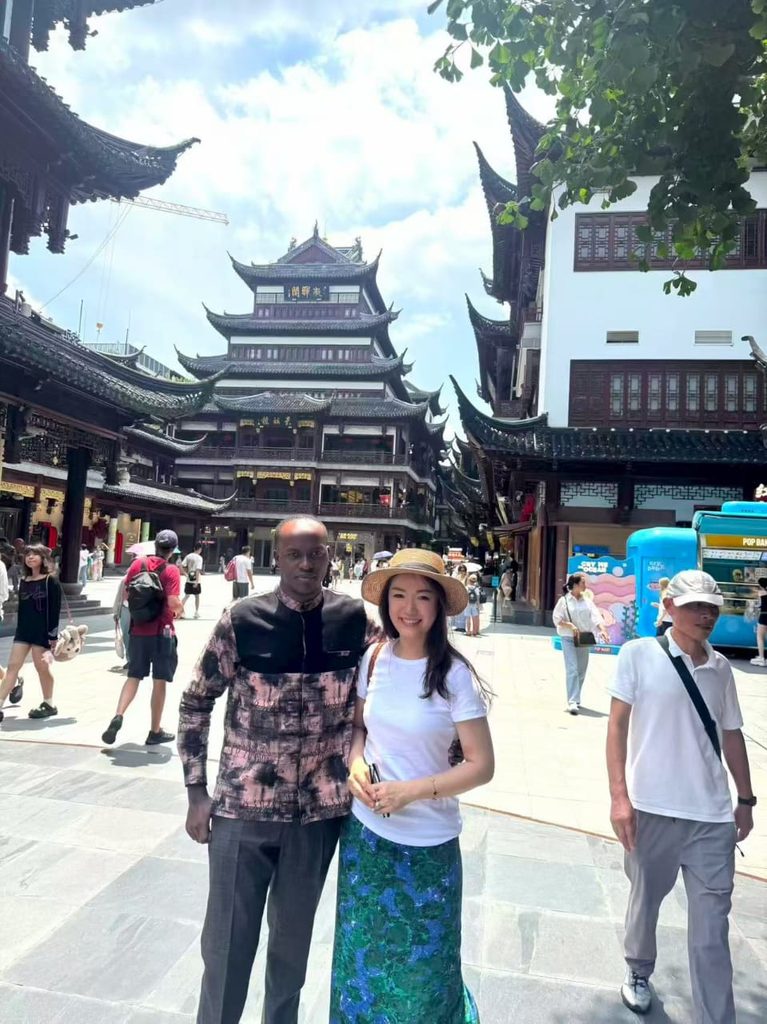
Posing for a photo with Ms. Ang in Shanghai, thanks to the kindness of a young Chinese man we had never met, but who kindly stopped to help take our picture. © Courtesy of a kind stranger.
Ang was also kind enough to make sure my children received Chinese traditional attire. Now my children have something from China to remind them that their father once travelled thousands of miles away and came back with more stories than souvenirs, thanks to her gifts. Ang, thank you.

Looking for models to showcase Chinese outfits—I think I found them! 😄 My little ones are ready for their China debut.
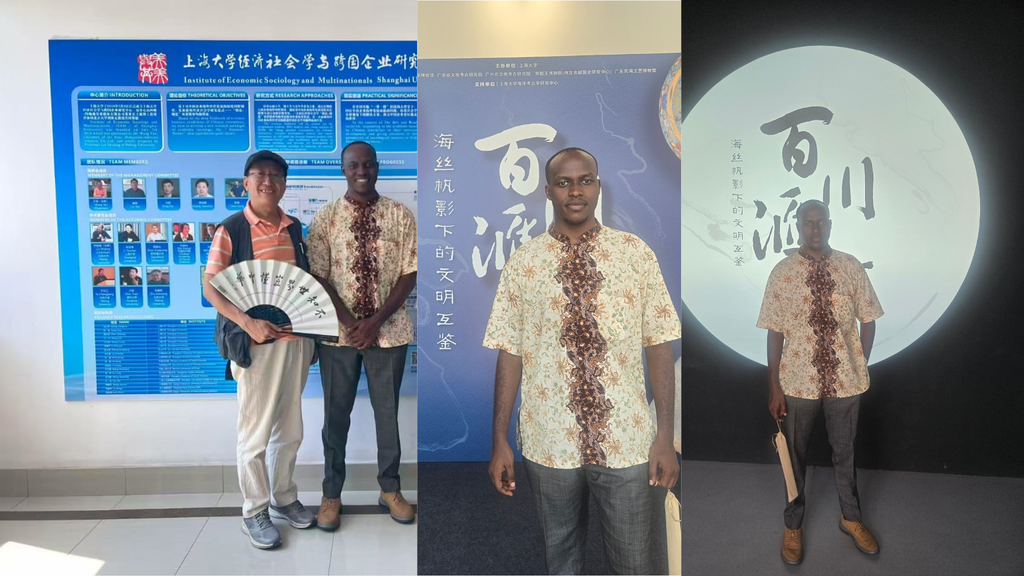
In Shanghai, Professor Liu Yu-Zhao gave us a fascinating tour of Shanghai University—from its faculties and cutting-edge technology to the remarkable contributions its alumni have made to China’s development and leadership. But beyond the impressive facilities, I took away another important lesson: China takes its history seriously and deliberately preserves it for future generations. I saw how the stories, achievements and contributions of those who came before are documented and passed on, ensuring that the next generation knows where the journey began and what they are building upon. It reminded me of a powerful saying from my mother tongue: “If you don’t know where you come from, you cannot know where you are going.” For me, preserving history is not simply about remembering the past; it is a development strategy for shaping the future.
Zhejiang: When the Future Becomes Ordinary
From Shanghai, I took China’s high-speed train to Zhejiang. The train itself deserves a story of its own. It is difficult to explain the experience of travelling at such speed while sitting in what feels like an ordinary, comfortable passenger train. Everything is orderly, efficient and remarkably smooth.
At the station, I was received by Professor Li Zhaoying.
In Hangzhou, I rode a bicycle, ate very good food and experienced something that genuinely left me speechless: a city where artificial intelligence and digital technology are not futuristic concepts. They are everyday life. I visited what felt like an artificial-intelligence city.
At one coffee shop, the entire process—from ordering to delivery—is automated and handled by robots. A robot takes the order, processes it, and drops the last scoop of my ice cream in my cup. I remember thinking: So this is what the future looks like when it becomes normal.
There is a difference between reading about China online and actually walking through its cities. Some things you read about sound exaggerated until you see them with your own eyes. Then the exaggeration disappears. The actual feeling becomes like—people don’t give China enough credit that it deserves.
What remains is the reality of a country that has invested enormously in infrastructure, technology, manufacturing, digital services and urban development. During my visit, I also had fruitful engagements with WaveMedia, Guancha, Zhejiang Media Group (ZMG), Zhejiang International Communication Center (ZICC), Changsha Media Group, Shenzhen News Group, Shenzhen TV (SZTV), Communication University of China and the All-China Journalists Association (ACJA). These engagements reinforced another important lesson for me: journalism and communication play a critical role in shaping understanding, building bridges between societies, and telling the story of development. Investing in journalism and communication to enhance the visibility of all these achievements helps strengthen our ability to tell our stories and forge new partnerships rooted in the spirit of people-to-people exchange. It is my hope that our engagements will therefore bear fruit and enable us to be the change we want to see.
And perhaps the biggest lesson for me is that the question for the rest of the world should not be whether China exists as a major development force, or whether it is the world’s second- or first-largest economy, but how countries around the globe, without exception, can cooperate with China while pursuing their own development priorities and learning from what works.
There is no room for superiority complexes—on either side. There is only room for partnership, learning and mutually beneficial cooperation. And that is what I like most about China’s foreign policy: its emphasis on cooperation, shared development and building partnerships across borders.
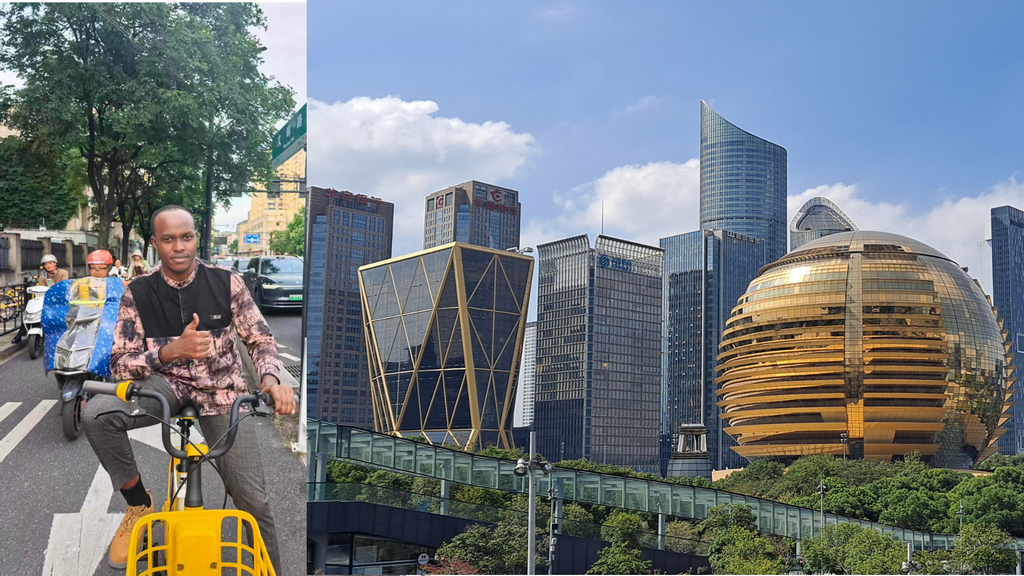
Riding a bike in Hangzhou. ©Professor Li Zhaoying
Changsha: Please Bring Me Water!
Then came Changsha, in Hunan Province. If I were writing this part of the story from a restaurant in Changsha, I might actually have shed a few tears—not because I was emotional, but because of the spice! What delicious food! What dangerously delicious food! Every bite was a battle between my taste buds and my heat tolerance—and, somehow, I kept going back for more.
Changsha taught me that a meal can be both an unforgettable culinary experience and a personal survival challenge. At one point, I looked around and saw local people eating while wiping tears from their eyes. That was a huge relief. I thought: *Ah! So it is not just me. *The food was spicy enough to make me question several decisions I had made in life.
But there was another discovery.
Rice is free.
I was trying to escape the spicy soups and decided to go to KFC. I bought chicken and chips, hoping that I could then enter a restaurant and simply buy some rice. The saleslady told me I did not need to pay for it.
I was confused. “Mifan ma?” I asked. Do you have rice?
She confirmed that they did. “But how much?” Nothing. I insisted. Still nothing. If you buy other dishes, the rice comes with it. If you don’t, then rice is there for free. At that moment, I realised that sometimes the greatest cultural discoveries are not found in museums.
Sometimes they are found in restaurants.
And Changsha?
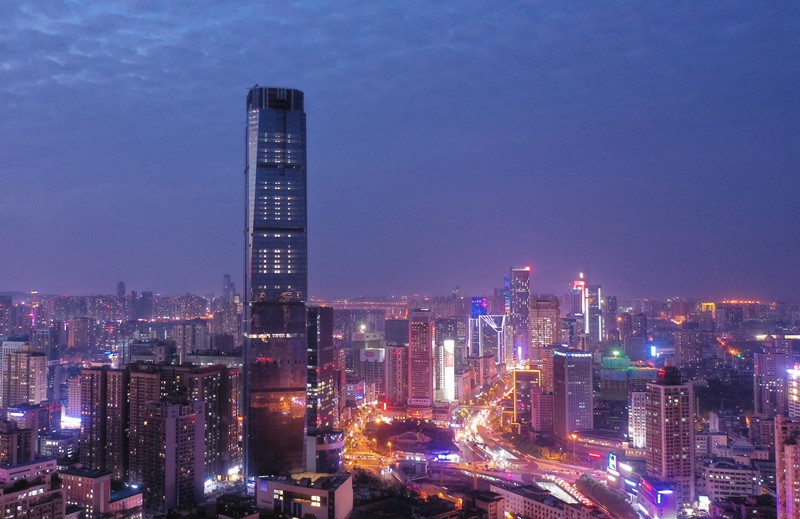
This city does not seem to sleep.
For anyone who loves nightlife, Wuyi Square is the place to be. The lights, crowds, restaurants, shops and energy make the city feel permanently switched on.
If you visit Changsha, do not leave without experiencing it. Just remember to carry water. Lots of water.
Beijing: History, Class and a Tap Away
From Hunan, it was time for Beijing. The capital. The Temple of Heaven. The Forbidden City. The enormous, beautiful public spaces. The fast trains. The packed Metro Line 8.
And the people.
One thing I noticed almost everywhere was how well dressed people were. Chinese people are stylish. Very stylish. If you are not careful, you can suddenly start questioning your wardrobe.
And the smartphones!
Everywhere I looked, people seemed to have incredibly sophisticated devices in their hands. China is operating at another level when it comes to consumer technology. In Beijing, I visited the Communication University of China, where Professor Wu Minsu gave me an outstanding tour—from classrooms and libraries to the beautiful Piano Lake.
But Professor Wu also taught me another important lesson about China: convenience.
After spending days looking for Vaseline for my face, I mentioned it to her. Within seconds, she ordered it online.
Problem solved. In China, online shopping and delivery have reached a level where life can sometimes feel like a series of taps.
You need something?
Tap. Order. Wait. It arrives.
This is not simply about technology. It is about how technology has been integrated into everyday life.
A Kinyarwanda Conversation in Beijing
While in Beijing, I also had a wonderful meeting with my friend Yang Ruoxi, who works at the School of African Studies at Beijing Foreign Studies University.
I had been away from Rwanda for weeks. I had spoken English. I had heard Mandarin. I had struggled with Chinese menus. And then suddenly, I heard Kinyarwanda. Ruoxi speaks very good Kinyarwanda. She studied for her Master’s degree at the University of Rwanda.
For a few moments, Beijing felt like Kigali.
When I told her how much Chinese hospitality had impressed me, she explained that hospitality and harmony are deeply rooted in Chinese culture.
She referred to the Chinese expression:
“美美与共,天下大同” which can be understood broadly as the idea that different forms of beauty can coexist and contribute to harmony and unity.
I left Beijing with something else too.
A Chinese name.
Ms. Yang gave me the name Yu Kai-lai. I have no idea whether I will ever get used to it. But I like it.
Mr. Cha: The Human GPS
And then there was Mr. Cha Seok-Hyung. If China has a human GPS, I found him.
From metro maps to making sure I got off at the right station, from translations to practical advice on navigating cities I had never seen before, Mr. Cha was always there.
Sometimes travelling is not about eMaps. Sometimes it is about meeting the right person. Mr. Cha was one of those people. I am eternally grateful, and I will not forget him.
Shenzhen: From Fishing Village to Technology Powerhouse
Then came Shenzhen. What a city.
Shenzhen’s story is perhaps one of the clearest examples of what deliberate development, openness and experimentation can produce.
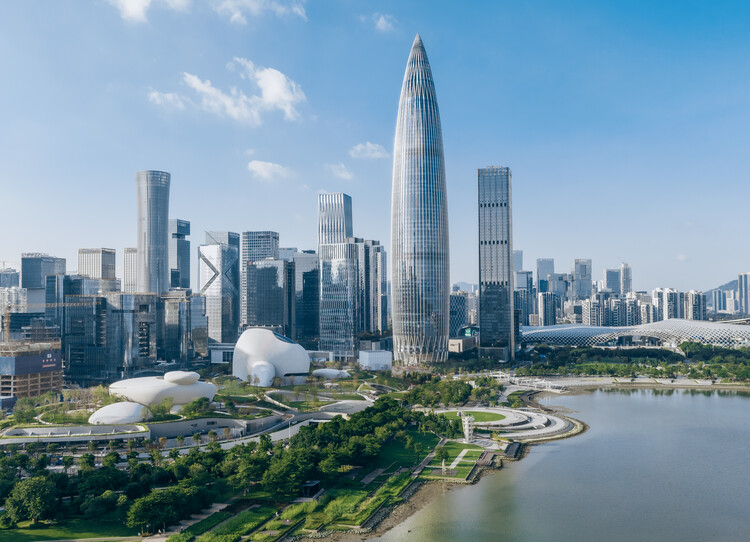
The city was established in 1979 and, in 1980, became China’s first Special Economic Zone. In the decades that followed, it transformed from a small border town into a major international centre for technology, manufacturing, finance and trade.
Standing in Shenzhen today, it is difficult to imagine the city that existed before this transformation.
Skyscrapers. Technology companies. Electric vehicles. Digital services. Modern transport. And innovation everywhere. The story of Shenzhen fascinated me because it is not simply a story about buildings.
It is a story about vision, experimentation, policy, investment, talent and the willingness to try something different. That is perhaps one of China’s most important lessons for developing countries. Sometimes development begins when a country decides to experiment.
And then came a rather exciting discovery for me: Shenzhen is home to BYD—my current dream car! I have driven and owned quite several cars over the years, but after seeing what BYD is doing with fully electric vehicles, I think I have finally found the one for my next chapter. So, if anyone asks me what car I am getting next, the answer is already decided: BYD, fully electric! It was quite a pleasant surprise to realise that the city I was visiting for its technology and innovation is also the home of the car brand that has quietly become my next automotive ambition.
What Stayed With Me
I travelled across six major destinations—Guangzhou, Shanghai, Zhejiang/Hangzhou, Changsha, Beijing and Shenzhen—spanning four provinces and two municipalities.
Of course, every place was different. But after moving from one city to another, certain patterns became impossible to ignore.
1. Discipline
There is a strong sense of order in public spaces. People queue. Transport systems are organised. Public facilities are maintained. There is a general understanding that millions of people living together in massive cities requires discipline.
2. Peace and security
One of the things that struck me most was the sense of security in public spaces. I saw people leave phones and other belongings unattended in places where, in many parts of the world, you might hesitate to do so. That general sense of public order was striking.
3. Infrastructure
China’s infrastructure is top-notch. Airports. High-speed trains. Metro systems. Roads. Bridges. Stations. Urban planning.
You travel through one city and think, *This is impressive. *Then you arrive in another city and realise there is more. The infrastructure is not simply about moving people from A to B. It is about connecting economies, cities and opportunities.
4. Quality of life
This perhaps impressed me most. When it is hot, public spaces have cooling systems. When people need transport, there are multiple affordable options. When people need food, there is an enormous variety of choices. When they need something from a shop, delivery is often only a few taps away. When they need healthcare, they can access both traditional and modern forms of medicine. When they need education, there are institutions and opportunities at different levels. Development becomes meaningful when it enters people’s daily lives.
5. Technology that solves ordinary problems
China reminded me that technology does not have to be spectacular to be transformative. Sometimes the most powerful technology is simply the technology that makes life easier.
Paying for something. Ordering food. Getting a taxi. Finding a train. Buying medicine. Receiving a package. Ordering coffee. A lot of this can happen from a phone. An important tip for a new traveller to China—install Alipay, WeChat and all its apps, including Didi; you will thank me later.
My conclusion is that the real achievement is not having the technology. It is making the technology useful to every member of society.
6. Economic development you can feel
China’s development is not only visible in GDP figures. You can see it in people’s consumption, mobility, housing, shopping habits, access to services, and purchasing power. Economic statistics tell one story. Walking through a Chinese city tells another. And sometimes the second story is more powerful.
7. Scale and long-term thinking
Perhaps the biggest lesson I took from China is the power of long-term vision and strategic planning. My visit to China brought to life many of the key development concepts I had been reading about in The Governance of China, Volume V, by H.E. Xi Jinping. What I had encountered in the pages of the book became tangible through the people, infrastructure, innovation, and development models I witnessed firsthand.
China does not seem to think only in terms of what is needed today, but in terms of what its cities, industries and people will need decades from now. A road is not simply a road; a railway is not simply a railway; and a technology park is not simply a collection of buildings. Each is part of a much larger, interconnected development vision. Under the leadership of H.E. Xi Jinping, General Secretary of the Communist Party of China, the Chinese Government has demonstrated a remarkable ability to look far ahead, set ambitious long-term goals, plan systematically and pursue those plans with discipline and consistency. What impressed me most is not simply the scale of China’s development, but the foresight behind it—the ability to anticipate tomorrow and begin building for it today.
8. Hospitality
And then there are the people.
Mr. Weng. Ang. Professor Li. Professor Wu. Yang Ruoxi. Mr. Cha and my good friend Mr. Yin Qingri, famously known in Rwanda Mr. Edward, staff members of the Chinese Embassy in Rwanda, led by Madam Lin Hang, all the young and old women, men and Chinese people I met in the metro stations, on the streets, who helped me with translations and orientation all many people whose names I may not have remembered, but whose kindness I will. Thank you.
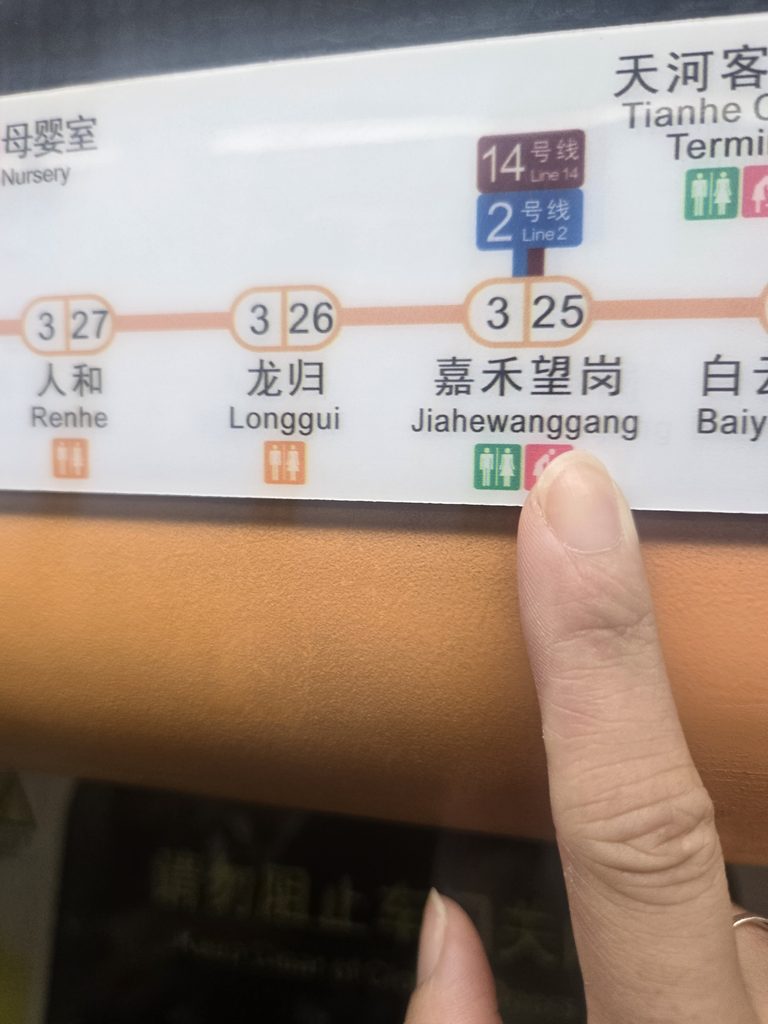
A kind lady’s finger pointing out which stop to get off at on the metro.
All these unknown, kind people really made the journey easier and more personal. They reminded me that international cooperation is not only about governments, agreements and conferences. It is also about people sitting together, sharing food, exchanging stories and helping one another find their way around.
What I Am Taking Home
I came to China expecting to learn about a country. I am leaving having learned about development, people and possibilities. I have learned that technology is most powerful when it improves ordinary people’s lives. I have learned that infrastructure matters, but what matters even more is what infrastructure enables people to do.
I have learned that countries in the Global South have enormous opportunities to learn from one another—not by copying blindly, but by exchanging experiences and adapting solutions to local realities.
Throughout my stay, I managed to learn six Chinese words—enough, I thought, to survive in China! Nǐ hǎo: hello; méiyǒu: there isn’t; mǐfàn: rice; duì: right/correct; xièxie: thank you; and bú kèqi: you’re welcome. Six words may not qualify me as a Chinese speaker, but they certainly helped me navigate food, directions, gratitude, and a few everyday encounters. 😄
And I have learned something else.
Never judge a country only by what you read about it.
Go there. Walk its streets. Meet its people. Eat its food. Try to order something in a language you do not understand.
Burn your tongue on Changsha chilli.
Make friends. And then make your own conclusions.
See You Again, China
On 30 July, I boarded my flight from Guangzhou Baiyun International Airport.
I was leaving China. But somehow, it did not feel like goodbye. It felt like the end of a chapter. I arrived with expectations. I am leaving with memories, friendships, lessons, and a much deeper appreciation of what China has become.
From the spicy streets of Changsha to the futuristic skyline of Shenzhen. From the academic halls of Fudan to the historic gardens of Shanghai. From the high-speed trains of Zhejiang to the grandeur of Beijing.
From the warmth of people to the countless strangers who smiled, helped, and welcomed me along the way.
China, you surprised me.
You challenged some of my assumptions.
You made me laugh.
You made me sweat.
You made me tear up—mostly because of the Changsha chilli!
And, somewhere between the high-speed trains, the dumplings, the robots, the metro stations, the late-night football and the endless cups of tea, you became a place I will remember fondly.
So no.
It is certainly not goodbye.
It is see you again.