
The initiative is intended to reduce the amount of electricity the charging stations draw from the national grid while promoting the use of renewable energy.
In an exclusive interview with IGIHE, KABISA Chief Executive Officer Poshia Muhoza said the pilot project is being implemented both at the company’s charging stations and at its offices.
“This programme is being implemented at our stations as well. We are also testing the use of electricity generated from solar power here at our offices,” she said.
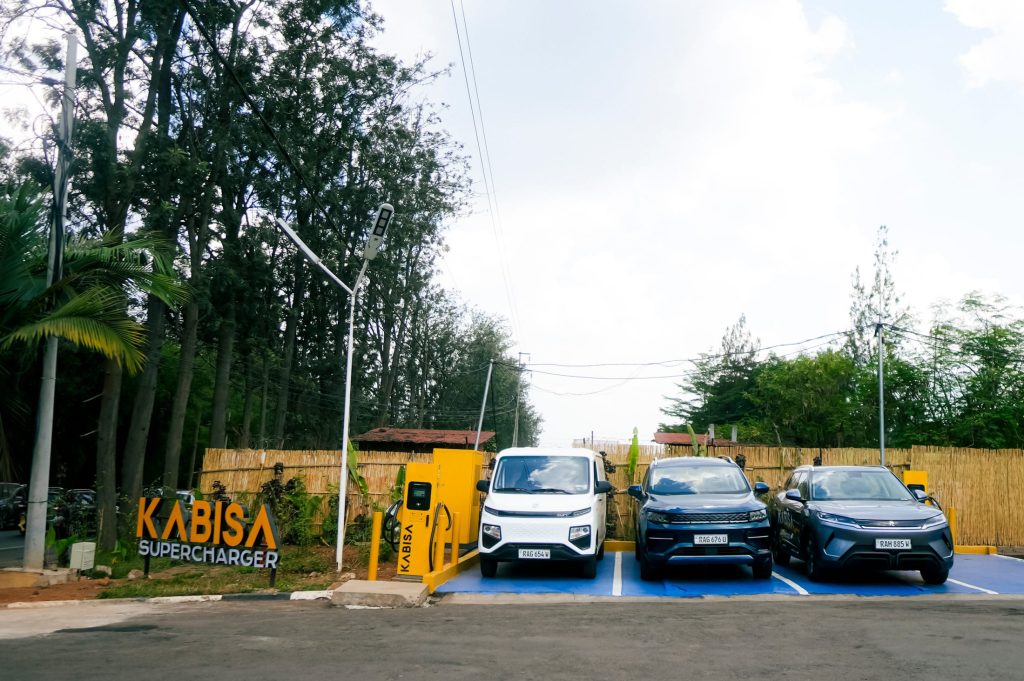
KABISA currently operates eight electric vehicle charging stations in Kigali. The company plans to establish additional stations in secondary cities, including Musanze, Rubavu, Huye and Rusizi.
The pilot comes as Rwanda continues to promote electric mobility, alongside efforts to expand the infrastructure needed to provide charging services for electric vehicle users.
Muhoza said the government continues to facilitate investment in the sector, particularly by making it easier for investors to obtain permits to construct charging stations and access the equipment required for their operation.
“The national policy continues to support the use of electric vehicles. Currently, the government is facilitating investors building electric vehicle charging stations by making it easier to obtain permits quickly and access the transformers required,” she said.
She added that the removal of import taxes on electric vehicles, together with a government programme targeting electric vehicles to account for 30% of vehicles used by public institutions, are among the measures giving investors confidence in the sector.
Muhoza said that in discussions with the government and institutions responsible for electricity distribution, they have been assured that projects are underway to increase domestic electricity generation to meet growing demand, including demand from electric vehicle users.
She said the company had been shown several projects being pursued by the government, giving it confidence to continue importing electric vehicles into the country.
“So far, the government has not told us that the electricity available in the country is insufficient. We are continuing to import electric vehicles, and we have also signed an agreement with RentCo Africa Limited that will make it easier for people to access electric vehicles through leasing,” she said.
Her comments come amid concerns from some observers over the relationship between occasional electricity shortages and the growing number of electric vehicles using the national grid.
Government officials, however, explain that the reduction in electricity supply that sometimes occurs during dry seasons is linked to declining water levels used by hydropower plants to generate electricity.
Minister of Infrastructure Damien Murwanashyaka recently told senators that the government is implementing several projects to increase electricity generation, with the aim of addressing concerns over electricity supply by 2029.
KABISA says some of the electric vehicles it sells can travel up to 500 kilometres on a fully charged battery. The company also says the cost of electricity used by the vehicles can be up to 70% lower than the cost of petrol or diesel.
The government has also recently announced plans to build electric vehicle charging stations in areas where limited commercial returns may not be sufficient to attract private investors, in an effort to bring charging services closer to users.