
The central bank says the growth in savings has enabled financial institutions to increase lending and support economic activities.
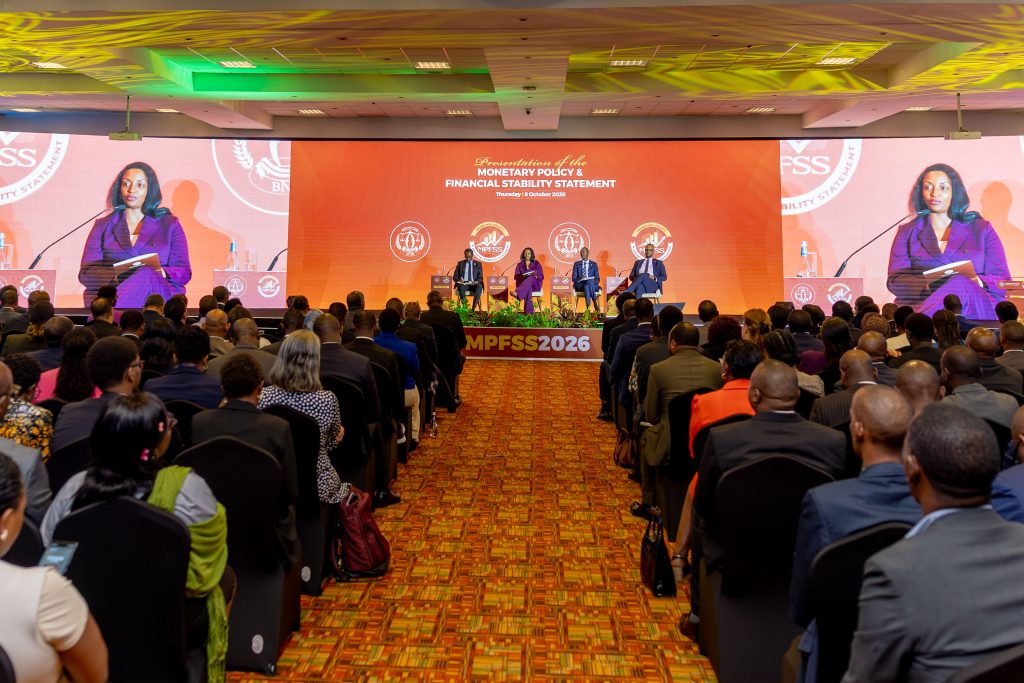
Speaking on October 8, 2026, while presenting the Monetary Policy and Financial Stability Statement, BNR Governor Soraya Hakuziyaremye said deposits were a key pillar of financial sector development because they enable institutions to extend loans and invest.
However, she noted that challenges remain because a large proportion of deposits can be withdrawn at any time, highlighting the need for measures to promote long-term savings.
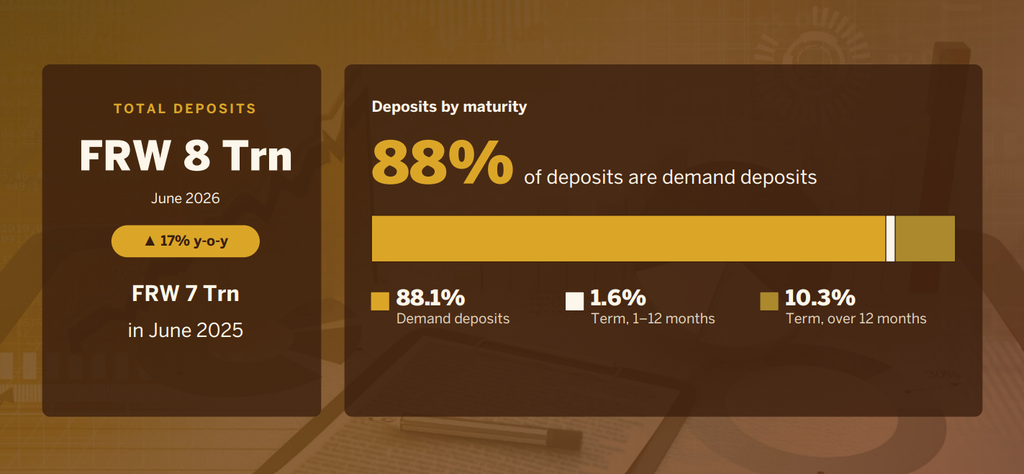
BNR data show that 88% of total deposits held in banks and microfinance institutions are in accounts that allow withdrawals on demand, while only 10.3% are held in savings accounts with maturities exceeding 12 months.
“This reliance on short-term funds is a concern and highlights the need to strengthen efforts to encourage long-term savings. Nevertheless, lending activity continues to grow,” Hakuziyaremye said.
Banks have approximately 2.6 million depositors, of whom 41% are women. Microfinance institutions serve about 2.9 million depositors, with women accounting for 53%.
The number of people holding savings accounts stands at approximately 2.1 million in banks and 840,000 in microfinance institutions.
Financial Sector Assets Grow by 22.8%
Hakuziyaremye said the financial sector’s total assets increased by nearly 23% in the first half of 2026, reaching RWF 17.5 trillion.
The growth was largely driven by increased deposits, insurance premiums, investment returns and pension contributions.
Banking sector assets rose by 20% to RWF 11.6 trillion, while pension sector assets increased by 38% to RWF 3.2 trillion. Insurance sector assets grew by 11% to RWF 1.4 trillion, while microfinance institutions’ assets rose by 26% to RWF 1.3 trillion.
Lending also expanded during the period. Loans issued by banks increased by 22% to RWF 7 trillion, while lending by microfinance institutions grew by 27% to RWF 834 billion.
Construction continued to account for the largest share of new bank lending, receiving 23%, up from 19% in the first half of 2025. Trade accounted for 17%, while agriculture received 5%, compared with 3% during the same period last year.
Hakuziyaremye said non-performing loans remained below 5%, standing at 3% in banks and 2.3% in microfinance institutions.
However, she noted that access to credit remained a challenge.
“When you compare the number of depositors with the number of borrowers, you find that 912,000 people have loans from banks, while 440,000 have loans from microfinance institutions. I would say that access to credit remains one of the areas where financial inclusion is still weak,” she said.
She added that Rwanda’s National Financial Inclusion Strategy sets targets to expand access to credit for households and small and medium-sized enterprises.
Hakuziyaremye stressed that the goal was to ensure that having an account with a bank, a microfinance institution or through a mobile phone translates into meaningful use of financial services.