

How prepared is Eastern Africa to respond when the next major crisis strikes? And beyond deploying personnel, can regional forces sustain operations long enough to accomplish their missions?
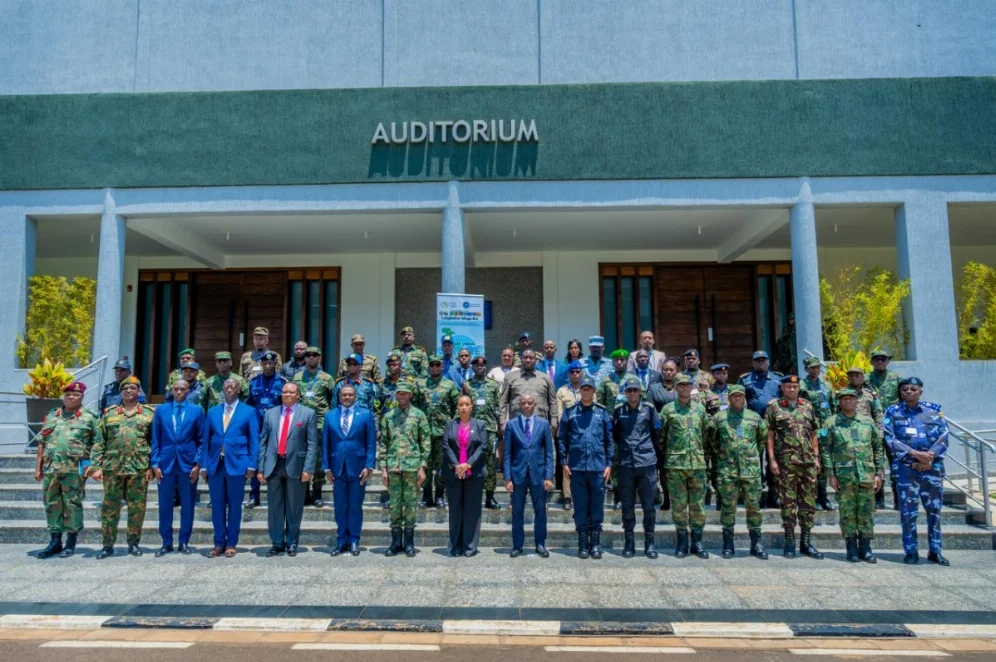
These are among the critical questions driving a two-week logistics exercise by the Eastern Africa Standby Force (EASF), which officially opened on Monday at the Rwanda Military Academy in Gako, Bugesera District.
Running from 19 to 30 October, the Logistics Map Exercise (LOG MAPEX) brings together military, police and civilian personnel from nine EASF member states to assess regional deployment capabilities, identify operational gaps and strengthen coordination in responding to emerging security and humanitarian challenges.
The exercise reflects a broader ambition within Africa’s peace and security architecture: building regional mechanisms capable of responding to crises through coordinated action, shared capabilities and greater operational preparedness.
Beyond military strength: Why logistics matters
Opening the exercise, Rwanda Defence Force Chief of Defence Staff Gen Mubarakh Muganga challenged participants to look beyond theoretical preparedness and focus on practical solutions that can translate regional commitments into effective operational capabilities.
He emphasised the importance of testing planning assumptions, clarifying responsibilities and identifying weaknesses that could undermine the timely deployment of regional forces.
For Muganga, the real measure of the exercise will not simply be the successful completion of its activities, but whether participating countries can translate the lessons identified into measurable improvements in their logistical systems and operational readiness.
He reaffirmed Rwanda’s commitment to regional security cooperation and called for stronger collective efforts to address existing capability gaps.
A force is only as ready as its ability to deploy
EASF Director Brig Gen Ronald Rwivanga placed logistics at the centre of the discussions, arguing that assembling a regional force is only the beginning of operational preparedness.
“A force is not truly ready because it has been assembled. It is ready when it can deploy in time, arrive with the right capabilities, sustain itself in the operational environment, and accomplish its assigned mission,” he said.
His remarks highlighted a fundamental challenge facing multinational operations: ensuring that personnel, equipment, supplies and essential services can move across borders efficiently and remain available throughout a mission.
In practice, this means that military capability alone is insufficient. Effective regional response also depends on transport arrangements, supply chains, medical support, communication systems and coordination among participating countries.
Rwivanga described logistics as a strategic capability that can ultimately determine whether a mission succeeds or fails.
The exercise will therefore examine how member states can better coordinate their resources, address deployment bottlenecks and ensure that regional forces remain operational under challenging circumstances.
Strengthening Africa’s capacity to respond to its own crises
The EASF forms part of the African Union’s wider peace and security architecture and is designed to facilitate rapid regional responses to conflicts and other emergencies, including preventive interventions, peace support operations and humanitarian assistance.
Having attained operational readiness in 2014, the force continues to undertake periodic evaluations and joint exercises to assess the preparedness of its military, police and civilian components.
The ongoing exercise in Rwanda provides another opportunity to examine whether existing plans, commitments and pledged capabilities can function effectively in a multinational operational environment.
It also underscores the growing importance of regional ownership in addressing Africa’s peace and security challenges.
Kenya’s High Commissioner to Rwanda, Janet Mwawasi Oben, emphasised that effective crisis response requires more than the professionalism of individual national forces.
She highlighted the importance of strong logistical systems, sustained regional cooperation and functioning institutions, noting that durable peace depends on complementary efforts across diplomacy, political engagement and defence cooperation.
Putting regional capabilities to the test
According to Brig Gen Robert Kabage of Kenya, the exercise’s lead facilitator, the programme will begin with four days of preparatory training to establish a common understanding among participants before transitioning to practical activities.
Through interactive lectures, group discussions and simulations, participants will examine deployment scenarios, assess logistical requirements and identify solutions to potential operational challenges.
The exercise is expected to generate practical recommendations for improving planning, coordination and the overall preparedness of participating countries.
Beyond the Gako exercise, the EASF is preparing for additional assessments and field activities.
Rwanda is scheduled to undergo its next readiness evaluation from 1 to 6 November 2026, while a separate humanitarian assistance and disaster response field exercise is planned for Kisumu, Kenya, in 2027.
The planned exercise in Kenya will test several capabilities pledged by member states, including Rwanda’s medical evacuation capacity, Kenya’s reconnaissance assets and Ethiopia’s strategic airlift capabilities.
These activities are intended to establish whether regional resources can be mobilised and coordinated effectively when confronted with real operational demands.
From regional commitments to operational readiness
As Eastern Africa continues to confront complex and interconnected security and humanitarian challenges, the exercise in Rwanda highlights an important reality: regional cooperation must extend beyond agreements and institutional frameworks to deliver practical capabilities.
For the participating countries, the next two weeks will provide an opportunity to identify what works, address what remains inadequate and strengthen the systems required for collective crisis response.
Ultimately, the significance of LOG MAPEX lies in its contribution to a more prepared, coordinated and responsive regional force—one capable of translating Africa’s collective peace and security ambitions into action when it matters most.