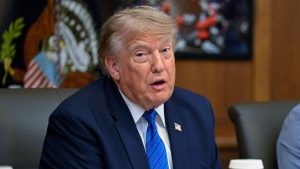
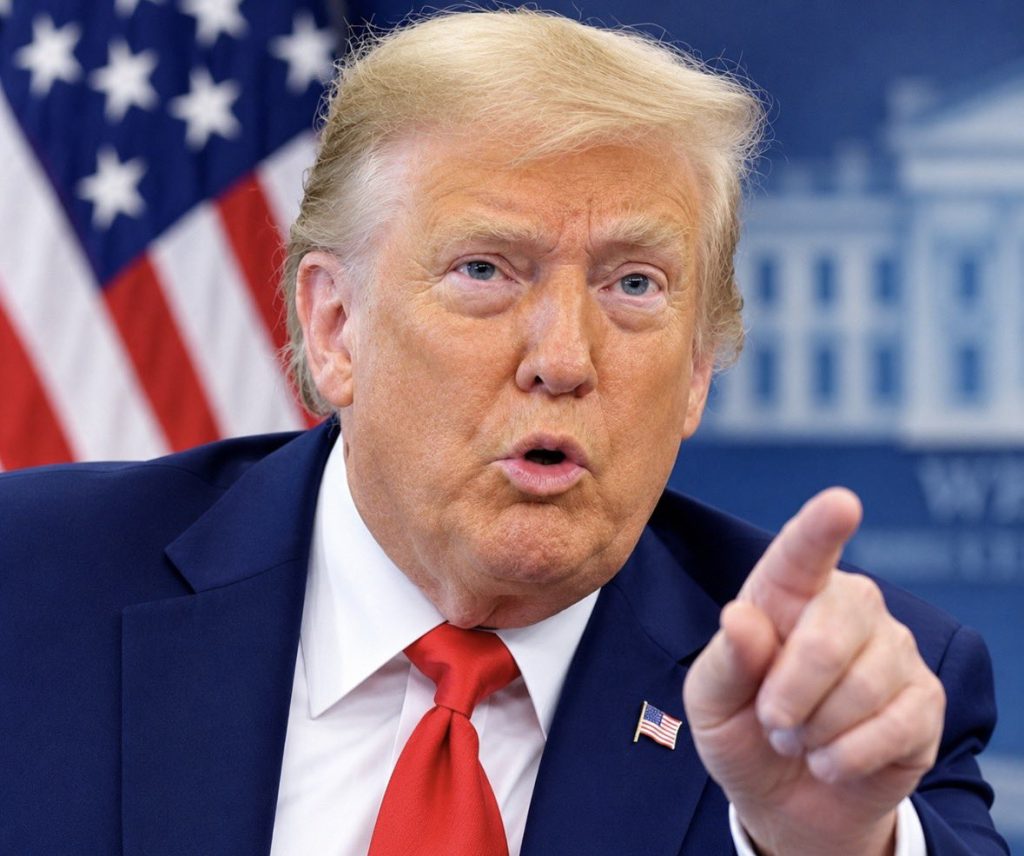

Trump made the remarks at the White House on November 9, 2026, after meeting Qatar’s Prime Minister, Sheikh Mohammed bin Abdulrahman bin Jassim Al Thani.
“The war with Iran, militarily, is over. What we are doing now is maintaining the current situation,” he said.
Trump said Iran’s military had been severely weakened by the conflict, but stressed that the issue was not completely resolved because the United States wanted a lasting solution that would prevent Tehran from developing nuclear weapons.
He said “positive steps” were being made in negotiations and that he saw a strong possibility of bringing the war to a permanent end.
“They are talking to us, and they are speaking respectfully. We will see how things go. I don’t think military action is very necessary at this time, but we are ready and have the capability to act whenever circumstances change,” he said.
The remarks mark a significant shift from Trump’s previous warnings that he could order intensified attacks on Iran if Tehran failed to meet Washington’s demands.
In an interview with C-SPAN, Trump reiterated that the United States could launch a much more powerful attack if Iran continued activities Washington considers a threat to its security.
He said a new strike could be “five times” more powerful than previous attacks. However, he indicated that Gulf countries, including Qatar, Saudi Arabia, the United Arab Emirates, Bahrain and Kuwait, preferred maintaining the current situation rather than allowing the conflict to escalate.
Trump said one of the issues the United States could not accept was Iran possessing nuclear weapons, adding that Washington continued to monitor Tehran’s military activities and nuclear facilities.
US Military Forces Remain in Place
Although Trump said further military action was not necessary at present, he did not announce any plans to reduce the thousands of American troops deployed near Iran.
The United States is also continuing maritime operations aimed at preventing Iranian oil products from reaching international markets.
“We are continuing. We have the largest maritime interdiction operation ever,” Trump said.
In recent days, US forces have also carried out targeted strikes against Iranian facilities. The US military command responsible for the region said it had intercepted a vessel departing from an Iranian port after it refused orders to stop.
Qatar remains among the countries seeking to facilitate negotiations between Washington and Tehran. Reports indicate that Qatari officials recently presented both sides with new proposals concerning Iran’s nuclear programme.
Iran, meanwhile, says the United States must first stop its blockade of Iranian ports, lift sanctions, release frozen Iranian assets, provide compensation for war damage and help end hostilities in the region before nuclear negotiations can begin.
Iranian Foreign Minister Abbas Araghchi said the war could not be brought to an end through military strikes or additional sanctions.
He said the solution lay in “speaking the language of respect”, urging the United States to accept Iran’s demands outlined in its two-day proposal.
Araghchi also said Trump should have realised earlier that he would not achieve through war the objectives he had set out to accomplish.
Oil Prices Begin to Fall
Trump’s remarks quickly affected international oil markets.
On November 10, the price of a barrel of oil fell below $90 for the first time since August 31, 2026.
The decline was largely driven by growing expectations that oil supplies from the Middle East could become more readily available in the United States and other markets.
There were also signs of increased liquefied natural gas shipments through the Strait of Hormuz following indications that the war could be coming to an end.
In October, 31 LNG carriers passed through the strait. Of these, 23 were carrying gas from Qatar’s Ras Laffan port, while eight departed from Das Island in the United Arab Emirates.
Data from Kpler shows that 42 LNG cargoes were loaded in October, up from 27 in September, as Qatar and the UAE continued efforts to restore shipping operations disrupted by the war.
Despite Trump’s declaration that the war is over, negotiations on a lasting agreement have yet to conclude. Iran and the United States remain divided over issues including sanctions, the nuclear programme, military activities in the region and the blockade of Tehran’s ports.