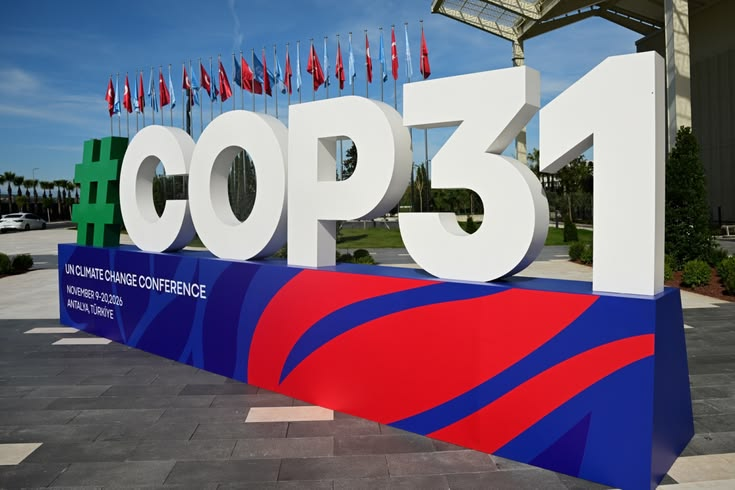

Global leaders and climate negotiators are focusing on seven key issues as the 31st United Nations Climate Change Conference (COP31) takes place in Antalya, Türkiye, from 9 to 20 November 2026.
The Conference of the Parties (COP) is an annual international meeting where countries come together to discuss climate change, agree on solutions, and strengthen global efforts to protect the environment.
According to the United Nations Environment Programme (UNEP), the discussions are centred on limiting global warming, translating climate commitments into action, increasing climate finance, strengthening climate adaptation, accelerating the transition to clean energy, reducing methane emissions and improving international cooperation.
These priorities come amid growing concerns about rising global temperatures and the need for stronger measures to help countries and communities respond to climate change.
Keeping warming as close to 1.5°C as possible
First, limiting global warming to 1.5°C above pre-industrial levels remains a major priority for countries participating in COP31.
However, UNEP warns that the world is on course to exceed this threshold, highlighting the urgency of reducing greenhouse gas emissions and strengthening climate action.
“The science is clear. Despite some progress in recent years, the world is set to cross 1.5°C of global warming,” said Martin Krause, Director of the Climate Change Division at UNEP.
Krause stressed the importance of making any temperature overshoot as small and short-lived as possible, saying: “We must make this overshoot as small and brief as possible. COP31 offers a critical opportunity to turn climate change commitments into action – and to start bending the temperature curve back down.”
Turning climate promises into action
Beyond limiting global warming, countries are expected to focus on translating existing climate commitments into practical measures that deliver results.
In particular, discussions will address expanding clean electricity, reducing dependence on fossil fuels, halting deforestation and strengthening resilience to climate impacts.
In this regard, Türkiye has highlighted voluntary targets, including increasing global electrification to 35 per cent by 2035 and reducing energy intensity in buildings by at least 25 per cent within the same period.
Emphasising the importance of delivering measurable progress, Krause said: “The credibility of the Paris Agreement depends on whether decisions made at international climate conferences translate into tangible results on the ground,”
Delivering climate finance to countries that need it most
Alongside the implementation of climate commitments, financing remains a major concern, particularly for developing countries facing significant costs in addressing climate change.
At COP31, discussions are expected to cover the commitment made at COP29 to provide US$300 billion annually to developing countries by 2035. In addition, countries will consider the broader ambition of mobilising US$1.3 trillion in climate finance annually by the same year.
Such funding is intended to support emissions reduction, climate adaptation and responses to climate-related losses and damage.
However, disagreements remain over how the funding should be sourced and distributed. Addressing this challenge, Krause noted: “While most countries recognize the need for more climate finance, disagreements remain over where the money should come from and how it should be channeled.”
He added: “We expect these questions to be central to discussions at COP31.”
Helping communities adapt to a warmer world
While climate finance is essential, countries must also strengthen their ability to prepare for and respond to climate impacts.
Consequently, adaptation discussions will focus on advancing the Global Goal on Adaptation, strengthening national adaptation plans and improving support for vulnerable communities.
These efforts are particularly important as communities continue to face climate-related challenges, including extreme heat, floods and droughts. Furthermore, sustainable cooling solutions are expected to feature in discussions as rising temperatures increase demand for cooling systems.
Speeding up the clean energy transition
Another important area of discussion is the transition to clean energy, which remains central to global efforts to reduce greenhouse gas emissions.
According to UNEP, energy systems account for approximately 70 per cent of global greenhouse gas emissions. Therefore, transforming the energy sector is essential to addressing climate change.
In this regard, discussions are expected to highlight renewable energy, electrification, energy efficiency and stronger electricity grids.
Additionally, the conference will feature the Antalya Compact for Energy Efficient Buildings, which aims to promote improved energy performance in the building sector.
Cutting methane emissions and tackling waste
Beyond the energy transition, reducing methane emissions across the energy, agriculture and waste sectors is another priority expected to shape COP31 discussions.
UNEP highlights the need to address methane emissions from sources such as landfills and organic food waste while improving waste management systems.
This is particularly important because methane is a potent greenhouse gas that contributes significantly to global warming. As a result, reducing its emissions can support wider efforts to limit temperature increases.
Strengthening International Climate Cooperation
Finally, international cooperation will be essential as nearly 200 countries come together to negotiate shared climate priorities and solutions.
Although countries may have different national interests and geopolitical positions, they are expected to seek common ground on climate finance, emissions reduction, adaptation and the implementation of existing commitments.
Emphasising the importance of collective action, Krause said: “No single COP can solve the climate crisis, but COP31will hopefully move us a real step forward.”
As negotiations continue in Antalya, the discussions are expected to contribute to global efforts to address climate change, strengthen resilience and translate international commitments into practical action.