
Oria Kije Vandeweghe, OIF’s Director of Communications, says the reforms were aimed at improving the organisation’s effectiveness and strengthening its role in political affairs.
In an interview with IGIHE in Phnom Penh, Vandeweghe outlined the changes introduced since Mushikiwabo was first elected in 2018, highlighting the growing involvement of young people and increased interest in Francophonie activities.
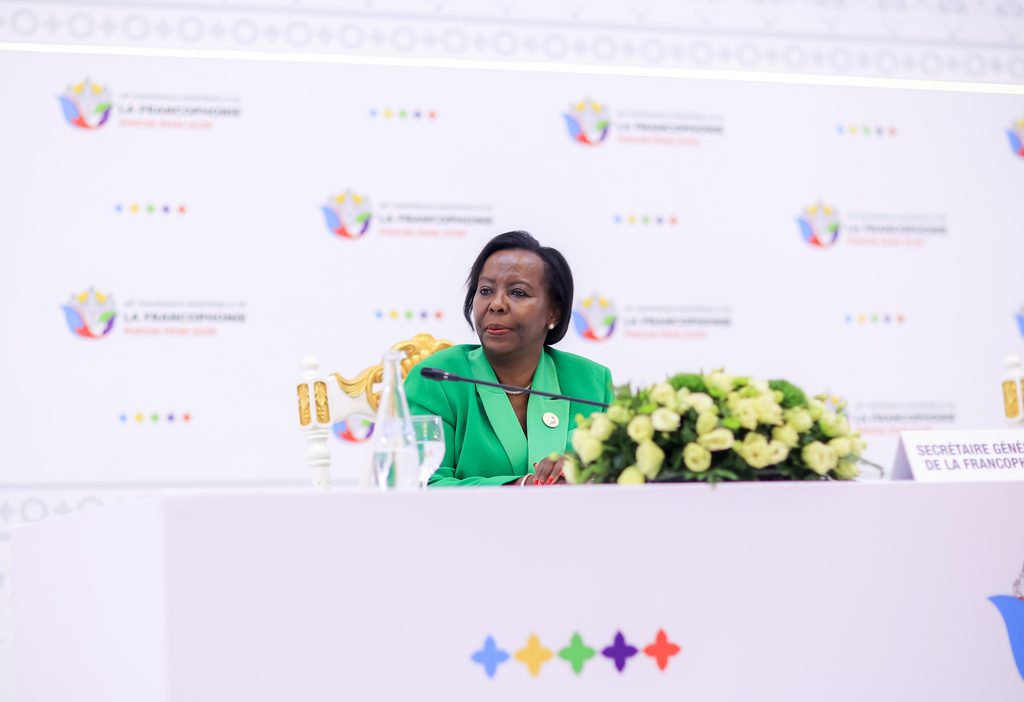
It has been eight years since Louise Mushikiwabo was elected Secretary-General of the Francophonie. During this period, OIF has undertaken reforms aimed at improving its operations and strengthening its ability to achieve its objectives.
She was first elected in October 2018 at the 17th Francophonie Summit in Yerevan, Armenia. Heads of state and government entrusted her with, among other responsibilities, reforming and improving the organisation’s operations.
In November 2022, she was re-elected for a second term at the 18th Francophonie Summit in Djerba, Tunisia, where she continued the reform agenda.
Oria Kije Vandeweghe said the period had been marked by significant changes within the organisation.
“She was elected with a clear mandate to reform and improve the organisation’s operations so that it could reach the standards of other international organisations,” she said.
Programmes Reduced from 45 to 15
One of the major changes involved restructuring OIF’s programmes. When Louise Mushikiwabo took office in 2018, the organisation had approximately 45 programmes operating across its member states.
Given the limited financial resources available, she initiated a review to identify areas where the Francophonie could make a meaningful impact while ensuring that available funds were used more efficiently.
The review led to a reduction in the number of programmes to 15. The aim was to concentrate resources on selected activities capable of delivering tangible results in the communities where they are implemented.
The Director of Communications said the COVID-19 pandemic period was used to accelerate the reforms.
“That period was not wasted at all. Instead, the organisation and the Secretary-General made good use of it to implement reforms,” she said.
OIF’s activities include promoting the French language, education, youth employment and women’s economic empowerment. One of its initiatives is “La Francophonie avec Elles”, which is also implemented in Rwanda.
Reforms to Operations and Financial Management
The reforms went beyond the organisation’s programmes and extended to its internal operations.
Oria Kije Vandeweghe said changes were made to administrative regulations and management procedures, budget preparation, the organisation’s institutional structure and staff coordination.
The objective was to make OIF more efficient while strengthening oversight and transparency in the management of its resources.
She said the organisation’s finances are audited annually by an independent Court of Auditors. After several years of audits by Morocco’s Court of Auditors, the responsibility has now been taken over by the Court of Auditors of the Kingdom of Belgium.
“OIF’s accounts have been approved every year without any difficulties since Louise Mushikiwabo took office,” she said, describing this as one of the key achievements during her tenure.
OIF Strengthens Its Role in Governance Issues
Another important aspect of the eight-year review is the strengthening of OIF’s political role, particularly in supporting countries facing governance challenges or disruptions to constitutional order.
The 2000 Bamako Declaration provides for measures against OIF member states when constitutional order is interrupted. These measures may include suspending a country from the organisation.
Under Louise Mushikiwabo’s leadership, discussions began on introducing additional approaches that would allow the organisation to maintain dialogue with countries experiencing political difficulties.
This led to the adoption of mechanisms for supporting, monitoring and assessing countries facing crises. The mechanisms are intended to support political transitions and help those countries gradually resume their participation in the Francophonie.
Guinea is one example of a country where these mechanisms have been applied, according to the Director of Communications.
OIF also continues to support countries in conducting elections and monitoring democratic processes. Vandeweghe said these efforts help strengthen member states’ confidence in the organisation’s political role.
Young People Show Growing Interest in Francophonie
Oria Kije Vandeweghe said one of the major achievements over the past eight years has been the increased visibility of OIF.
She noted that media coverage of the 20th Francophonie Summit in Phnom Penh demonstrated growing public interest in the organisation and its activities.
She also highlighted the increasing involvement of young people, particularly on social media, in discussions about Francophonie and the French language.
The Director of Communications said this was an encouraging development for an organisation that still has the potential to achieve more.
“Never before has OIF been talked about as much as it is being talked about now, here in Phnom Penh,” she said.
Election of New Secretary-General Postponed by One Year
The review of Louise Mushikiwabo’s eight years in office comes at a significant moment for OIF.
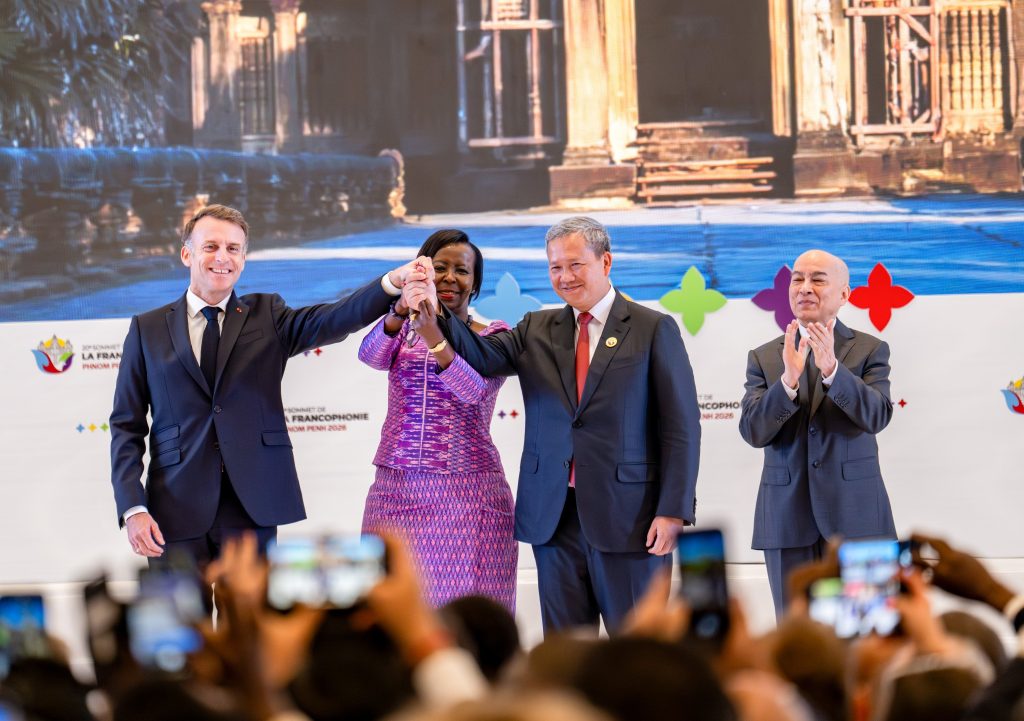
Leaders of French-speaking countries who met in Phnom Penh failed to reach an agreement on who should become the organisation’s next Secretary-General. The election was postponed by one year, allowing Mushikiwabo to remain in office during the transitional period.
OIF is now entering another phase in which it must continue fulfilling its mandate while preparing for the next stage of its leadership.
Over the past eight years, the organisation has reduced its programmes, reformed its operations, strengthened financial transparency and expanded its political engagement. These changes have marked an important phase in its development.