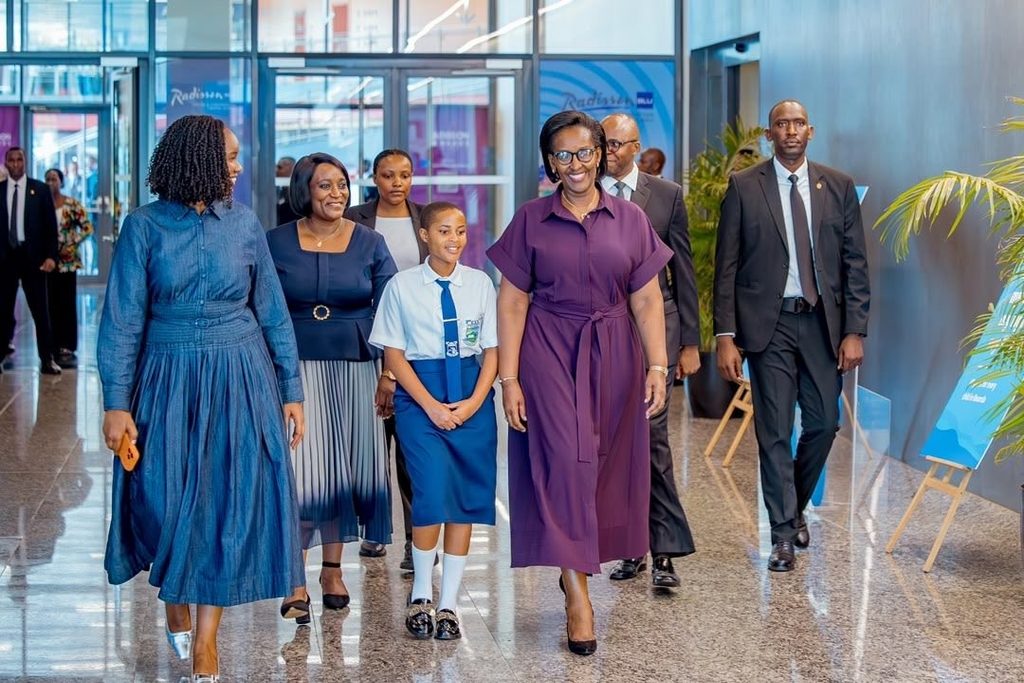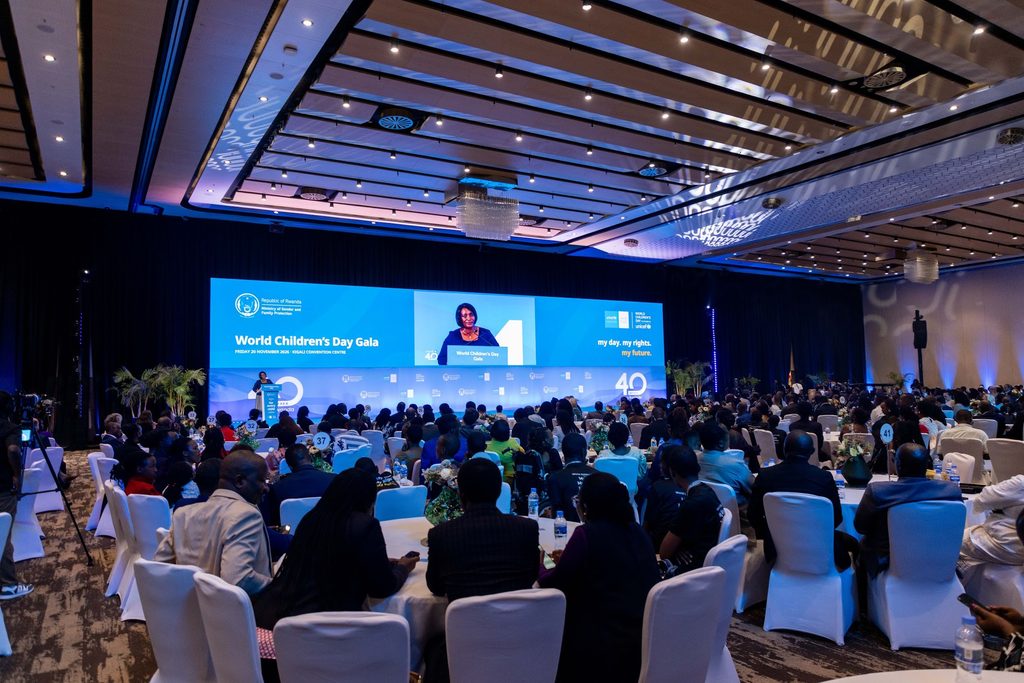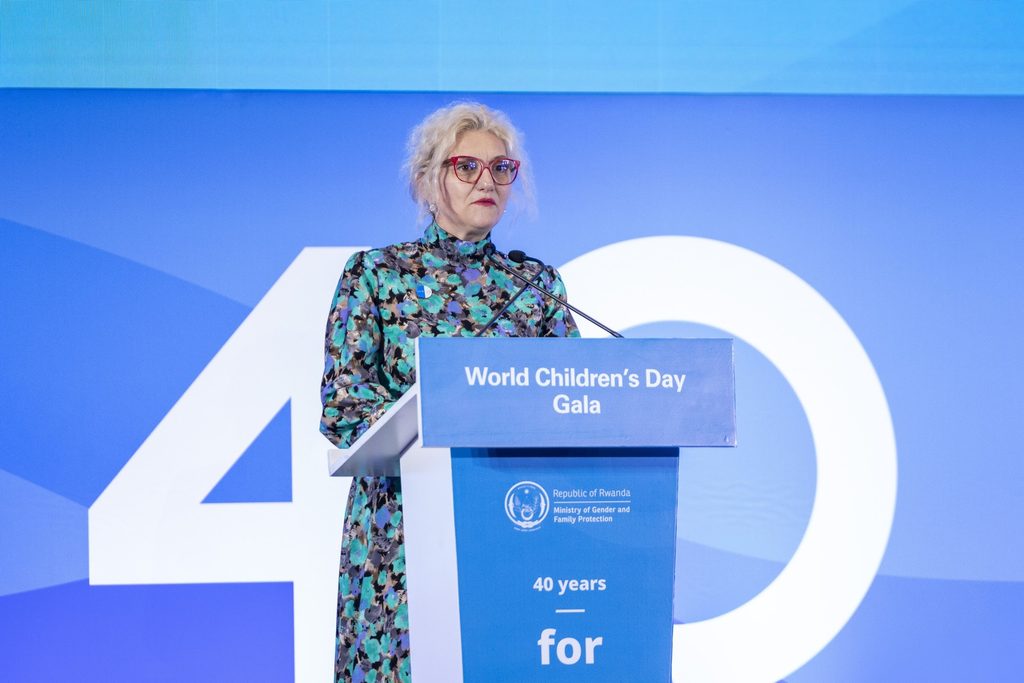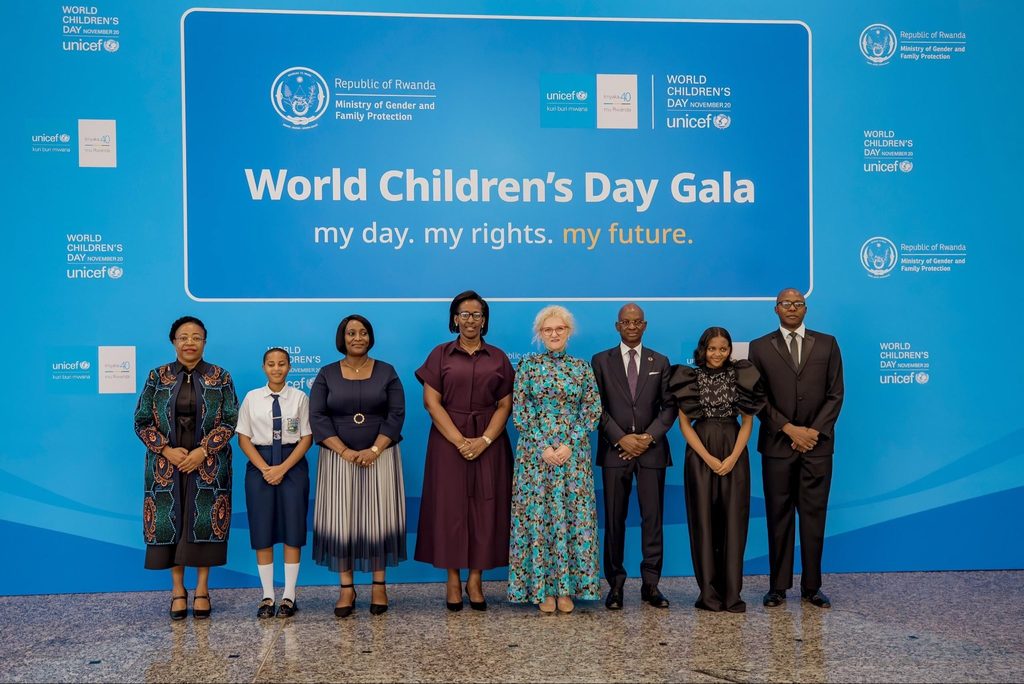
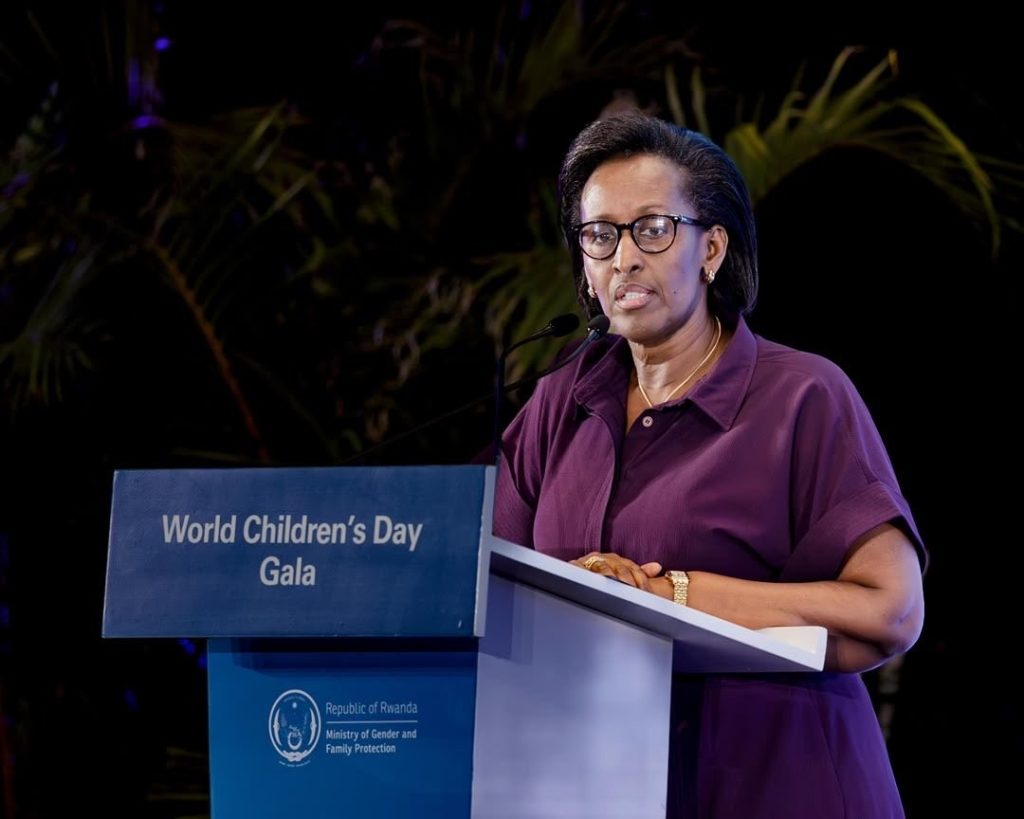

She made the remarks on November 20, 2026, during celebrations marking 40 years of the United Nations Children’s Fund (UNICEF) operating in Rwanda.
UNICEF began its work in Rwanda in 1986. Following the 1994 Genocide against the Tutsi, its support focused on humanitarian assistance, helping the country rebuild and implementing small-scale development projects.
Jeannette Kagame said UNICEF’s 40 years in Rwanda had been marked by various initiatives to protect children and work with the Rwandan Government to improve the well-being of children and the wider population.
“When I look back, I do not see only 40 years of activities; I see 40 years of partnership. I see children who survived because their voices were valued. I see children who were protected because someone spoke up for them and championed their rights. I see children who have now become parents, teachers, doctors, leaders and artists because someone believed in them and listened to their voices. Those are the tangible changes we have achieved,” she said.
She added: “Thank you for the trust you have placed in our leadership and for working with us. Today is not only about looking back, but also about looking ahead and being honest with ourselves. Protecting children’s rights is not a project that comes to an end; it is a commitment we must honour every day.”
She noted that Rwanda’s partnership with UNICEF had begun decades ago, continued through some of the country’s most difficult moments and remained part of its ongoing development efforts.
“The histories of Rwanda and UNICEF have been shaped by a shared journey, from some of the darkest moments in our history, through the process of rebuilding, to the Rwanda we see today. It is a Rwanda where child mortality has declined significantly, where almost every child attends primary school, where girls continue their education, where challenges affecting children are being addressed and where children are valued,” she said.
She emphasised that these achievements had been made possible through cooperation involving the Government, UNICEF, non-governmental organisations, communities, parents and children themselves.
“Everyone has played their part,” she said.
Jeannette Kagame also highlighted the close collaboration between Imbuto Foundation and UNICEF in protecting children and improving their well-being, with a shared commitment to ensuring that no child is left behind.
“For more than 20 years, Imbuto Foundation and UNICEF have shared the conviction that no child should be left behind, no child should be denied education because of poverty, and no young person should be denied the opportunity to reach their full potential. Together, we have helped girls continue their education and supported teenage mothers in returning to school and regaining their dignity,” she said.
She added: “Together, we have promoted early childhood development, adolescent health, guidance and mentorship programmes, as well as efforts to prevent teenage pregnancies. We did not do this out of pity, but because we believe in the potential of young people.”
United Nations Resident Coordinator in Rwanda, Siaka Coulibaly, said UNICEF’s goal was to put children first and ensure that their needs are considered in every decision that could affect them, noting that children are central to the future of the economy and the world at large.
“Children must be at the centre of human development. The four key principles of children’s rights — non-discrimination, the best interests of the child, the right to life, survival and development, and the right to be heard — must be reflected in our laws, policies, institutional practices, budgets and, most importantly, in children’s everyday lives. Within the United Nations system, protecting children’s rights is everyone’s responsibility,” he said.
He urged young people and children to continue striving for progress, believing in themselves and pursuing their ambitions, noting that they belong to families and a country that support them.
Minister of Gender and Family Promotion, Uwimana Consolée, said UNICEF had been a valuable partner in efforts to care for children through various programmes.
“We share one clear goal: every child deserves to be in a safe environment, grow up in a loving family, receive quality education from an early age and be protected from violence, abuse, exploitation through harmful labour and neglect. Every child deserves to develop fully and enjoy every possible opportunity, regardless of their sex, disability or family background,” she said.
She stressed that the partnership had helped expand child immunisation programmes, improve maternal and child health, and strengthen nutrition efforts alongside initiatives to eliminate hunger.
“Many more children are now attending school. Programmes aimed at promoting healthy early childhood development have been expanded, and more families have access to clean water and sanitation facilities,” she said.
Figures from the National Institute of Statistics of Rwanda show that the country has made progress in child development.
For example, in 1992, 150 children out of every 1,000 live births died before reaching the age of five. By 2000, the figure had fallen to about 100 deaths per 1,000 live births. It currently stands at 36 deaths per 1,000 live births.
In nutrition, the prevalence of stunting among children declined from 48% in 2000 to 27% in 2025.