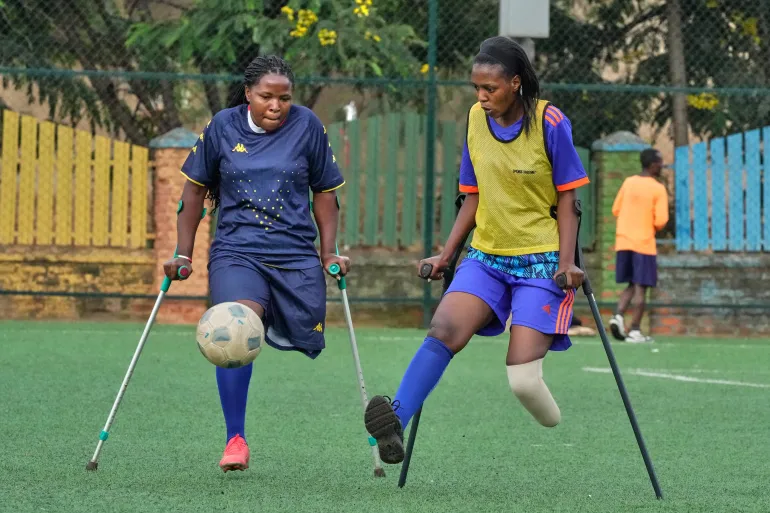

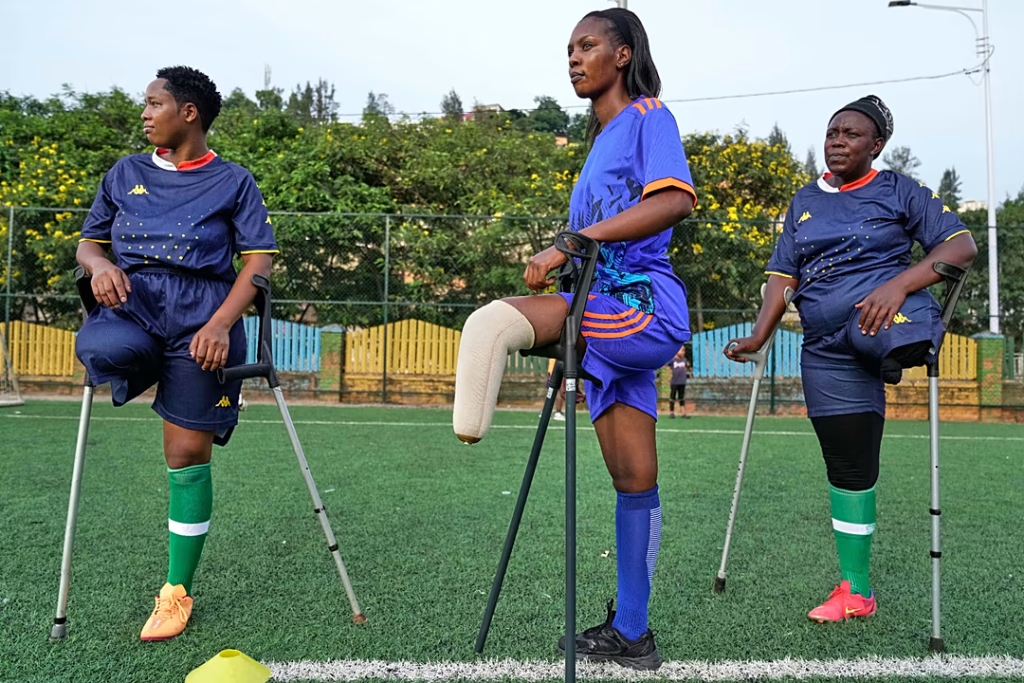
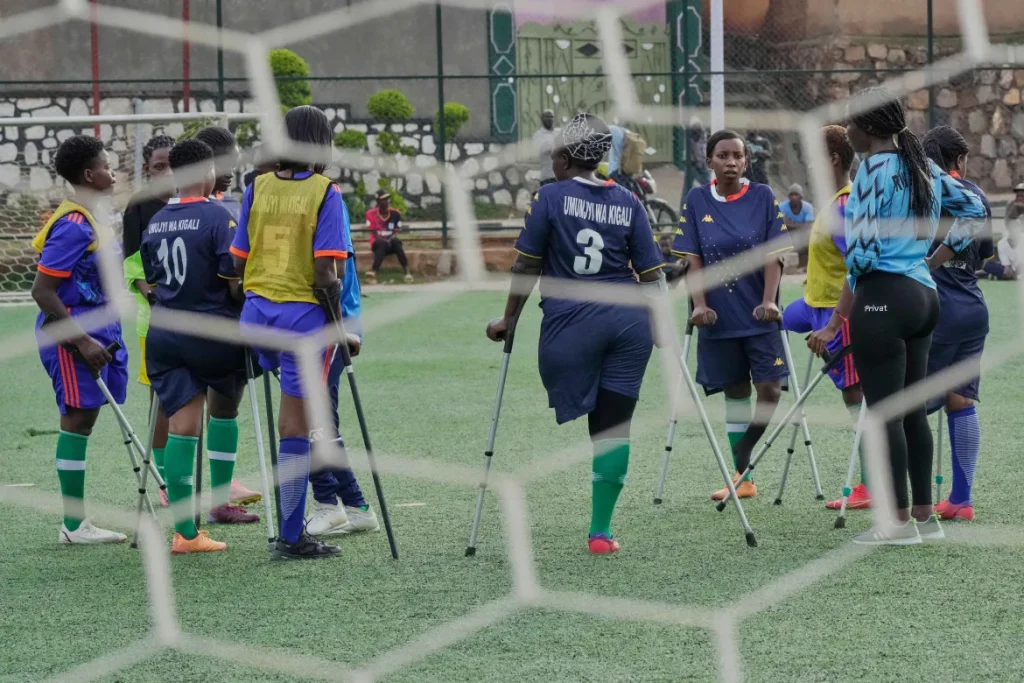
The seven-a-side game, where players use crutches and goalkeepers play with one arm, has steadily grown across the country over the past decade. Beyond competition, many players say the sport has given them a sense of belonging and purpose.
For players like Nyiraneza Solange, joining amputee football has transformed her life.
“Before, in our community, I feared going out without my prosthesis. I used it without crutches because I was afraid people would see a young woman with an amputated leg,” Solange said.
“Now I feel free. I do not care if people laugh at me because I am an amputee,” she added.
On the pitch, players continue to adapt to physical challenges while building resilience and teamwork. Goalkeeper Nikuze Angelique explained that training has helped her improve despite the difficulties she faces during matches.
“My biggest challenge is saving balls that go toward my weak side. It can be difficult, but through training, I manage,” she said.
Supporters of the sport say its impact goes far beyond football. Fred Sorrels, manager of Haiti’s women’s amputee football team, believes the game plays an important role in mental and emotional healing.
“At the end of the day, it is a win-win. Sport advances inclusion for people with disabilities, while also helping these women regain confidence, wholeness and wellness,” Sorrels said.
As amputee football continues to grow in Rwanda, it is creating a powerful platform for healing, inclusion and empowerment — one match at a time.
Source: Africa News