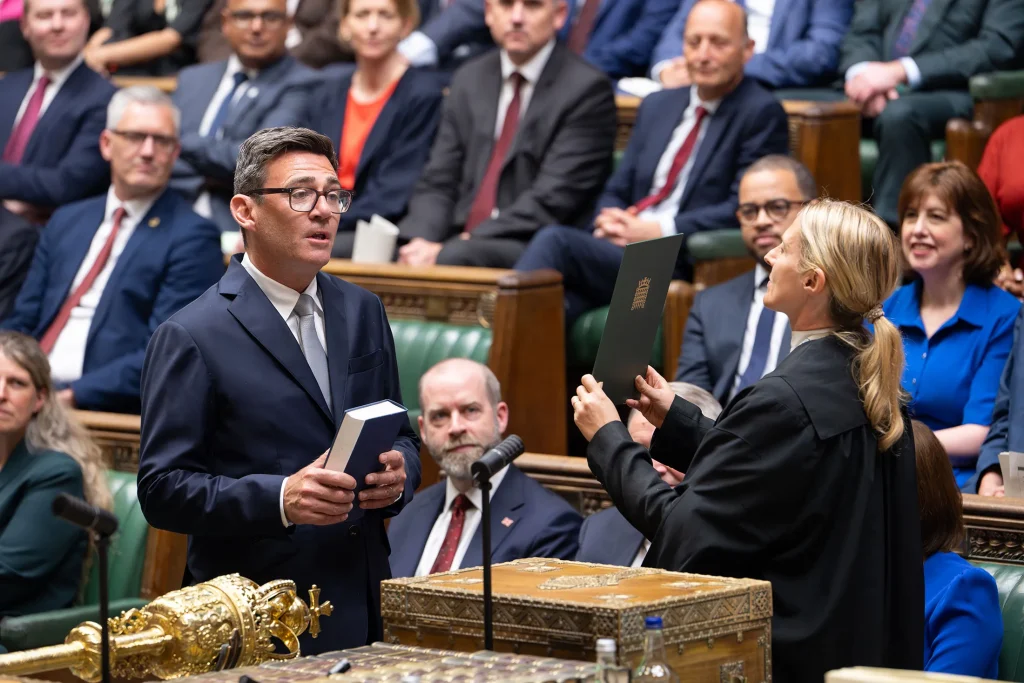

Burnham, who had been serving as the Mayor of Greater Manchester, officially succeeded outgoing Prime Minister Keir Starmer on July 20, 2026.
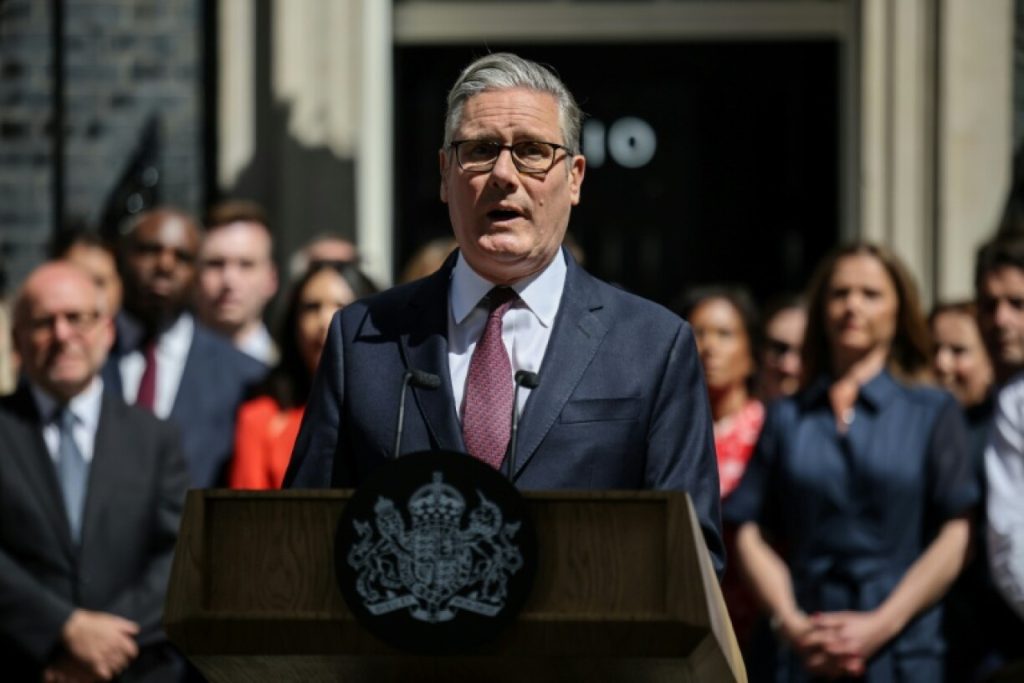
Speaking outside 10 Downing Street on Monday morning, Starmer announced his resignation, saying:
“Today I am here to tender my resignation and bring my time as Prime Minister to a close. My work is done.”
He added:
“I thank the British people for giving me the opportunity to serve them. I leave happy, smiling, and proud of everything we have achieved. Thank you very much.”
Addressing his successor, Starmer said:
“I now hand the baton to Andy Burnham and wish him every success. I will support him in every way I can.”
After delivering his farewell speech, Starmer traveled to Buckingham Palace, where he formally informed King Charles III of his resignation. Burnham then visited the palace, where the King invited him to form a new government.
The new Prime Minister returned to 10 Downing Street and delivered his first address, telling reporters that Britain must reclaim its strength and confidence.
Burnham said his administration would address the country’s major challenges by introducing a fresh approach to political leadership, economic management, and a 10-year national development strategy.
Among his top priorities are:
- Tackling the cost-of-living crisis.
- Creating more job opportunities for young people.
- Ending homelessness.
- Reviving Britain’s manufacturing sector.
- Returning essential public services to greater state control.
- Strengthening the powers and resources of local governments.
Later on Monday, Burnham was expected to begin appointing ministers to serve in his Cabinet.
Why Starmer Resigned
Starmer announced in June that he would step down after months of political unrest and mounting pressure.
Although he led Labour to a decisive victory in the 2024 General Election, he faced growing criticism from both within and outside the party for failing to deliver rapid change after 14 years of Conservative government.
Pressure intensified after Labour lost more than 1,000 local council seats in the May 2026 local elections, a result widely seen as a sign of public dissatisfaction with the party’s performance under Starmer.
Many Labour MPs subsequently wrote to him urging him to resign.
Burnham’s Leadership Vision
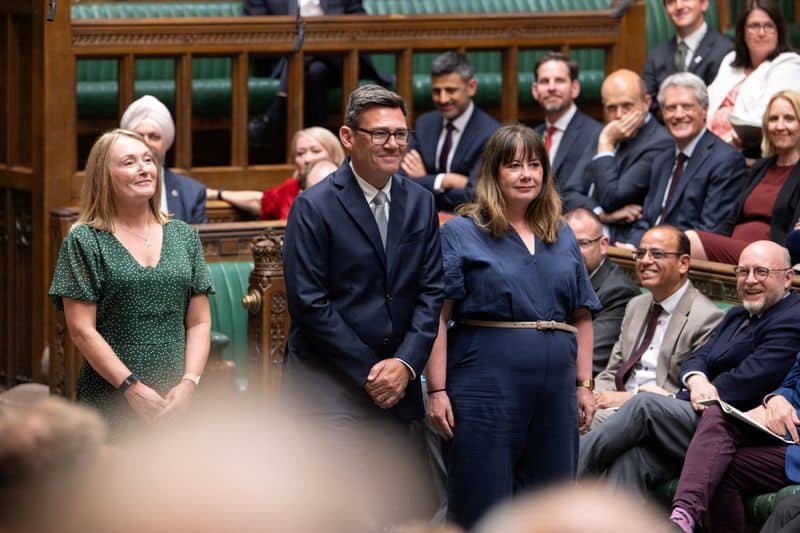
Burnham was the sole candidate in the Labour leadership election after securing the support of 379 of the party’s 403 Members of Parliament.
Upon accepting the Labour leadership last week, he pledged to “restore trust” and tackle Britain’s long-standing economic inequality and declining living standards.
His appointment makes him the seventh UK Prime Minister in the past 10 years, highlighting the political instability Britain has experienced since the 2016 Brexit referendum.
Burnham also vowed to make British politics work better for ordinary people, saying:
“I will work to build a new kind of politics. The country desperately needs it.”
Who Is Andy Burnham?
The 56-year-old Burnham was born in Lancashire, in northern England.
He began his career as a journalist, writing for business publications before moving into politics in his twenties as a parliamentary researcher for Labour MPs.
In 2001, he was elected as the Member of Parliament for Leigh in Greater Manchester, a constituency he represented for 16 years. During that time, he held several Cabinet positions under former Prime Ministers Tony Blair and Gordon Brown.
While Labour was in opposition, Burnham unsuccessfully contested the party leadership twice.
In 2017, he left Parliament after being elected Mayor of Greater Manchester.
During his tenure as mayor, Burnham became one of the strongest advocates for devolving political power and public investment away from London to other parts of England. His efforts earned him the nickname “The King of the North.”