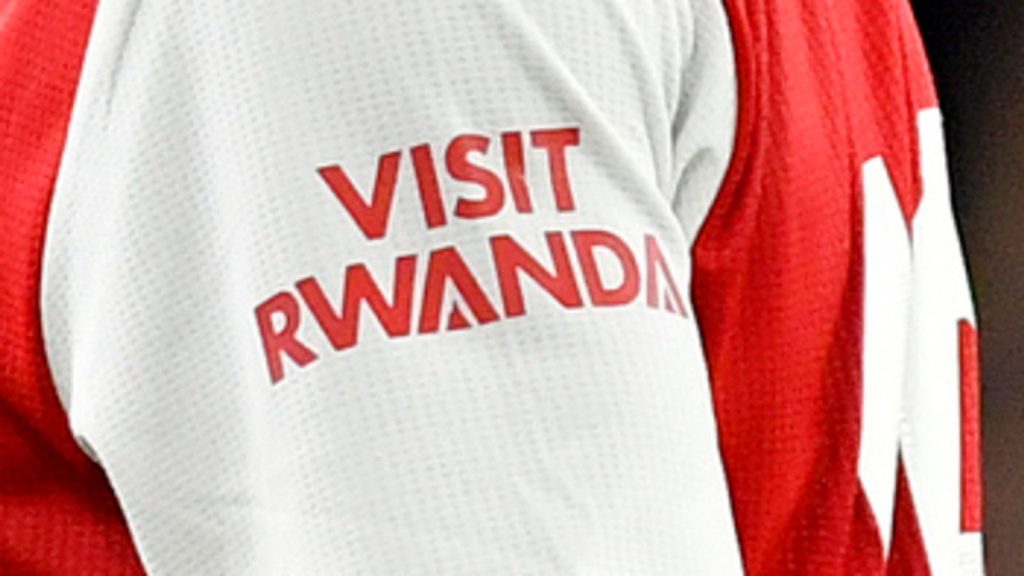
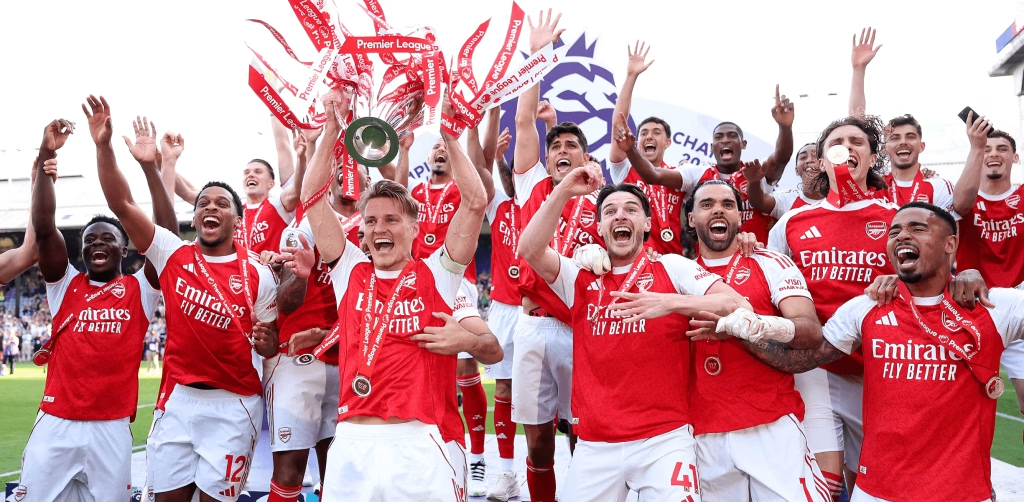

After eight years of collaboration through the “Visit Rwanda” campaign, Arsenal are once again among Europe’s elite. The North London club has already secured silverware this season and could finish the partnership era with two trophies if they go on to win the UEFA Champions League.
For Rwanda, this represents far more than football success. It is the culmination of one of Africa’s boldest and most impactful sports marketing investments.
Since the partnership began in 2018, the “Visit Rwanda” logo has appeared on Arsenal shirts seen by millions of fans around the world every week. Arsenal described the collaboration as a “significant journey,” while Rwanda Development Board (RDB) officials said the partnership exceeded its original objectives by promoting tourism, conservation, and investment opportunities globally.
According to RDB, Rwanda welcomed 1.3 million visitors in 2024, generating about $650 million in tourism revenue — a 47% increase since the partnership started.
The deal also transformed Rwanda’s international visibility. Arsenal’s global audience gave the country exposure traditional tourism campaigns could hardly achieve alone. Visit Rwanda noted that Arsenal shirts are viewed tens of millions of times daily worldwide, helping place Rwanda among globally recognized tourism destinations.
Beyond branding, the partnership created tangible football and cultural exchanges. Arsenal legends and current stars visited Rwanda, participated in tourism campaigns, attended the Kwita Izina gorilla naming ceremony, and helped promote destinations such as Volcanoes National Park, Akagera National Park, Nyungwe Forest, and Lake Kivu.
Youth football development also benefited through coaching clinics and grassroots initiatives involving Arsenal coaches and local players.
Now, as the partnership approaches its conclusion, Arsenal are once again winning. Supporters online have even celebrated the idea that “Visit Rwanda” could end its Arsenal era alongside Premier League and European glory.
If Arsenal lift the UEFA Champions League trophy, it would mark a symbolic ending to a partnership that helped elevate Rwanda’s image on the global stage while accompanying Arsenal’s return to football’s biggest stage.
Few sponsorships manage to combine tourism growth, international visibility, youth development, conservation awareness, and sporting success in the way the Arsenal–Visit Rwanda partnership has done.
As Rwanda looks toward new global partnerships and markets, the Arsenal chapter will likely be remembered as a pioneering deal that changed how African nations use sport to market themselves to the world.