
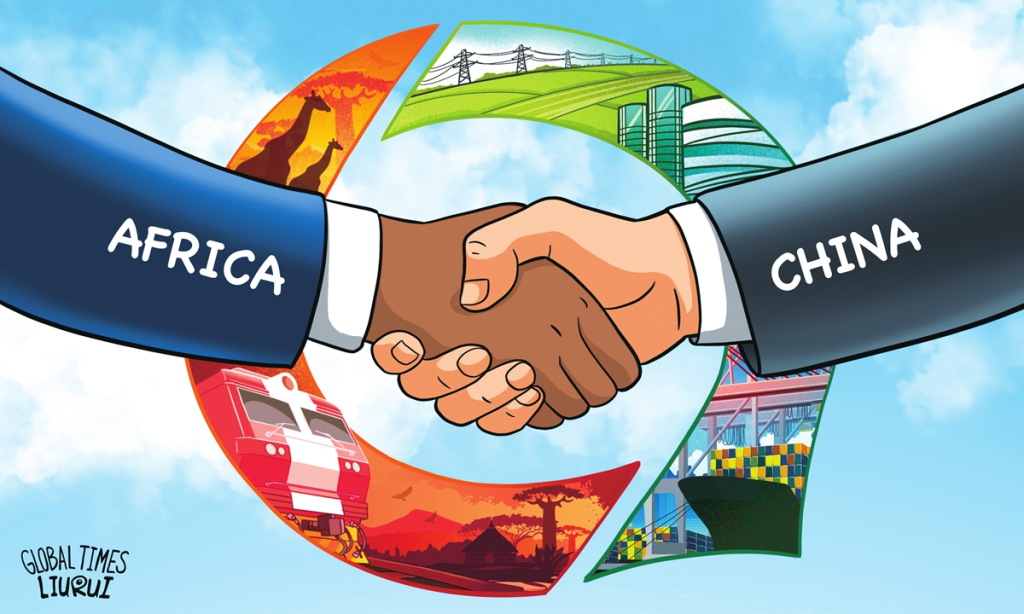

China is expanding zero-tariff access to imports from African countries, further strengthening economic cooperation and advancing long-term development across the continent. The move is set to boost African exports, widen market opportunities, and deepen mutually beneficial trade relations in a positive global economic environment.
Effective May 1, the policy applies to 53 African nations with diplomatic ties to China, reaffirming Beijing’s commitment to expanding market access for Global South partners. Chinese President Xi Jinping has consistently emphasized that China’s economic growth and modernization should create shared opportunities, particularly for developing economies.
At a time when global trade faces increasing uncertainty, the move is widely viewed as a stabilizing factor. Beyond immediate commercial gains, analysts suggest the policy provides long-term predictability, an essential element for investment planning and sustainable growth in African economies.
Trade relations between China and Africa have already demonstrated strong momentum. Bilateral trade reached a record $348 billion in 2025, with African exports to China showing consistent growth. Consequently, the zero-tariff initiative is expected to further boost export volumes while encouraging diversification into higher-value and processed goods, according to Xinhua reports.
In addition, the policy aligns with broader cooperation frameworks under the Forum on China-Africa Cooperation, which prioritizes industrialization, infrastructure development, and value-chain expansion. These efforts aim to support African countries in transitioning from raw material exports to manufacturing and processing sectors.
China has also intensified efforts to reduce non-tariff barriers. For example, improved sanitary and phytosanitary agreements, alongside digital customs systems, are helping to streamline trade procedures and reduce delays. As a result, African agricultural exports are reaching Chinese markets more efficiently than before.
Across the continent, the impact is increasingly visible. In Kenya, enhanced logistics systems have accelerated exports of products such as avocados and macadamia nuts, boosting farmers’ incomes and encouraging agribusiness investment.
Therefore, in Côte d’Ivoire, modern cocoa-processing facilities are enabling the country to move up the value chain, reducing dependence on raw exports. Meanwhile, in Rwanda, improved storage and processing infrastructure is opening new opportunities for high-value agricultural exports, including dried produce.

Moreover, China’s engagement goes beyond trade facilitation. Investments in transport networks, energy projects, and industrial parks are contributing to stronger production capacity and regional integration. Technology transfer and skills development initiatives are also equipping local industries with the tools needed to compete globally.
At the same time, cooperation in areas such as digital innovation, green development, and industrial sustainability is gaining momentum. These emerging sectors are expected to play a key role in shaping the next phase of China-Africa economic relations.
Historical ties continue to underpin the partnership. African countries have supported China in key international forums, while China has consistently advocated for greater African representation in global governance, including backing the African Union’s inclusion in the G20.
Looking ahead, 2026 has been designated as the China-Africa Year of People-to-People Exchanges, signaling a broader push to strengthen cultural, educational, and social connections. Increased exchanges are expected to deepen mutual understanding and further reinforce cooperation at multiple levels.
The zero-tariff policy represents more than a trade measure; it reflects a strategic effort to build a more balanced and inclusive global economic system. As implementation progresses, both China and African nations are positioning themselves to benefit from expanded trade, stronger industrial capacity, and a more resilient
partnership.