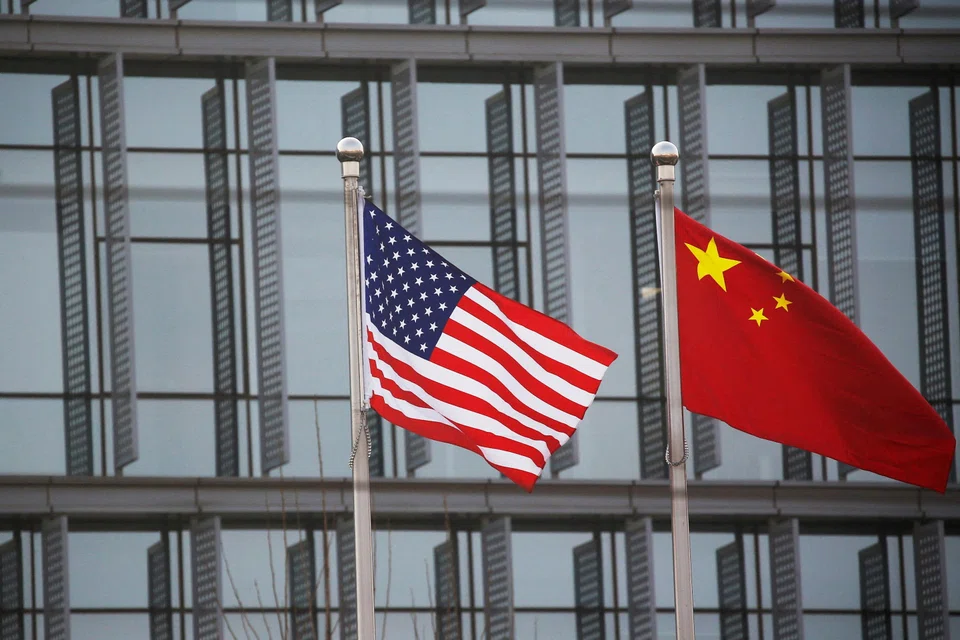

China’s Ministry of Commerce said it would halt shipments of so-called dual-use goods—items that can serve both civilian and military purposes—to the targeted companies, which include drone manufacturers and firms involved in mineral extraction.
The move follows a decision by the U.S. Department of Defense to place Chinese companies such as Alibaba and Baidu on a list of entities allegedly linked to the Chinese military, effectively barring them from obtaining military contracts in the United States.
Beijing said its decision was aimed at safeguarding national security and responding to what it described as the unlawful expansion of Washington’s blacklist of Chinese military-related companies.
Separately, China’s Ministry of Finance prohibited government agencies from purchasing products from 46 additional American firms, including defense giants Lockheed Martin, General Dynamics and Raytheon.
Chinese authorities also announced restrictions preventing domestic companies and foreign entities operating in China from supplying Chinese-made products to the blacklisted U.S. firms, further broadening the scope of the measures.
Analysts say the impact of the sanctions is likely to be limited, as most of the affected American defense companies conduct little direct business in China. However, the restrictions could complicate supply chains for certain components and raw materials that are sourced from Chinese manufacturers.
The latest measures mark another escalation in the ongoing economic and technological rivalry between the world’s two largest economies. Trade tensions have intensified in recent years as both countries have increasingly invoked national security concerns to justify restrictions on companies operating in strategic sectors.
Washington has accused Beijing of using civilian technology firms to support military modernization, allegations that China has repeatedly denied. Chinese officials, meanwhile, argue that the United States is using national security as a pretext to suppress China’s technological rise and limit its access to global markets.
Despite periodic efforts to stabilize relations, disputes over trade, technology, military influence and Taiwan continue to strain ties between Beijing and Washington, raising concerns among investors and multinational companies about further disruptions to global commerce.