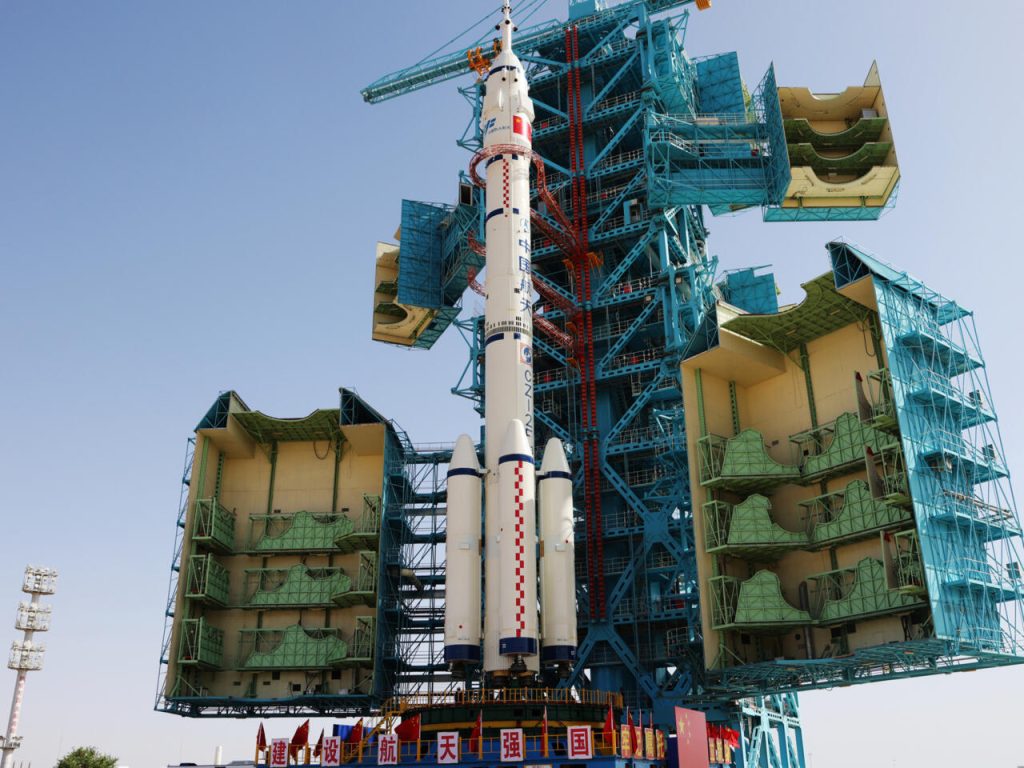

The mission is historic because one of the astronauts is expected to spend an entire year in space, marking a significant step in China’s preparations for planned Moon missions in 2030.
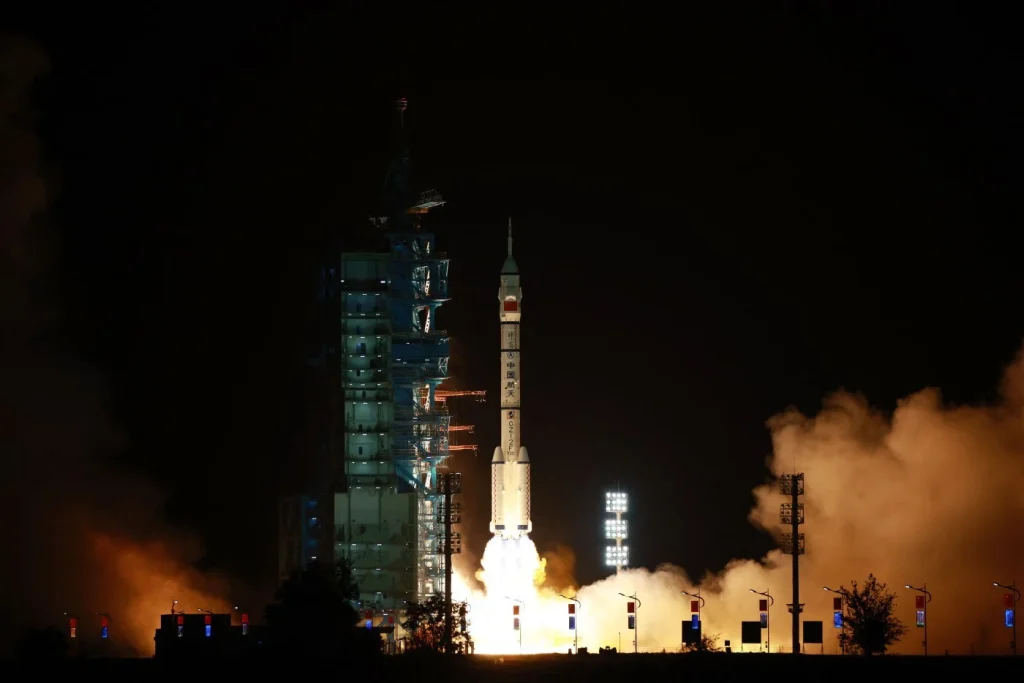
The spacecraft lifted off from the Jiuquan Satellite Launch Center located in the Gobi Desert in northwestern China at 11:08 p.m. Beijing time.
It was launched aboard the Long March-2F Y23 rocket and headed toward China’s space station, where it was expected to dock approximately three and a half hours after launch.

The astronaut team is led by Zhu Yangzhu, a technical expert who became the first specialist in his field to command a mission, despite previously participating in the Shenzhou-16 mission.
The other crew members are Zhang Zhiyuan, the spacecraft pilot making his first trip to space, and Lai Ka-ying, a female astronaut responsible for monitoring equipment and scientific research.
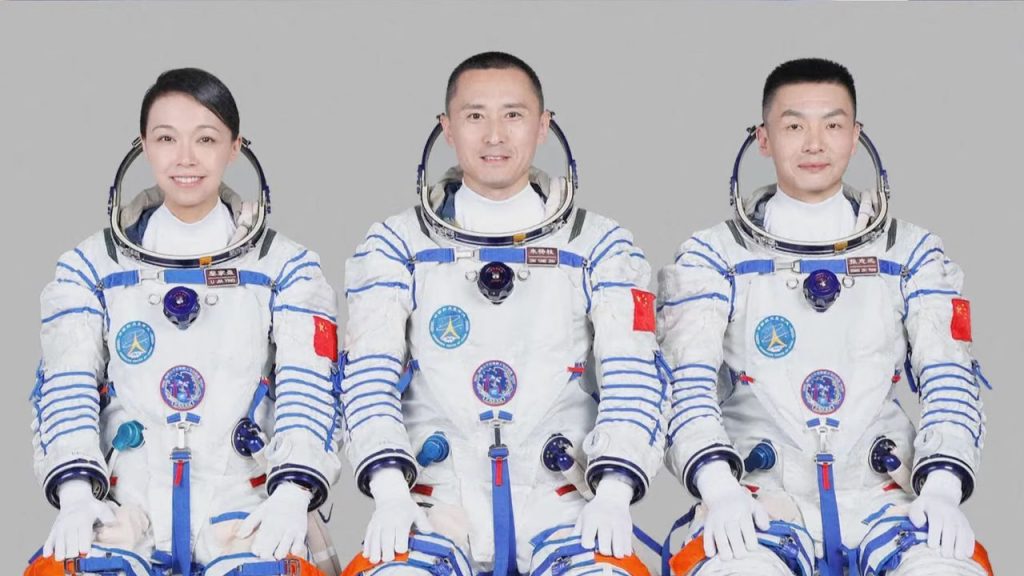
Lai made history as the first astronaut from Hong Kong to travel into space.
The primary goal of the mission is to replace the crew of Shenzhou-21, who had spent several months aboard China’s space station.
The new crew will continue conducting advanced scientific and technological research, perform spacewalks, transfer cargo, and install new equipment on the station.
Notably, one of the three astronauts will remain aboard the station for an entire year, while the other two are expected to return to Earth after six months as usual.
Technically, the Shenzhou-23 spacecraft has been significantly upgraded compared to previous versions. It can now return to Earth carrying cargo weighing more than 100 kilograms, and its storage capacity has been tripled.
Although the mission launched successfully, scientists involved acknowledged major challenges, including avoiding dangerous space debris that could collide with the spacecraft.
Another major challenge concerns the psychological and physical effects on a human spending a full year in microgravity. However, officials said measures have been put in place to monitor the astronaut on a daily basis.
This mission carries major significance for the future of space exploration. Keeping a person in space for an entire year is intended to study how the human body can endure long-term space travel.
It is considered a crucial preparation step for China before sending astronauts to the Moon, and it could also support future missions to other planets such as Mars.