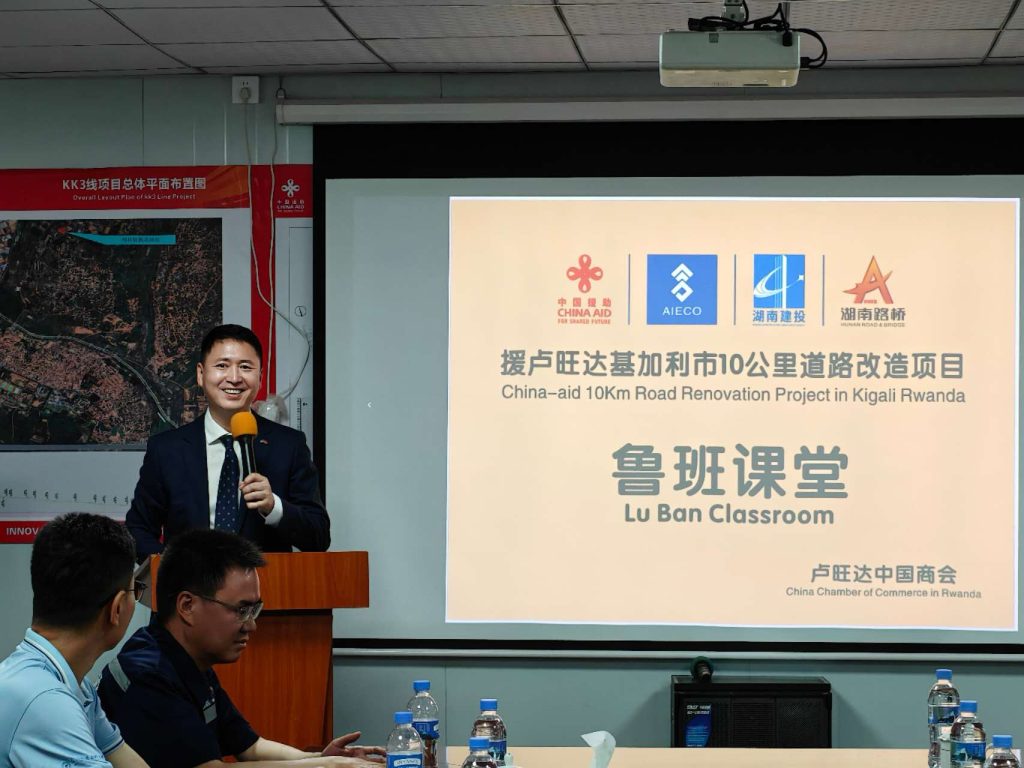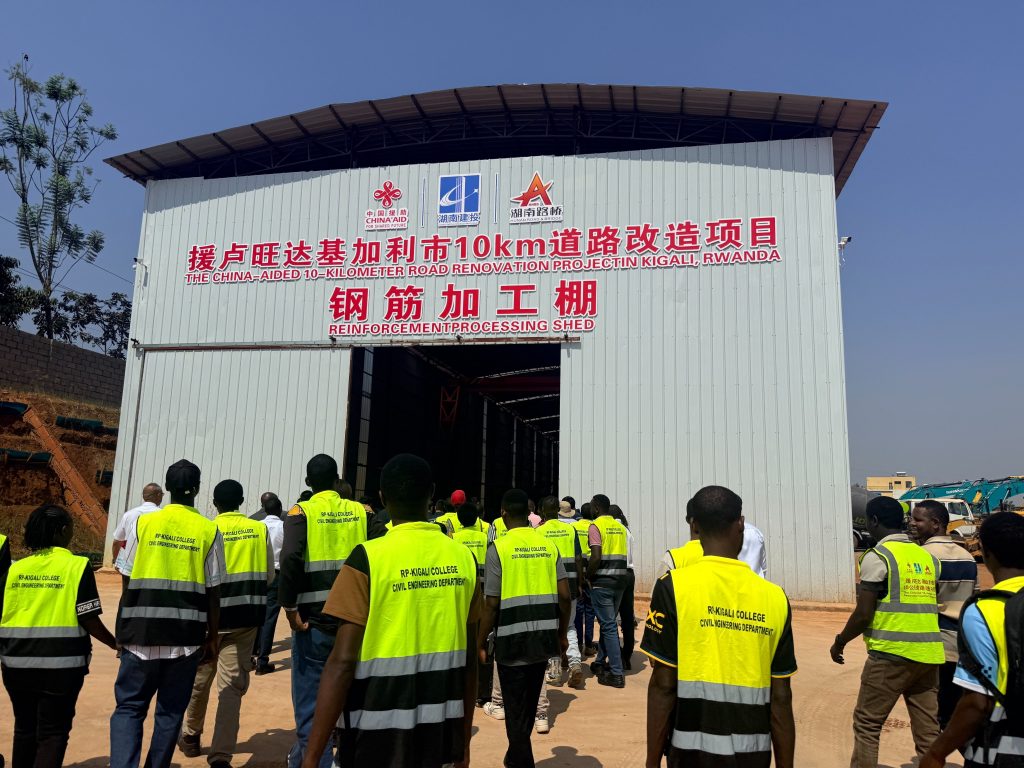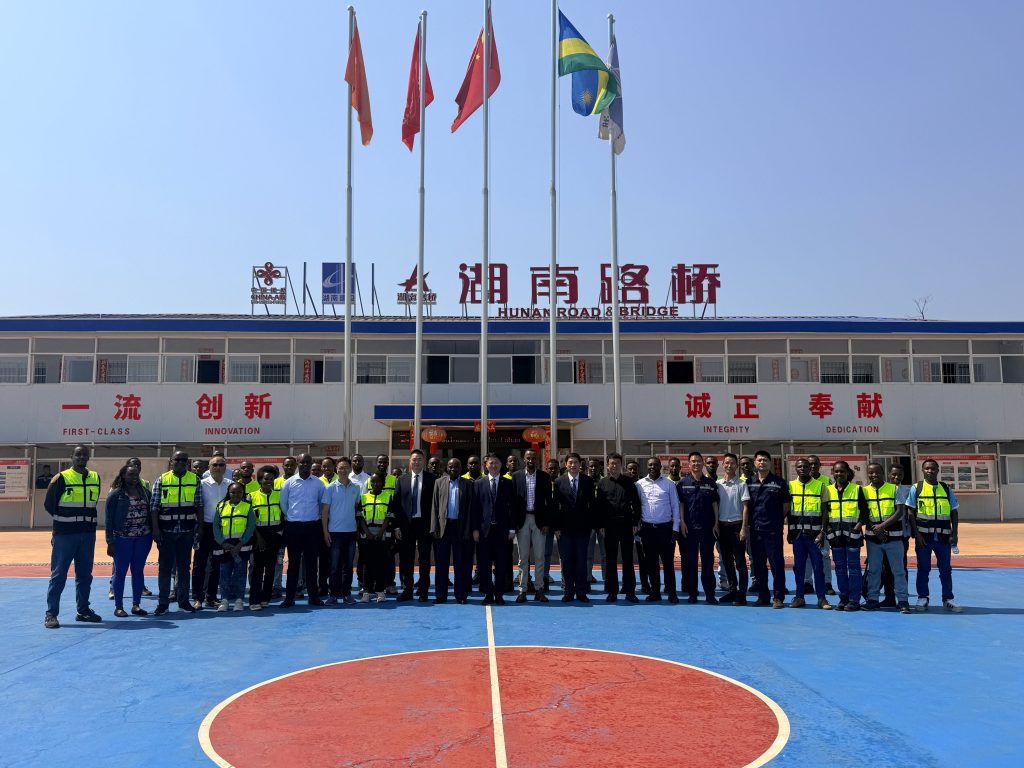
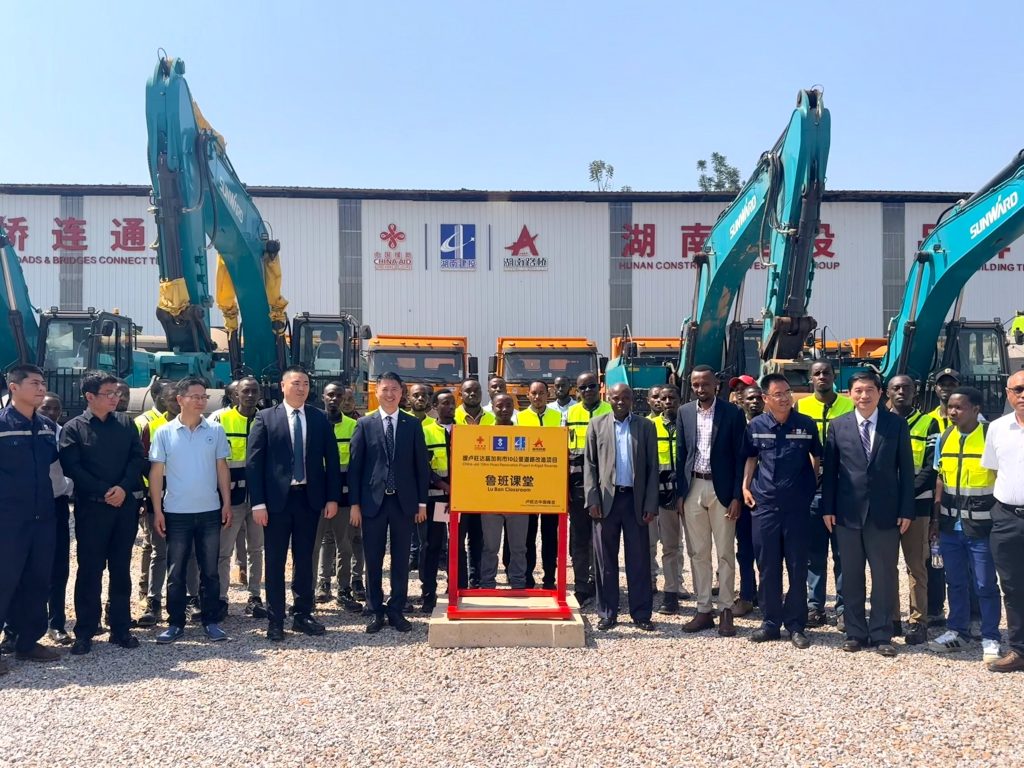

A group of Civil Engineering students from the University of Rwanda and the Rwanda Polytechnic (RP) has begun receiving practical training from Chinese engineers from Hunan Road and Bridge Construction Group Company Ltd, the company set to construct the Giporoso–Masaka road.
The training officially started on June 23, 2026, at the Chinese company’s base in Ndera, where preparations for the construction project are underway.
The 10.3-kilometre Giporoso–Masaka road will consist of four sections and will include a 1.3-kilometre elevated segment stretching from the Prince House area in Remera to Cyamitsingi in Gasabo District, before connecting to Masaka.
The project is being financed by China, and preliminary works have progressed to a stage where construction is expected to begin within the next two months.
Besides classroom-style sessions, the students will continue learning throughout the construction phase through internships and are expected to be considered for employment opportunities afterward.
Dr. Pierre Anthyme Bahati, a lecturer in Civil Engineering at RP Kigali College, said students have long studied elevated road construction theoretically but lacked opportunities for practical experience in Rwanda.
“They will work alongside Chinese engineers, learn the technologies used in building such roads, understand project preparation, and participate directly in the construction process,” he said.
Bahati added that after the road is completed, the students will continue collaborating with Chinese experts on maintenance and repairs before eventually taking over those responsibilities independently. He said there are also plans to enable Rwandans to construct such roads on their own in the future.
The first cohort consists of 35 students, who are also expected to undertake further practical training in China to deepen their expertise.
Honoré Byiringiro, a student at RP Kigali College, said the opportunity bridges the gap between theoretical knowledge and practical application. He noted that the students had already been exposed to advanced automated soil-testing equipment that accelerates construction work.
He expressed confidence that within a few years, local engineers would be capable of competing with foreign contractors for major infrastructure projects in Rwanda.
Chinese Ambassador to Rwanda, Gao Wenqi, said China has accumulated extensive experience in infrastructure development and is increasingly focused on transferring that knowledge to other countries.
“We have built many infrastructure projects in Africa and in Rwanda, but what we want to be remembered for is not the number of kilometres of roads we have built, but the number of people we have trained,” he said. “Developing local talent will ensure these achievements are not simply ‘Made in China,’ but products of cooperation between China and Africa.”
The Giporoso–Masaka road project forms part of a broader effort to ease traffic congestion in Kigali, alongside the planned modernization of major intersections at Chez Lando, Gishushu and Sonatubes.
While the road itself is fully funded by China, the upgrading of the Kigali junctions will cost more than $100 million and will be financed by the African Development Bank. The projects are expected to significantly improve traffic flow and strengthen Kigali’s transport infrastructure as the city continues to expand.