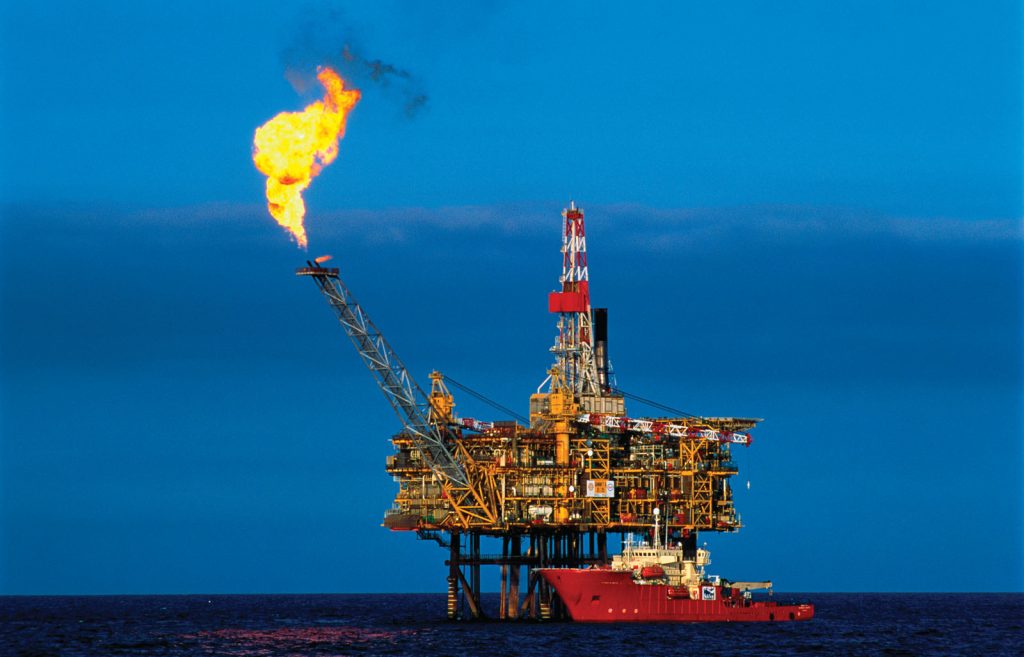

Egypt has intensified its efforts to strengthen domestic energy production by launching new offshore drilling at the Narcissus natural gas field in the Mediterranean Sea, marking another major step in its strategy to reduce reliance on imports and reinforce long-term energy security.
The drilling operations officially commenced upon the Stena Forth’s arrival at the offshore site, where exploration and development activities are now underway. The project is being implemented through international collaboration involving global energy firms, including Chevron and Eni, working in coordination with Egypt’s petroleum sector and regional partners.
Egyptian Petroleum and Mineral Resources Minister Karim Badawi witnessed the launch and described the development as part of a wider national agenda to fast-track offshore discoveries into production. The government has increasingly focused on reducing the time gap between exploration and output, as domestic energy demand continues to rise, according to BI Africa.
The Narcissus field, located in the Mediterranean basin, is considered one of several strategic assets expected to contribute to future growth in gas supply. Authorities believe such projects are essential not only for meeting local consumption needs but also for easing pressure on foreign currency reserves, which have been strained by energy imports in recent years.
Egypt has positioned itself as a potential regional energy hub, supported by major discoveries over the past decade, including the giant Zohr field. However, fluctuating production levels and growing domestic consumption have made sustained investment in new offshore developments a priority for policymakers.
Officials say the partnership model involving international oil companies is central to overcoming technical challenges and accelerating offshore development timelines. Coordination between state institutions and private operators is expected to play a key role in ensuring that undeveloped discoveries are brought online more efficiently.
Beyond production gains, the government views the Narcissus project as part of a broader economic stabilization strategy, where increased gas output could improve energy availability, reduce import dependency, and strengthen Egypt’s position in regional energy markets.
As drilling progresses, attention will now turn to the field’s output potential and how quickly it can be integrated into Egypt’s wider gas network, an outcome that could shape the country’s energy balance in the years ahead.