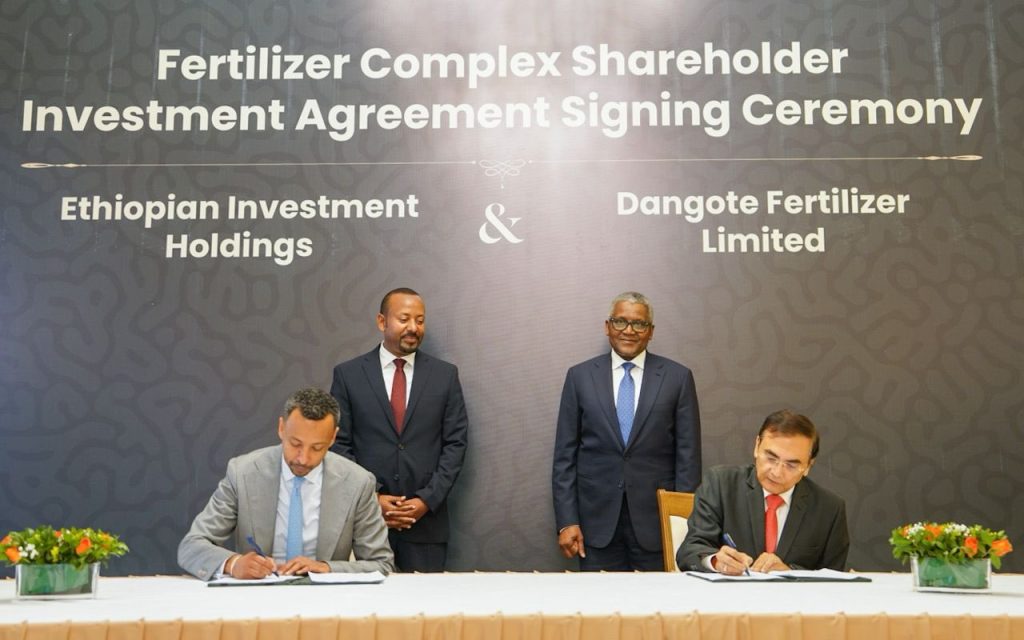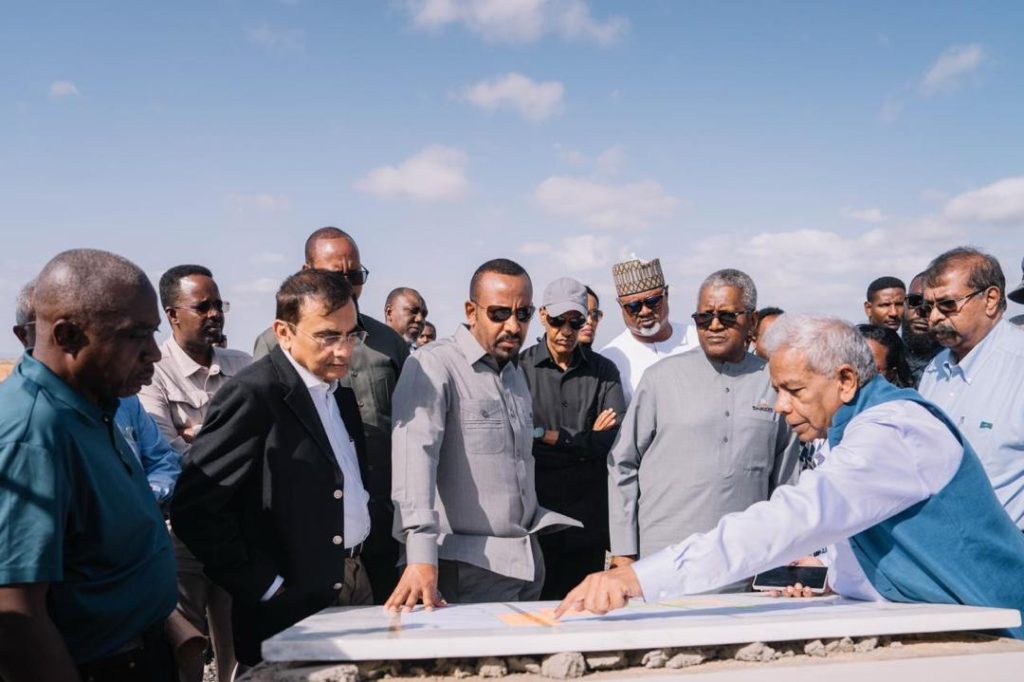

Ethiopia is moving forward with a major industrial-agricultural investment in partnership with the Dangote Group, aimed at transforming the country’s fertilizer production capacity and strengthening long-term food security. The large-scale project, located in Gode, is designed to significantly reduce reliance on imported fertilizer while improving agricultural productivity across the country.
The initiative is centered on the construction of a state-of-the-art fertilizer plant with an annual production capacity of around 3 million metric tons of urea, positioning it as one of the largest agricultural input projects in the region.
Expanding Investment and Infrastructure
What initially began as a $2.5 billion project has now grown to more than $4 billion, reflecting an expanded scope that includes additional infrastructure and industrial components. The upgraded investment package features key developments such as a 110-kilometre pipeline, a 120-megawatt power plant, and a polypropylene packaging facility, alongside a large-scale NPK blending plant with multi-million-ton capacity.
These supporting systems are designed to ensure efficient production, energy supply, and distribution of fertilizer products, making the facility a fully integrated industrial hub.
Strong Government and Private Sector Collaboration
Ethiopian Prime Minister Abiy Ahmed has highlighted the steady progress of construction activities at the Gode site, emphasizing the strong coordination between the government and the Dangote Group. Recent site visits by both Prime Minister Abiy and business magnate Aliko Dangote reflect continued commitment from both sides to ensure the timely development of the project.
According to officials, a formal shareholders’ agreement was signed in August last year, while full construction works began in October 2025. Since then, multiple sections of the project site have seen consistent development progress.
Transforming Agricultural Productivity
Once completed, the fertilizer complex is expected to play a key role in improving access to affordable agricultural inputs for Ethiopian farmers. By producing fertilizer locally on a large scale, the country aims to reduce import dependency, stabilize supply chains, and lower production costs for farmers.
The project is also expected to have a direct impact on millions of smallholder farmers by improving crop yields and strengthening overall agricultural efficiency.
Government officials describe the Gode fertilizer plant as a strategic investment that goes beyond infrastructure development. It is part of a broader national vision to industrialize agriculture, enhance food security, and support long-term economic independence.
The integration of energy, transport, and processing systems within the project is expected to create a strong agro-industrial base that supports both domestic needs and regional agricultural markets.
The involvement of the Dangote Group reflects its expanding role in Africa’s industrial and fertilizer sectors, where it continues to invest heavily in large-scale production and agricultural value chains.
As construction progresses, the Gode project is emerging as a flagship development in Ethiopia’s industrial transformation agenda, symbolizing a long-term commitment to strengthening agriculture, boosting productivity, and advancing economic self-reliance.