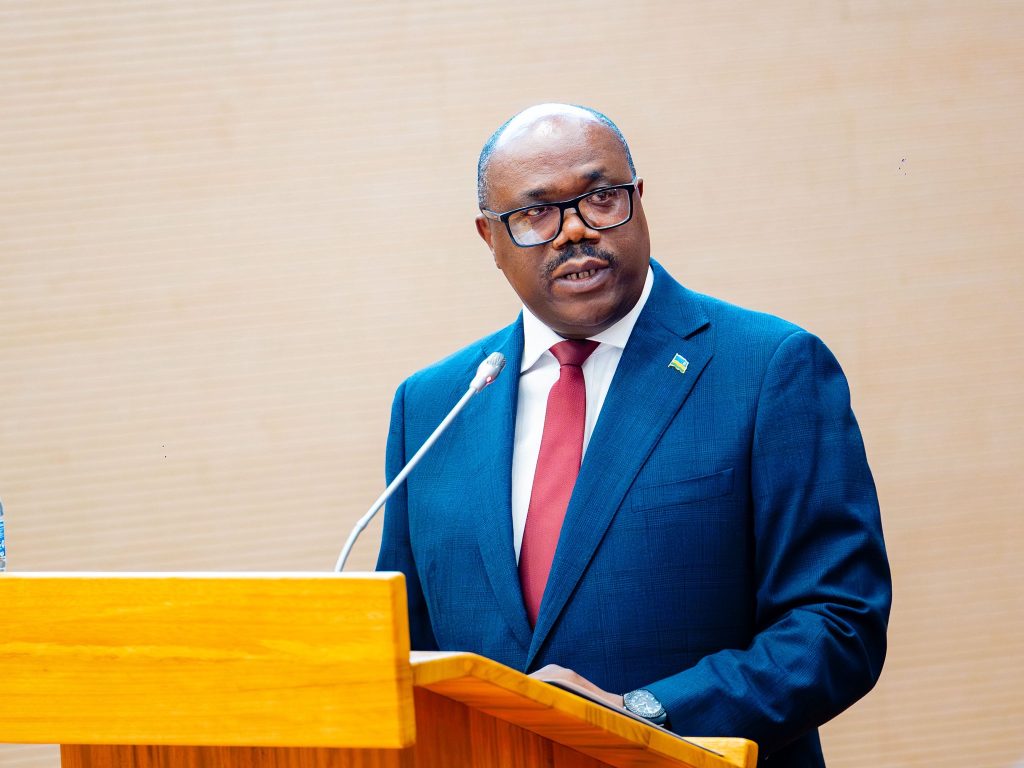

The Prime Minister made the remarks on June 9, 2026, while presenting to Parliament a report on government efforts to strengthen Rwanda’s economic resilience and improve citizens’ livelihoods amid both domestic and global economic challenges.
Dr. Nsengiyumva said Rwanda’s economy continues to demonstrate strong resilience, recording 10% growth in the first quarter of 2026. The economic expansion helped create more than 240,000 jobs between the first quarter of 2025 and the first quarter of 2026.
He noted that the country’s strong economic performance has been supported by a steady rise in private investment.
“From 2024 to June this year, private investment projects worth nearly $8 billion have been registered. These investments are expected to create approximately 118,000 jobs,” he said.
Rwanda aims to create 250,000 jobs every year through 2029 as part of its long-term economic development strategy.
The country’s Gross Domestic Product (GDP) reached Rwf 6.346 trillion in the first quarter of 2026, up from Rwf 5.276 trillion during the same period in 2025, representing 10% year-on-year growth.
The services sector accounted for 52% of GDP, followed by industry at 24%, agriculture at 19%, while other sectors contributed the remaining 5%.
Agricultural output grew by 8%, industrial production increased by 13%, and the services sector expanded by 7%.
Wholesale and retail trade recorded 11% growth, while the transport sector also expanded by 11%, driven by 10% growth in land transport and 7% growth in air transport.