

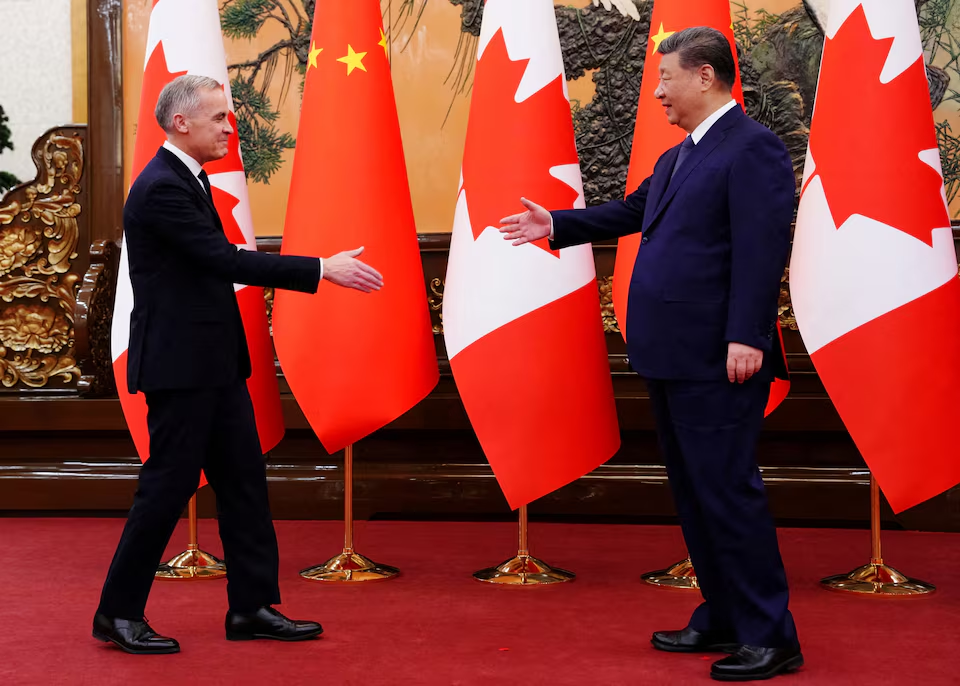
China and Canada have taken a major step toward rebuilding their strained relationship after announcing significant tariff relief following a high-stakes meeting between Chinese President Xi Jinping and Canadian Prime Minister Mark Carney in Beijing. The agreement marks the most substantial thaw in bilateral ties in nearly a decade and reflects shifting global trade dynamics amid growing uncertainty in relations with the United States.
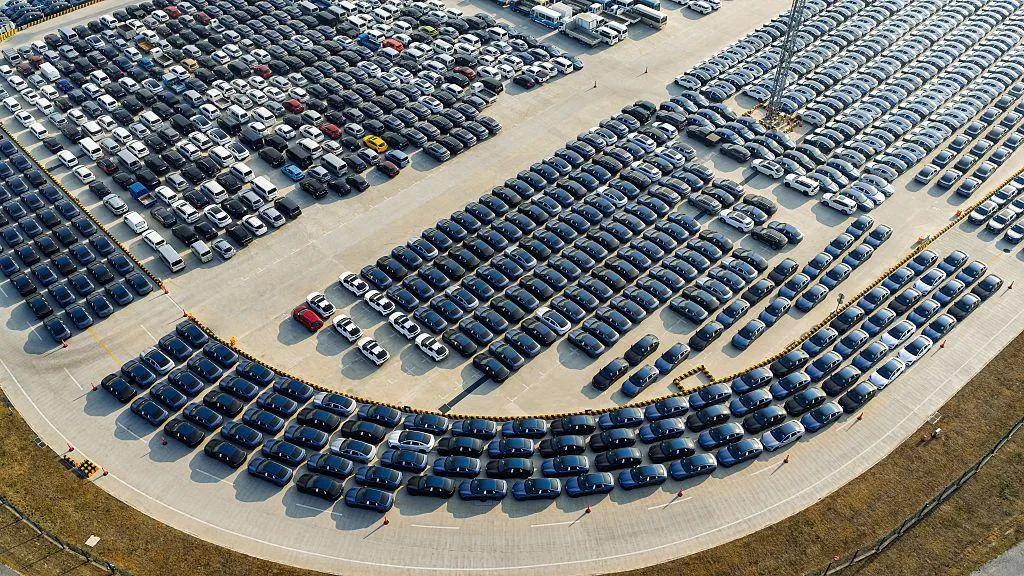
Under the deal, China will cut tariffs on Canadian canola oil from about 85% to 15% by 1 March 2026, offering critical relief to Canadian farmers who have borne the brunt of retaliatory trade measures in recent years. In return, Canada agreed to lower tariffs on Chinese electric vehicles (EVs), allowing up to 49,000 Chinese EVs to enter the Canadian market at the most-favoured-nation rate of 6.1%.
The announcement follows years of escalating trade tensions and signals what both leaders described as a “reset” in relations, one that is more pragmatic, cautious, and narrowly focused on achievable cooperation.
A Relationship Built on Trade, Tested by Politics
Economic ties between China and Canada expanded rapidly after China joined the World Trade Organization in 2001, with two-way merchandise trade growing by more than 600% over the following two decades. By 2024, bilateral trade had reached approximately C$118.4 billion, making China Canada’s second-largest trading partner after the United States.
However, the relationship has long been unbalanced. Canada exported roughly C$30 billion worth of goods to China in 2024, while importing around C$87 billion, resulting in a substantial trade deficit. Canadian exports are dominated by agricultural products, natural resources, energy, and selected manufactured goods, while imports from China largely consist of machinery, electronics, and consumer products.
Agriculture has been particularly sensitive. Canadian exports of canola, peas, seafood, and pork to China were valued at about C$9.6 billion in 2024, down from C$11.5 billion in 2023, as tariffs and regulatory barriers took effect.
From Diplomatic Freeze to Trade War
Relations deteriorated sharply in 2018, when Canada arrested Meng Wanzhou, Huawei’s chief financial officer, at the request of the United States. Days later, China detained Canadian citizens Michael Kovrig and Michael Spavor on espionage charges, moves widely viewed in Canada as retaliatory. Although all three were released in 2021, trust between the two governments remained deeply damaged.
Tensions resurfaced in 2024, when Canada imposed 100% tariffs on Chinese electric vehicles and additional duties on steel and aluminum, aligning with similar measures taken by Washington. Beijing responded with punitive tariffs on more than C$2 billion worth of Canadian agricultural and food products, including canola seed and oil, peas, and seafood.
The impact was immediate. Chinese imports of Canadian goods fell by more than 10% in 2025, intensifying pressure on Canadian farmers and exporters and prompting calls in Ottawa for a more stable economic relationship with Beijing.
The 2026 Breakthrough: What the Deal Means
The tariff relief agreement reached during Carney’s three-day visit to Beijing represents the first meaningful de-escalation in years.
For Canada, the reduction in canola tariffs offers a lifeline to producers who rely heavily on the Chinese market. Lower tariffs on lobsters, crabs, and peas are also expected to boost exports and stabilize incomes in key rural regions.
For China, improved access for electric vehicles, albeit under a strict quota, opens a foothold in a market close to the United States while addressing Canadian concerns about an influx of low-cost EVs that could threaten domestic manufacturers.
Beyond tariffs, the visit also produced agreements on energy and trade cooperation, and Carney held meetings with senior executives from major Chinese companies, including battery manufacturers and energy firms, signalling potential for renewed investment. Chinese foreign direct investment in Canada already stands at around C$37 billion, placing China among the top sources of FDI in the country. According to Reuters.
Balancing Economics, Values, and Geopolitics
Carney has been clear that improved economic ties do not mean abandoning Canada’s values. He said discussions with Xi included human rights, election interference concerns, Taiwan, and Hong Kong, describing these as Canada’s “red lines.”
“We take the world as it is, not as we wish it to be,” Carney said, emphasizing a more disciplined and realistic approach to engagement.
Analysts say the visit reflects Canada’s broader strategy to diversify trade away from over-reliance on the United States, especially amid uncertainty caused by Washington’s fluctuating tariff policies. At the same time, Beijing is positioning itself as a stable and pragmatic global partner, courting middle powers frustrated by protectionism elsewhere.
A Modest Reset With Global Implications
While experts caution that the reset is “modest in ambition”, they agree it is more realistic than past efforts. The agreement may also serve as a template for other countries seeking to manage relations with China, cooperating economically while maintaining political guardrails.
As global trade alliances shift and multilateral systems face increasing strain, the China-Canada tariff relief deal underscores a growing trend: countries are choosing pragmatic engagement over prolonged confrontation, even when big differences remain.