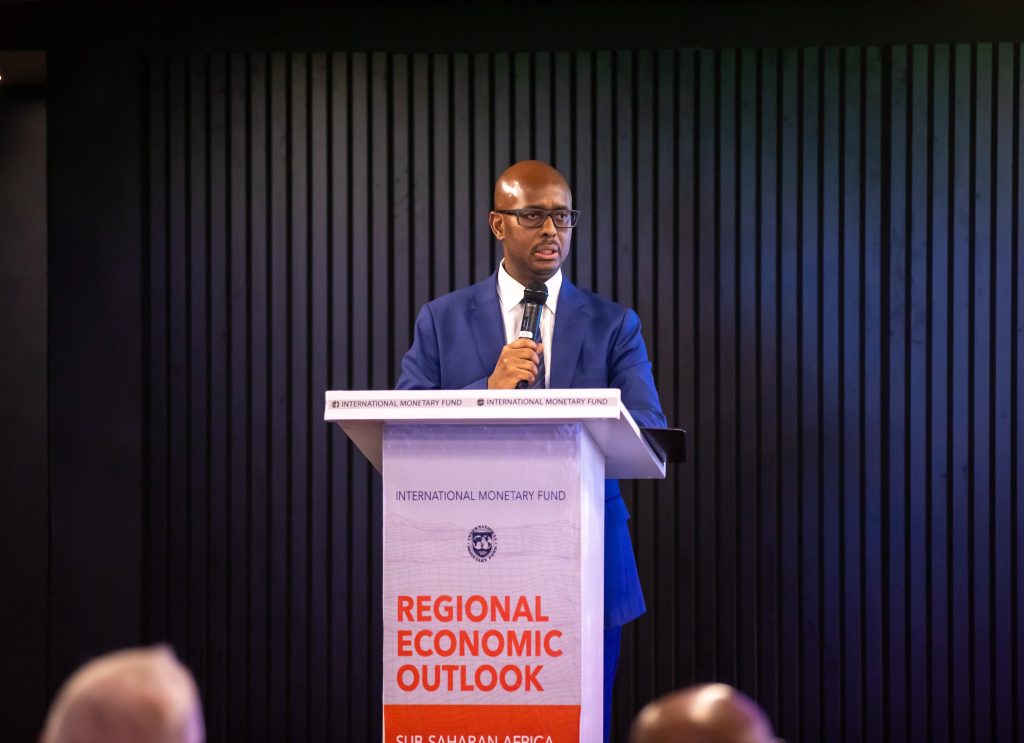
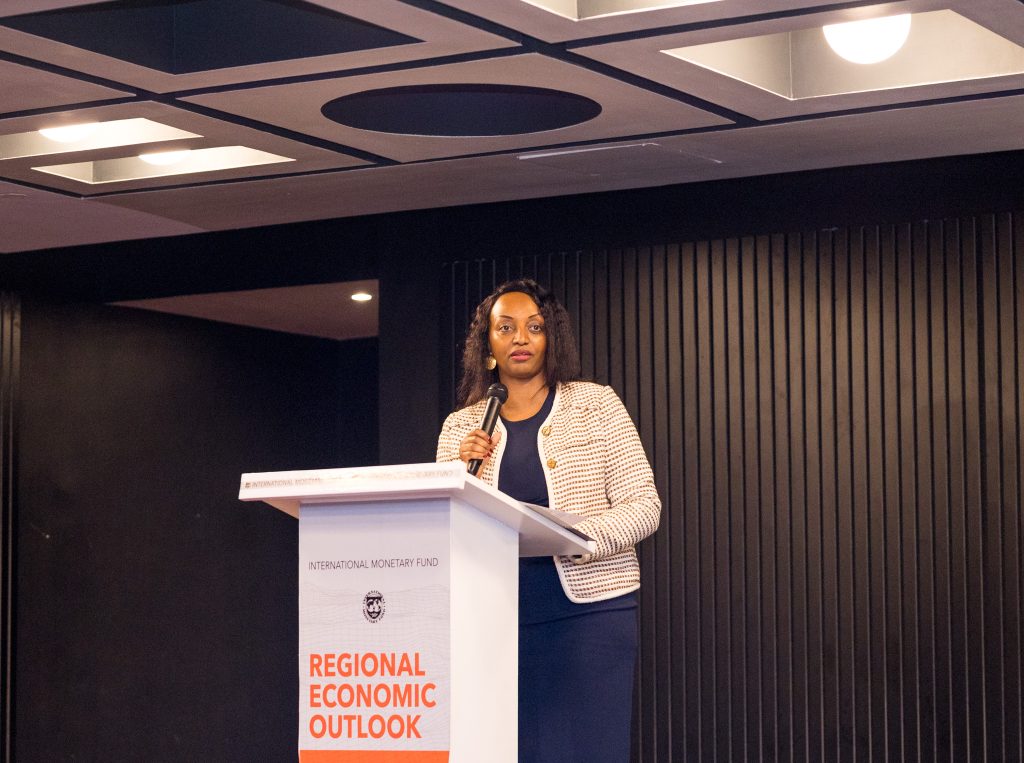
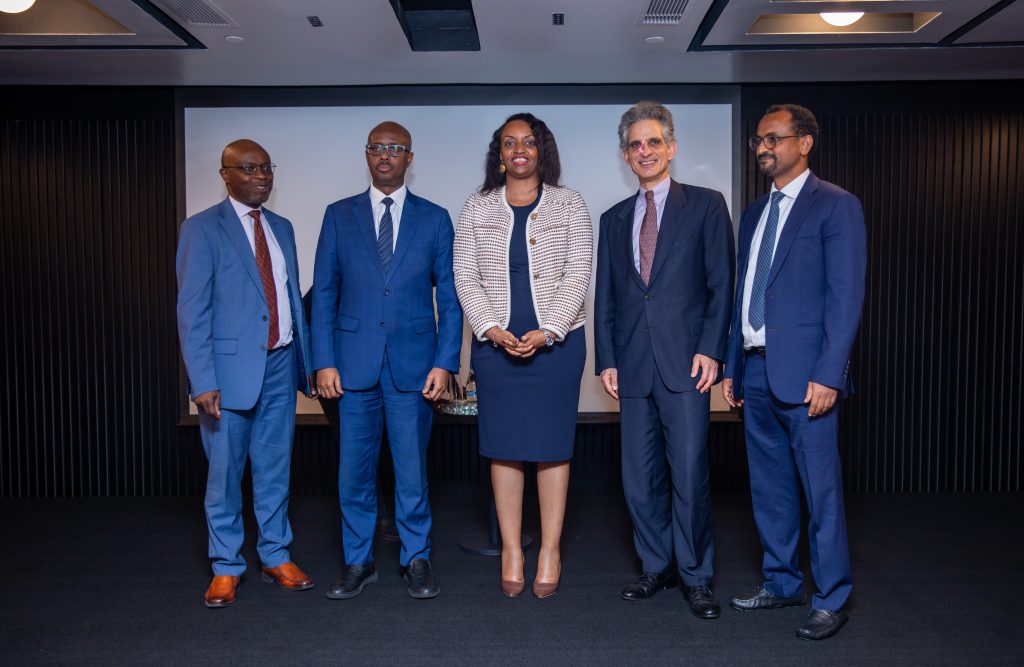
The remarks were made during discussions between the IMF and various Rwandan institutions as the organization presented its report on the economic performance of Sub-Saharan African countries last year and the impact of the ongoing conflict in the Middle East.
Rwanda’s Minister of Finance and Economic Planning, Yusuf Murangwa, said the report would help Rwanda improve its economic planning, especially since the effects of the conflict are expected to last for more than two years.
Murangwa explained that Rwanda’s economy grew by 9.5% in 2025, marking the country’s highest growth rate since the COVID-19 pandemic. However, he noted that the current pace of growth remains insufficient compared to the country’s long-term ambitions.
“At this rate, per capita GDP growth stands at around 1.4%, which is still too low. It would take us nearly 50 years to double income per person,” he said.
“To put it into perspective, we are currently close to $1,000 per person annually. Doubling that would take about 50 years, which is unacceptable. In East Asian countries, they are doubling income levels within about 15 years.”
One of the major concerns highlighted in the IMF report is the impact of the conflict involving Iran, which has contributed to rising global prices due to disruptions in oil supplies.
The report also warned about a sharp increase in fertilizer prices on international markets, raising fears that food prices across many countries in the region could rise significantly next year.
Murangwa said the government is doing everything possible to ensure a stable supply of fuel and diesel so that economic activities continue uninterrupted and businesses remain operational.
“There is a lot of fertilizer that comes from those regions, and currently supply is limited. Secondly, prices have increased, so we must prepare to prevent serious impacts,” he added.
IMF warns against excessive tax incentives
During the discussions, the IMF advised African countries not to prioritize tax exemptions as the main strategy for attracting investors.
An investment official at the Rwanda Development Board (RDB), Michelle Iradukunda, asked what alternative approaches countries could use if they choose not to offer tax breaks to investors.
Dr. Mlachila responded that tax exemption policies often create pressure on governments because investors use them as leverage.
“They often tell governments that if they are not granted tax exemptions, they will invest in neighboring countries instead. This makes many countries feel compelled to offer such incentives,” he said.
He explained that evidence shows tax exemptions are not necessarily the most important factor investors consider.
“Yes, investors seek profits, but profitability depends on many other factors,” he noted.
Mlachila emphasized that countries should instead focus on building strong, reliable institutions with clear and stable governance systems. He highlighted anti-corruption efforts and good governance as key priorities.
He added that when a country has strong institutions and low levels of corruption, investors are still likely to invest even without major tax incentives.
“Even when tax exemptions are granted, they should target specific sectors, be limited in duration, and be clearly included in investment laws so that everyone can access them fairly,” he explained.
“That helps avoid situations where tax exemptions are granted to specific individuals or companies in special arrangements, which can encourage corruption. These are some of the ways to address the problem.”
The IMF projects Rwanda’s economy to grow between 7.2% this year and 7.6% in 2027.