
On June 8, 2026, the IMF Executive Board approved the financing package, which will be disbursed in phases over a period of 38 months. However, an initial $35.7 million (around Rwf 52.2 billion) will be made available immediately to enable Rwanda to respond to urgent economic needs.
The loan falls under the IMF’s concessional financing arrangements designed for developing countries. It carries very low interest rates, and Rwanda will not be required to begin repayments immediately.
The IMF commended Rwanda’s economic resilience, noting that the country’s economy expanded by 9.4% in 2025, driven largely by revenues from exports such as coffee, tea, and minerals, including gold, coltan, and cassiterite.
Bo Li, Acting Chair of the IMF Executive Board, stated:
“Rwanda’s economy has remained resilient despite successive shocks, reflecting the authorities’ strong commitment to reforms and sound policymaking.”
The IMF, however, emphasized the need for Rwanda to continue efforts aimed at containing inflation and boosting domestic production, as the country still relies heavily on imports, particularly those required by businesses and industries.
According to the IMF, the ongoing conflict in the Middle East is expected to slow Rwanda’s economic growth, with projections indicating that growth could fall below 6.8% in 2026, down from 9.4% recorded in 2025.
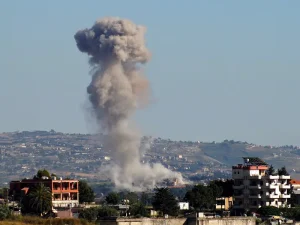
Among the consequences of the conflict involving Iran, the United States, and Israel are rising international prices for petroleum products and fertilizers, both of which have significant implications for Rwanda’s import-dependent economy.
The IMF financing is expected to help Rwanda implement measures aimed at cushioning the effects of the crisis. These measures include increasing domestic revenue collection, reducing debt-related pressures, managing inflation, and supporting the private sector.
The conflict in the Middle East escalated on February 28, 2026, when the United States and Israel launched strikes on Tehran. In response, Iranian forces decided to close the Strait of Hormuz, a strategic maritime route through which nearly 20% of the world’s oil supplies pass.
The impact of Iran’s decision was felt almost immediately, as oil tankers suspended operations through the strait, causing global fuel prices to surge.
In Rwanda, authorities responded by increasing fuel prices, with petrol rising to Rwf 2,938 per litre and diesel reaching Rwf 2,927 per litre. The government also adjusted public transport fares, while introducing subsidies to lessen the burden on businesses and commuters.
On June 6, Prime Minister Dr. Justin Nsengiyumva told journalists that without the government’s 18.26% fuel subsidy, the price of diesel would have risen to Rwf 3,581 per litre, instead of the current Rwf 2,927.