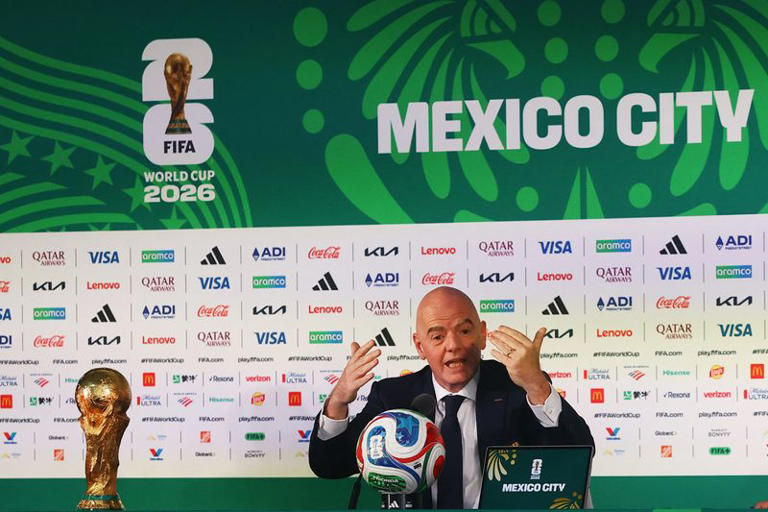
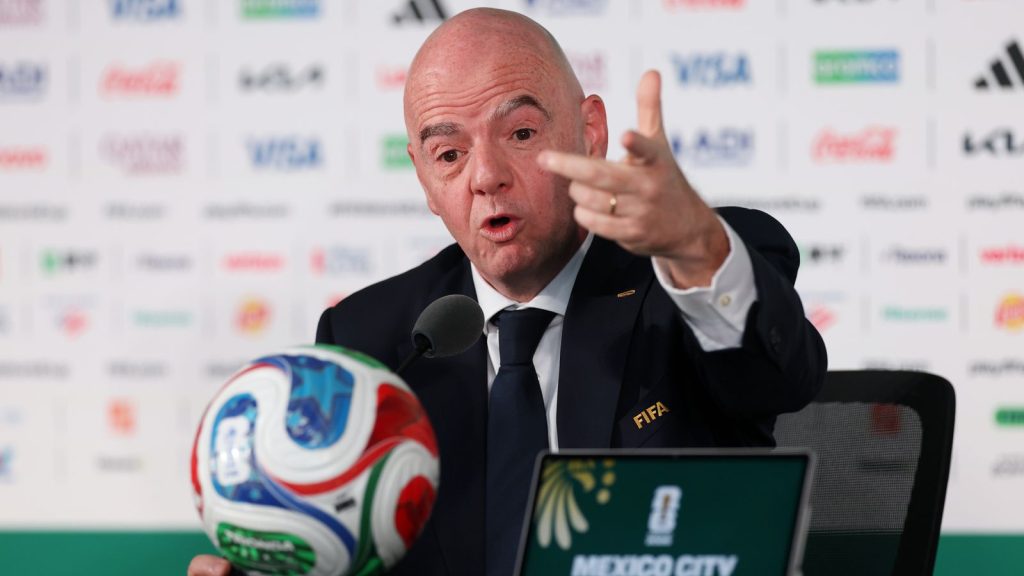

Speaking to the media on the evening of Wednesday, 10 June, ahead of the tournament’s opening festivities, Infantino said FIFA had done everything within its powers to address the challenges, but national laws ultimately prevailed.
The 2026 FIFA World Cup will be co-hosted by the United States, Mexico, and Canada, running from 11 June to 19 July 2026.
Among the issues raised during the press conference were the availability of tickets, with around 180,000 tickets reportedly still unsold, as well as visa difficulties facing fans, officials, and other participants travelling to the tournament, particularly those entering the United States.
Infantino cited the case of Omar Abdulkadir Artan, a Somali referee who was denied entry into the United States, describing the situation as unfortunate but beyond FIFA’s control.
“What happened to the referee from Somalia is regrettable. But we are not kings of the world who can instruct governments and national police forces. There are limits to our authority. We are a sports organisation. In his case, he was suspected of having links with terrorist groups,” Infantino said.
He added that FIFA consistently seeks solutions to such problems, although public pressure does not always help.
“We always try to find solutions, but sometimes making too much noise and speaking loudly can produce the opposite of the desired outcome. A tournament of this magnitude inevitably faces challenges—whether in the United States, Canada or Mexico. The important thing is to deal with them.”
Addressing criticism over ticket prices, Infantino argued that the cost remained reasonable considering the scale of the competition.
He noted that the cheapest tickets were selling for around $60, which he described as affordable given the expansion of the tournament format and the increased number of participating teams.
Infantino further emphasised that revenues generated through FIFA competitions are reinvested into the development of football worldwide and distributed among member associations, including countries that do not qualify for the World Cup.
The 2026 FIFA World Cup has drawn significant attention over the difficulties some football supporters and participants have encountered when attempting to travel to the tournament, particularly to matches scheduled in the United States.
Beyond the Somali referee’s case, several Moroccan fans reportedly failed to secure visas despite already purchasing match tickets. Talal Salah>, a videographer working with the Iraq national football team, was reportedly sent back to his home country, while Iraqi striker Aymen Hussein underwent seven hours of questioning before eventually being allowed entry.
Meanwhile, the Iran national football team, amid ongoing tensions between Iran and the United States, opted not to base itself in the United States despite being scheduled to play matches there. Instead, the team chose to stay in Mexico, following reports that some members of its delegation had been denied entry visas.