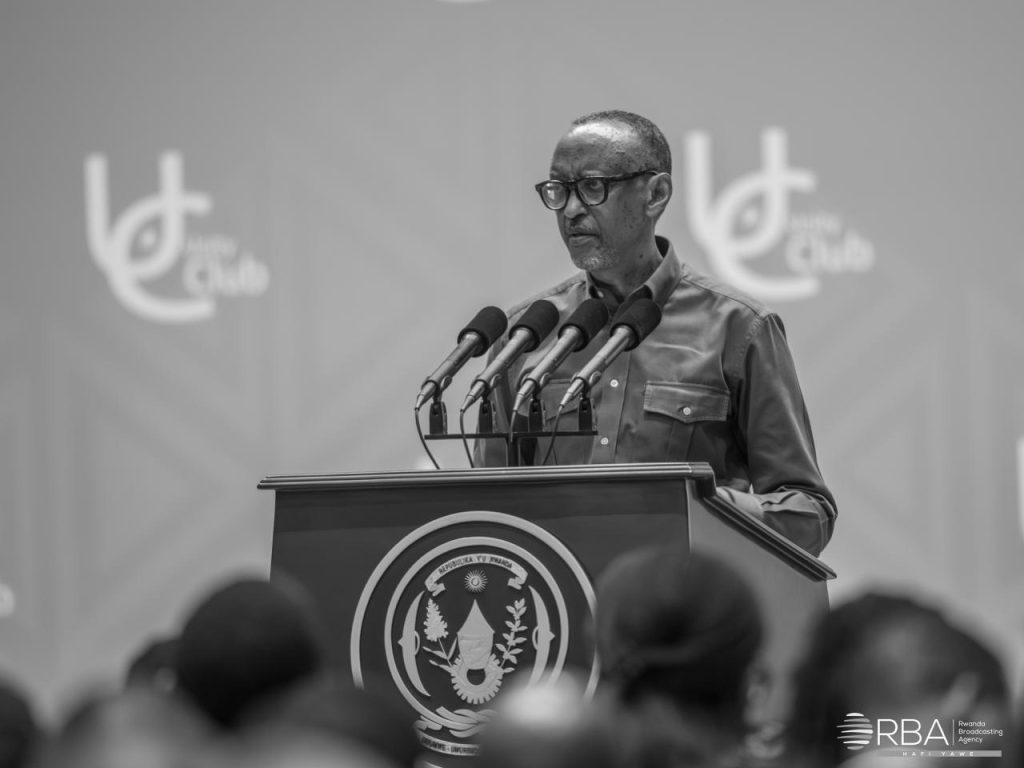

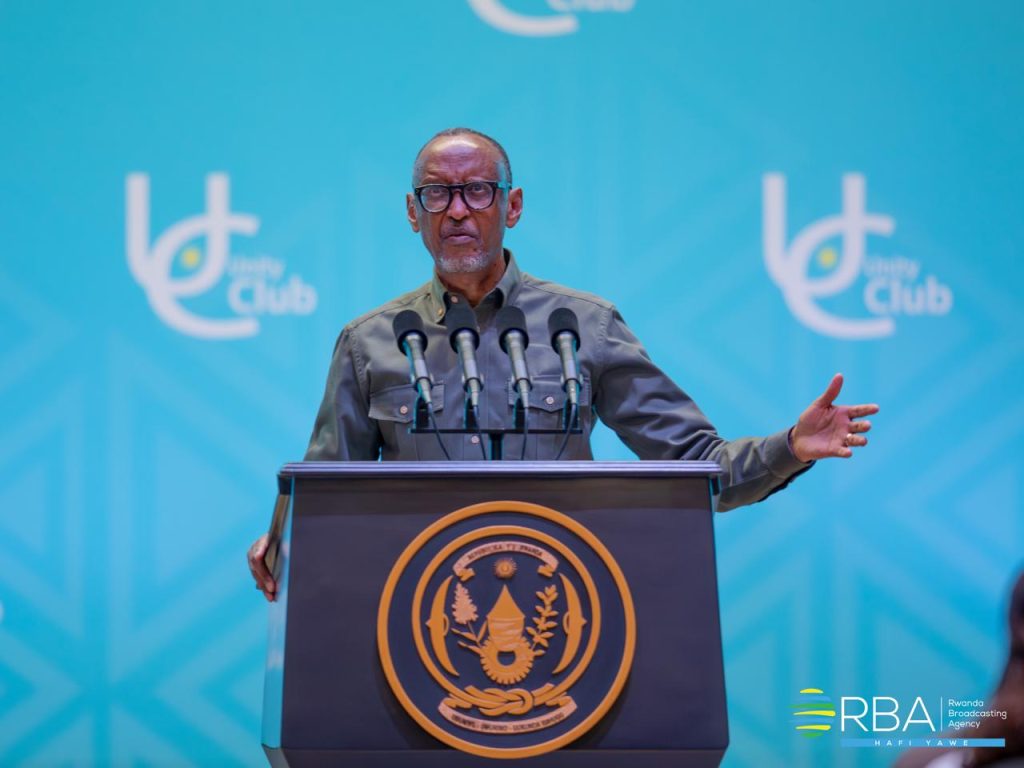
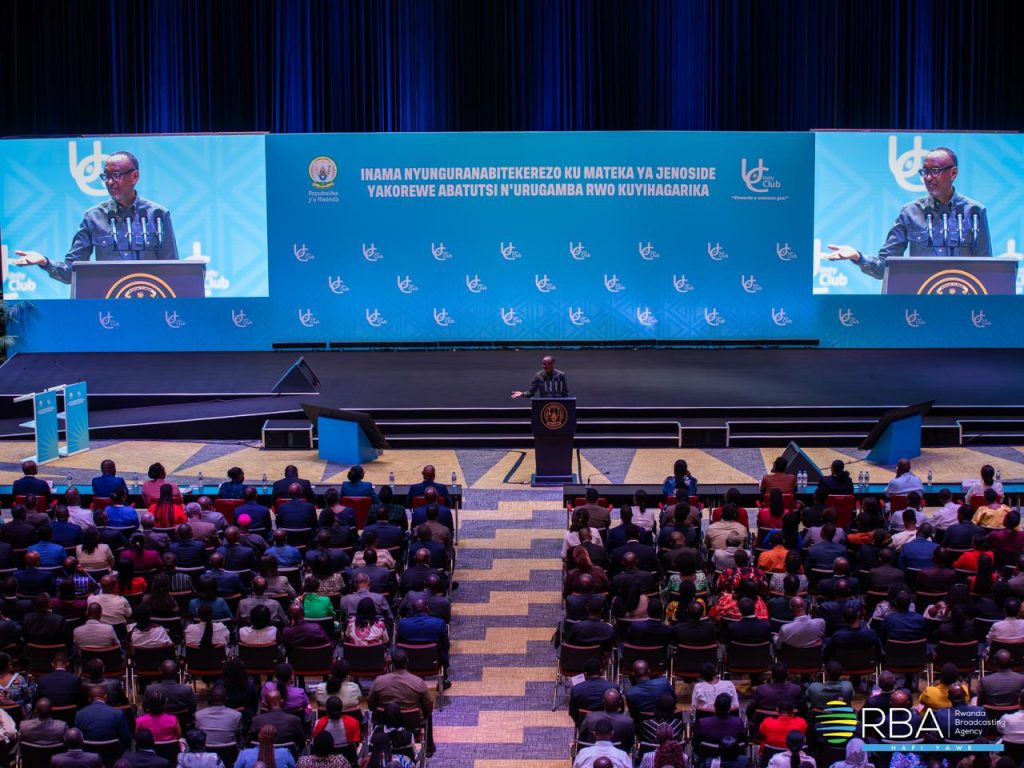
He made the remarks on Saturday at Intare Conference Arena, where he and First Lady Jeannette Kagame joined members of Unity Club Intwararumuri and other leaders for a dialogue on the history of the 1994 Genocide against the Tutsi and the liberation struggle that ended it.
The discussions examined the events that led to the 1994 Genocide against the Tutsi, the role played by those who planned and carried out the genocide, and the liberation struggle that brought it to an end and laid the foundation for rebuilding Rwanda and restoring trust among its people.
President Kagame said the history of a country such as Rwanda will never be viewed in exactly the same way by everyone because people interpret events through different perspectives, depending on the roles they played, the interests they pursued, or their connections to what happened.
He noted that debates about history often involve attempts to alter or misrepresent facts, saying it is understandable that people perceive events differently based on their involvement or interests. However, he stressed that such discussions should ultimately lead to establishing the truth.
Kagame said historical debates are frequently influenced by feelings of shame, reluctance to acknowledge one’s role in past events, or fear that the truth could implicate relatives, friends, or associates.
“There is a lot involved,” he said. “Some people feel ashamed of the role they played or the connections they had, and they do not want to revisit it. That is understandable. But what matters even more is rising above that and working together to establish the truth on which we can build the future.”
The President emphasized that some truths cannot be reversed, especially when they are supported by evidence or by the testimony of those who took part in the events.
He argued that once an individual openly admits responsibility for wrongdoing, there should be no further dispute over the facts. Instead, society should draw lessons from those admissions and use them to bring about positive change.
Kagame warned that while some people continue to resist the truth and seek to reshape history according to their own preferences, Rwanda cannot allow itself to become hostage to such efforts.
“A country cannot be held hostage by people who want history to be whatever they wish it to be or however they choose to understand it,” he said. “Research, discussion, and debate aimed at finding the truth deserve sufficient time, but there must also be limits.”
He added that Rwanda has already provided ample space over the years for dialogue, historical research, and the search for truth, but that opportunity should not be abused to distort history or mislead the public.
The President observed that people sometimes reject the truth not because they are unaware of it, but because acknowledging it could implicate family members, friends, ideological allies, or others with whom they share common interests.
He said some individuals defend those accused of crimes despite clear evidence simply because of personal relationships or shared beliefs, while others oppose the truth because accepting responsibility for past crimes could eventually reflect on them as well.
Kagame argued that the greatest danger is not only denying the truth but also reaching a point where people deny that crimes occurred at all or attempt to justify the killing of innocent victims.
“If someone was killed, it is as if some people are saying, ‘They deserved to die anyway. Why should they have lived?'” he said. “As Rwandans, we experienced this, and we must find lasting solutions.”
He stressed that Rwanda cannot ignore or sidestep its painful past. Instead, Rwandans have a responsibility to acknowledge history as it happened and draw lessons from it to build a nation fundamentally different from the one that descended into genocide.
While recognizing that Rwanda’s history includes immense tragedy, Kagame said those events should not define the country’s future or determine how Rwandans live today.
He said Rwanda has reached a stage where its people know the values they stand for and should be prepared to defend them—even, if necessary, with their lives.
“These are the principles we live by, and if necessary, the principles we would die for,” Kagame said. “That is where Rwanda has reached, whether some people like it or not. We have spent years explaining, persuading, and being patient, but there comes a point where that must end.”
He concluded by warning that dialogue, education, and tolerance have their limits, especially when actions or narratives threaten to push the country back toward the dark chapters of its past.
“When we see that things are reaching a point where they could return people to the tragic history we know, the answer is ‘No.’ We draw the line. Anyone who crosses it will face the consequences. We have no hesitation about that,” he said.
Courtesy of IGIHE
Photos by RBA