
The war across the Middle East intensified overnight as Israel launched a fresh wave of airstrikes on Iran while continuing operations against Hezbollah targets in Lebanon. As military action expands, governments worldwide are urgently moving to evacuate their citizens from the region.
US and Israel Expand Military Offensive
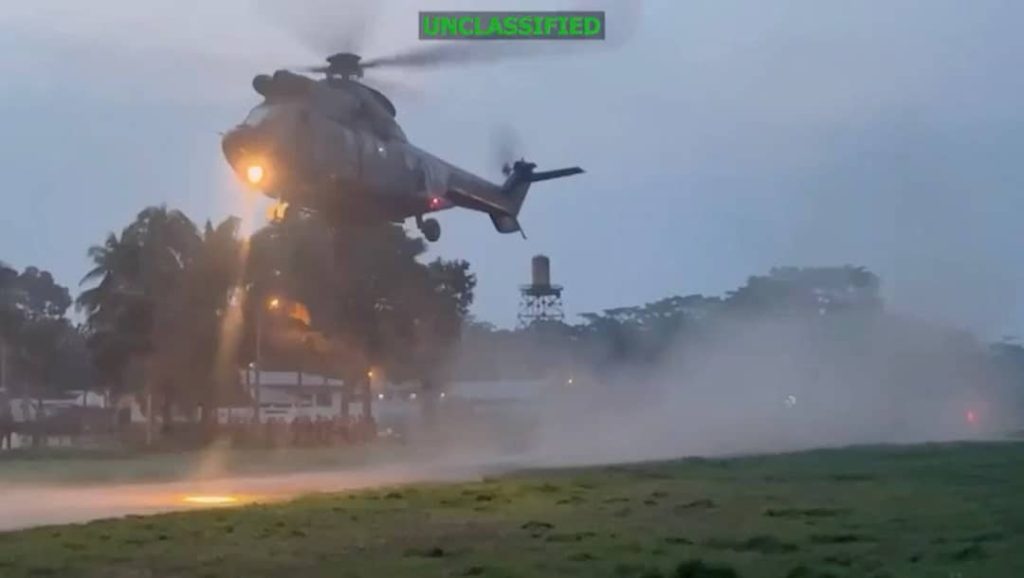
The United States says it has struck more than 2,000 targets inside Iran since launching its joint campaign with Israel. According to US Central Command, the operation involves over 50,000 troops, 200 fighter jets, two aircraft carriers and long-range bombers, marking one of the largest American military deployments in the region in decades.
US officials report that Iran has responded by firing more than 500 ballistic missiles and launching over 2,000 drones. American commanders say the focus is now on neutralising any remaining threats capable of targeting US and allied forces.
Israel confirmed it is carrying out a “broad wave of strikes” across Iran while simultaneously attacking Hezbollah facilities in Lebanon. Israeli air defence systems have reportedly intercepted additional missiles launched from both Iran and Lebanon, as reported by BBC News.
Civilian Death Toll Rises
The US-based Human Rights Activists News Agency (HRANA) reports that at least 1,097 civilians have been killed in Iran since 28 February. Among the victims are 181 children under the age of 10. More than 5,400 civilians have reportedly been injured.
HRANA states that over 100 attacks were recorded in the past 24 hours alone, striking military bases, residential neighbourhoods and medical centres. Hundreds of additional reported deaths are still under review.
Global Evacuations Underway
As airspace closures spread across the Gulf region, several countries have launched repatriation efforts.
United Kingdom:
The UK has chartered a commercial evacuation flight from Muscat, Oman, scheduled to depart at 23:00 local time on 4 March. The flight will prioritise vulnerable British nationals. Officials estimate that around 300,000 British citizens are currently in Gulf countries affected by the crisis.
Australia:
Australia is in discussions with airlines to assist approximately 115,000 Australians stranded in the Middle East. However, officials warn that evacuations remain difficult due to restricted airspace.
France:
France says about 400,000 French nationals are impacted. The government has urged citizens to register through its “Ariane” system, with over 25,000 already signed up for assistance.
Germany:
Germany indicated that commercial travel operators are responsible for repatriating most of the estimated 30,000 Germans in the region, with military evacuation considered only as a last resort.
Italy:
Italy has already flown 127 citizens home from Oman and Dubai, with authorities continuing to monitor the situation closely.
Spain:
Spain has begun evacuating its nationals from parts of the Middle East as security risks escalate.
United States:
The US has urged Americans to immediately leave more than a dozen Middle Eastern countries, though dedicated evacuation flights have not yet been announced.
Economic Shockwaves Spread
The escalating conflict is also shaking global markets. South Korea’s Kospi index temporarily halted trading after plunging more than 8%, triggering an automatic circuit breaker. Analysts warn that oil supply concerns and geopolitical instability could deepen economic uncertainty.
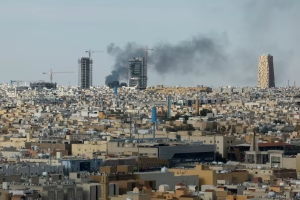
Saudi Arabia has also reported intercepting two cruise missiles and nine drones near Riyadh, underscoring the widening regional impact of the conflict.