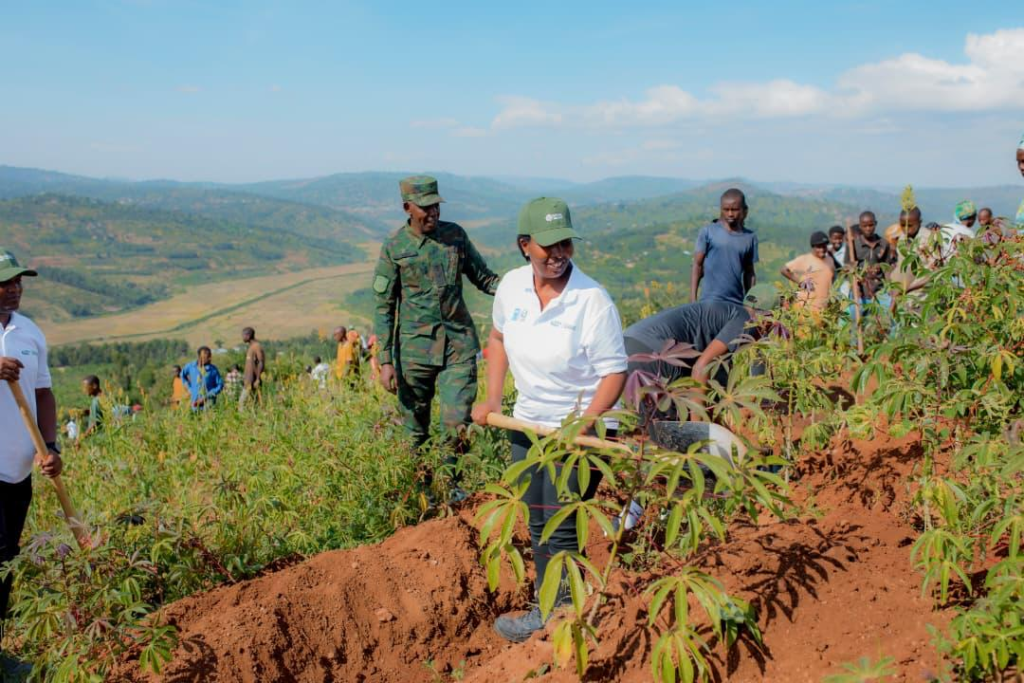

Gisagara District, Southern Province of Rwanda, The Minister of Environment, Dr. Bernadette Arakwiye, on 30 May, joined development partners, local authorities, and residents of Gisagara District to officially close Phase One and launch Phase Two of the Green Amayaga Project during the National Environment Week celebrations.
The day began with community work (Umuganda), bringing together government officials, development partners, including the United Nations Development Programme (UNDP), the Global Environment Facility (GEF), local authorities, and community members in environmental conservation activities aimed at restoring ecosystems and strengthening climate resilience.
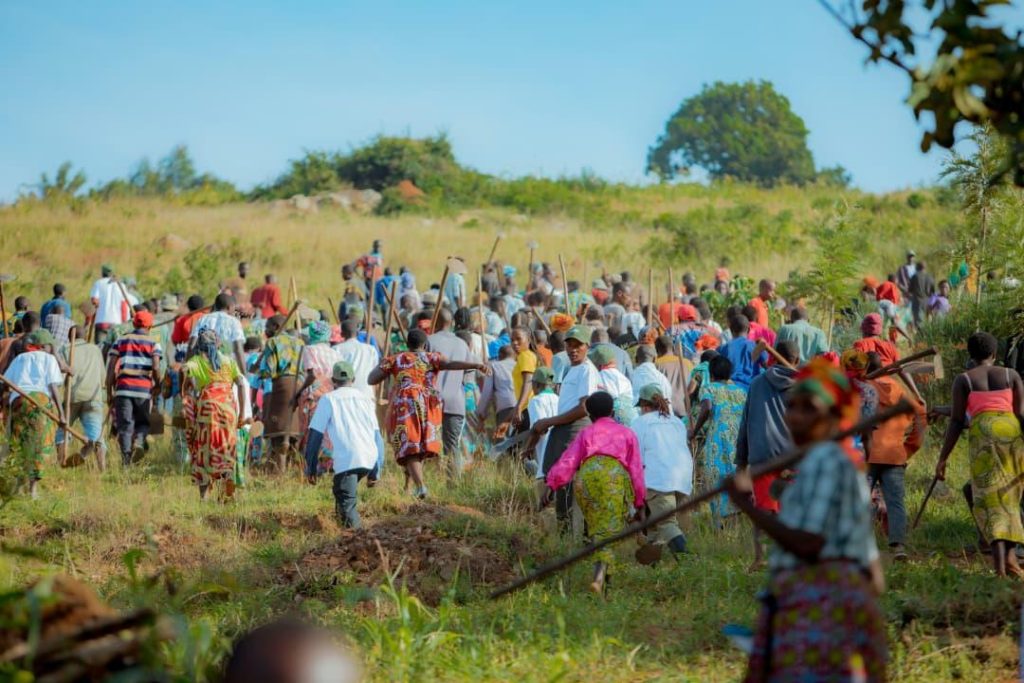
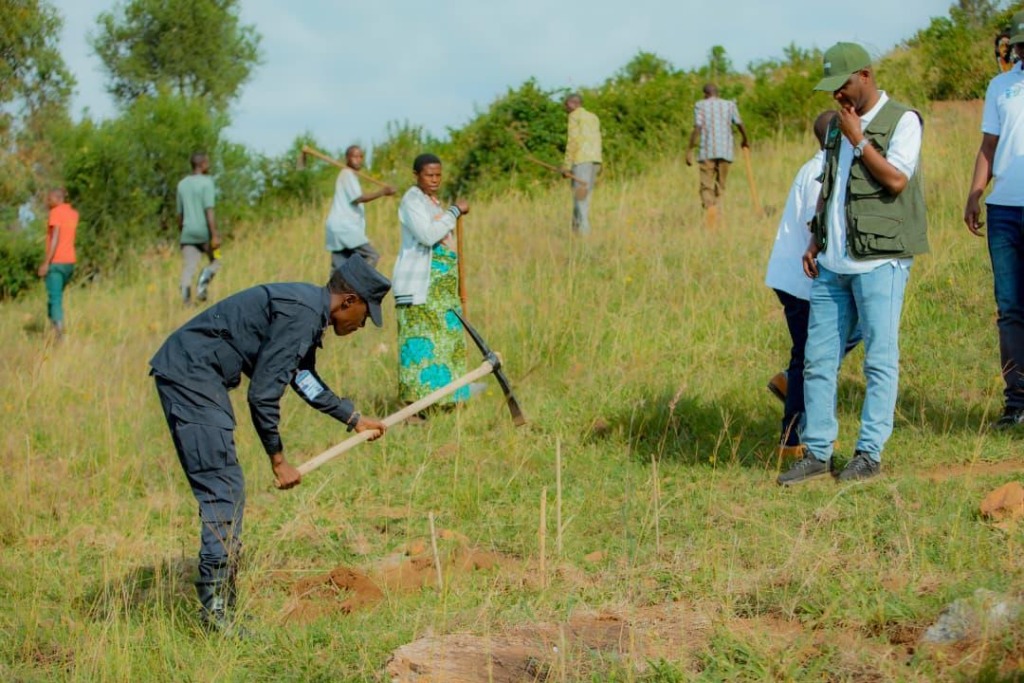
The Green Amayaga Project, implemented over the past six years, marked the completion of its first phase, which focused on ecosystem restoration, land protection, and community resilience building.
In her remarks, Dr. Bernadette Arakwiye reaffirmed Rwanda’s commitment to building a climate-resilient and environmentally protected nation, noting that the Amayaga region has been supported through interventions addressing past environmental challenges such as droughts, soil erosion, and land and forest degradation, with efforts aimed at restoring ecosystems and strengthening resilience for both people and biodiversity.
She further emphasised that the achievements realised will be sustained by the communities, stating that what has been achieved will not be reversed because residents will continue to preserve them.
The Minister urged residents to continue strengthening their commitment and partnership in environmental protection, highlighting that the project has improved livelihoods, empowered women and youth, and strengthened resilience.
Strong Partnership and Community Ownership
Appreciation was extended to the Government of Rwanda, UNDP, GEF, and all stakeholders for their continued support in advancing sustainable ecosystem restoration.
Dr. Arakwiye emphasised that environmental protection is closely linked to national development goals, including improved livelihoods, job creation, food security, and climate resilience.
She noted major achievements such as millions of seedlings planted, riverbanks restored, and clean cooking technologies introduced to households and schools.
UNDP Highlights Community Impact and New Beginning
The UN Resident Coordinator a.i. and UNDP Resident Representative, Fatmata Lovetta Sesay, described Umuganda as a symbol of unity, dignity, collective responsibility, and environmental stewardship.
“Today is important because we are celebrating, but at the same time, we are marking a new beginning of Green Amayaga Phase Two.” She stated.
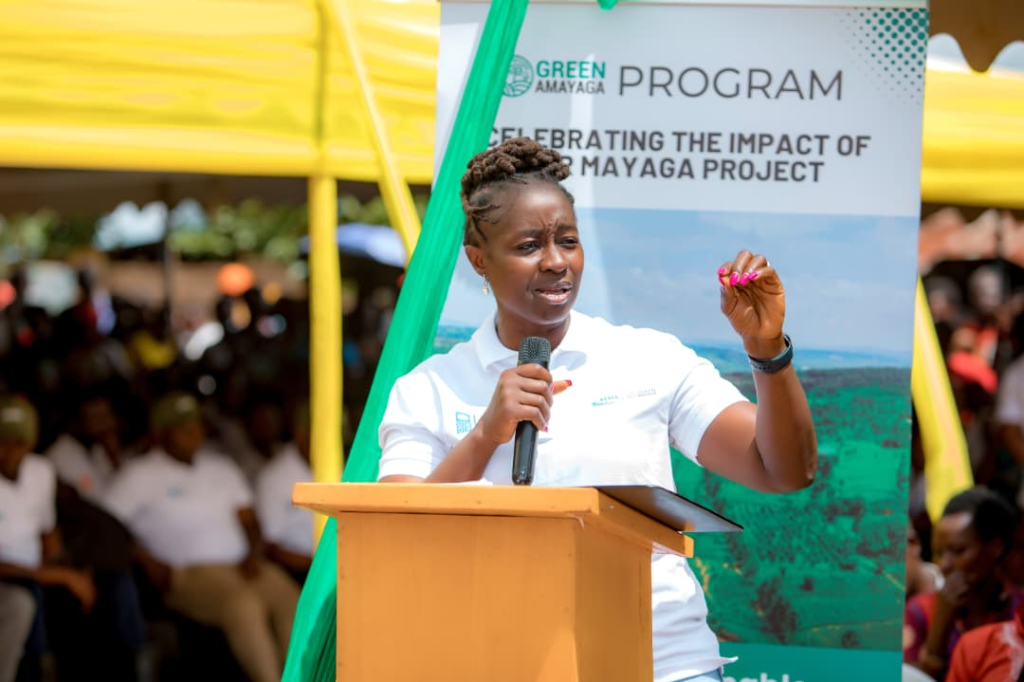
She emphasised that the achievements of Phase One were driven by communities:
“The achievements we celebrate today are really achievements of the communities. You have translated activities into concrete results.”
She highlighted key impacts such as livestock support, fruit tree production, improved nutrition, and clean cooking technologies that improved health and livelihoods.
Launch of Phase Two of Green Amayaga
Phase Two of the Green Amayaga Project has officially begun, expanding to additional districts including Huye and Muhanga. The new phase will focus on improved land management, job creation, and value addition of agricultural products to strengthen community well-being.
UNDP stressed that the next phase will move beyond production into processing and economic transformation to create more employment opportunities and increase community income.
Beneficiaries Share Transformation Stories
Birindwa Jean Paul, a beneficiary of the Green Amayaga Project, said that the initiative has become an example of what is possible in transforming livelihoods and restoring the environment.
He noted that since 2022, the project has improved the livelihoods of himself and fellow community members. He explained that it has helped increase land value and strengthened land conservation efforts, making soil erosion no longer a burden.
Birindwa also stated that crop harvests have significantly increased as a result of the Green Amayaga Project, highlighting its positive impact on agricultural productivity and land restoration.
Nyiraminani Josephine, a resident of Gisagara District in the Southern Province, said that the Green Amayaga Project has significantly improved her livelihood.

She explained that before the project was introduced, she used to harvest only one bag of maize. However, after the implementation of Green Amayaga, her harvest increased to between three and five bags of maize.
She noted that income from her agricultural activities has improved, enabling her to pay school fees without interruption and contribute to her household’s health insurance.
Nyiraminani expressed gratitude to the Government of Rwanda and its partners, including REMA, for bringing the project to her community, saying it has positively transformed their lives.
She further stated that residents are committed to preserving the achievements made so far and continuing to play their role in protecting the environment and sustaining the project’s gains.
Stakeholders emphasised that the success of Green Amayaga is a result of strong collaboration between the government, development partners, and local communities.
As Phase Two begins, residents were encouraged to remain actively engaged in protecting and building on the gains achieved, ensuring long-term environmental resilience and improved livelihoods.