
The Pentagon on Tuesday identified four of the six American soldiers killed in a drone strike in Kuwait, marking some of the first U.S. casualties in the expanding war with Iran. The service members were part of an Army Reserve logistics unit responsible for supplying troops with food, fuel, water, and equipment across the region.
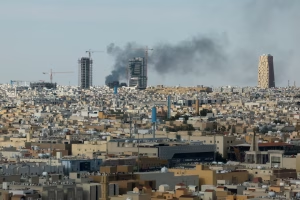
The soldiers died Sunday when an Iranian drone struck a command center at Port Shuaiba, Kuwait, just one day after the United States and Israel launched military operations targeting Iran. Tehran quickly retaliated with waves of missiles and drones aimed at Israel and Gulf states hosting American forces, dramatically widening the conflict.
The Soldiers Identified
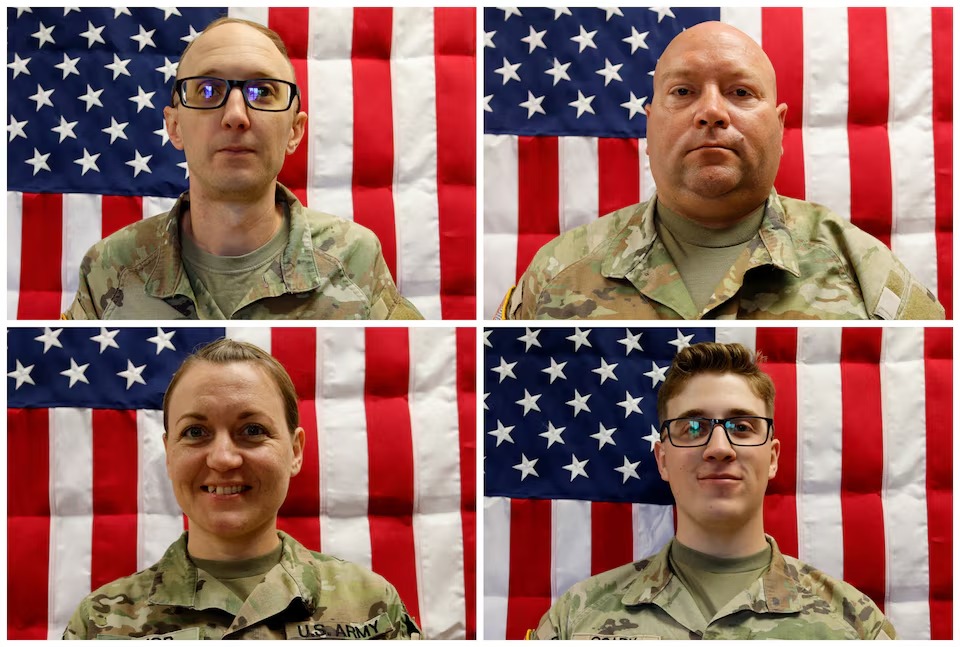
The Army named the fallen troops as Capt. Cody A. Khork, 35, of Florida; Sgt. 1st Class Noah L. Tietjens, 42, of Nebraska; Sgt. 1st Class Nicole M. Amor, 39, of Minnesota; and Sgt. Declan J. Coady, 20, of Iowa. Coady was posthumously promoted from specialist.
All four were assigned to the 103rd Sustainment Command, a Des Moines-based unit specializing in large-scale logistics operations. Their work ensured front-line forces remained supplied during overseas deployments a role that rarely draws headlines but is critical to sustained military operations.
Army Secretary Daniel Driscoll praised their service, saying the men and women of the unit “bravely volunteered to defend our country, and their sacrifice will never be forgotten.”
Personal Lives Cut Short
Beyond their military service, the four were remembered by loved ones as devoted family members and community contributors.
Nicole Amor was days away from returning home to her husband and two children. Her husband described her as a source of light who helped others through difficult times. An avid gardener, she enjoyed making homemade salsa from peppers and tomatoes she grew herself and spending time outdoors with her children.
Declan Coady, the youngest of the group, was a student at Drake University and served as an information technology specialist in the Army Reserve. An Eagle Scout, he had volunteered in his community, building furniture for organizations assisting homeless children.
Noah Tietjens, a husband and father, was mourned publicly by Nebraska leaders. U.S. Senator Pete Ricketts said his family was praying for Tietjens’ loved ones and urged Americans to honor the sacrifices made by military familiesas as reported by BIA .
Escalating Conflict
The strike in Kuwait underscores the growing vulnerability of U.S. forces stationed across the Middle East. Although facilities are often protected by blast walls and layered security, the increasing use of drones has exposed new risks in modern warfare.
President Donald Trump acknowledged that more casualties could follow as Iran continues retaliatory attacks. “Sadly, there will likely be more before it ends,” he said, reflecting the sobering reality facing U.S. service members deployed in the region.
As the war intensifies, the deaths of these four reservists highlight both the human cost of the conflict and the often-overlooked role of logistics units that sustain military operations far from home.