
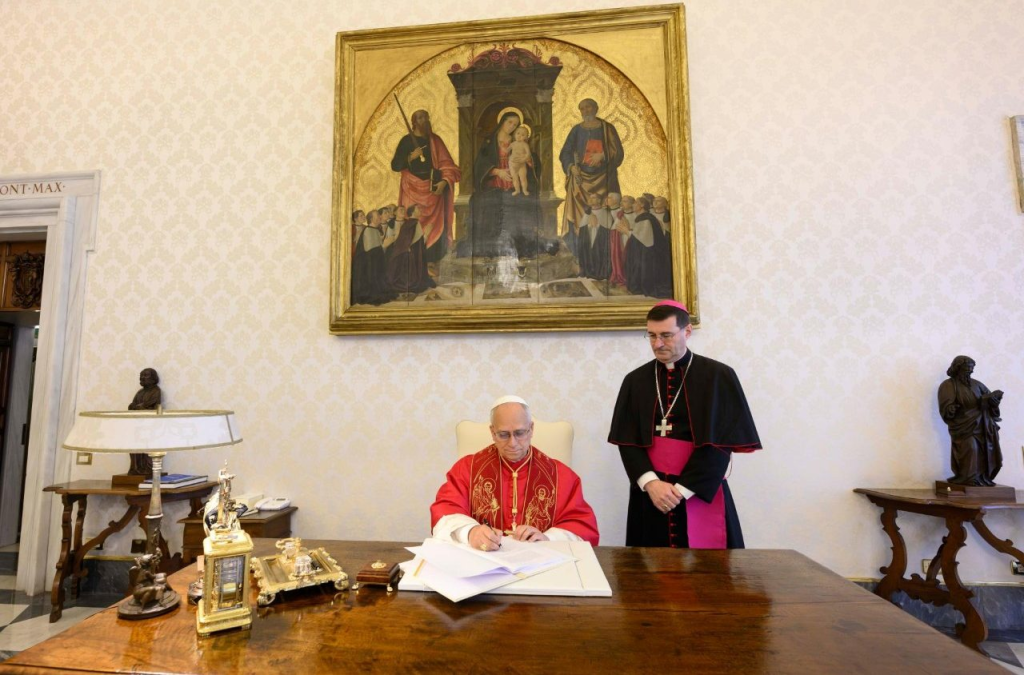

Pope Leo XIV has issued a strong appeal for global ethical governance of artificial intelligence, warning that the fast-growing technology could intensify conflict, deepen inequality, and concentrate power in the hands of a few actors.
In his first major encyclical, Magnifica Humanitas: On Safeguarding the Human Person in the Time of Artificial Intelligence, the Pope places human dignity at the center of the global debate on AI, urging that technological progress must remain firmly guided by moral responsibility and the common good.
Magnifica Humanitas is Pope Leo XIV’s first encyclical, a major Church document on artificial intelligence and its impact on human life. The title means “The Greatness of Humanity,” and it highlights his message that human dignity must stay at the center of technological progress. An encyclical is an official teaching letter issued by the Pope to guide the Catholic Church and the wider world on important moral and social issues.
He cautions that without strict oversight, AI risks being misused in ways that fuel instability, particularly through its increasing role in modern warfare. The encyclical, therefore, calls for some of the strongest ethical restrictions on the military use of artificial intelligence, stressing that human life and civilian protection must always come first.
Pope Leo also raises concern over the unequal control of advanced technologies, warning that when AI is dominated by a small number of powerful corporations or states, it can widen global divisions and weaken social justice.
A key message in the document is a call to rethink how societies understand war. The Pope questions traditional interpretations of the “just war” concept, arguing that it no longer fits the realities of the modern world. He insists that the use of force should be strictly limited to self-defense and encourages diplomacy, dialogue, and reconciliation as the primary path to peace.
The encyclical further explores the wider social impact of AI, including its influence on work, privacy, and human identity. Pope Leo warns against ideas that blur the distinction between humans and machines, saying such trends risk undermining the unique dignity of the human person.
Using the biblical image of the “Tower of Babel,” he illustrates the danger of unchecked technological ambition driven by control and uniformity rather than cooperation and diversity.
While the Vatican does not reject technological progress, the document emphasizes that AI must be guided by inclusive governance, transparent legal frameworks, and shared ethical standards. It calls on governments, tech developers, and civil society to jointly ensure that innovation serves humanity rather than narrow interests.
The encyclical also highlights the importance of education and communication, urging the development of an “ecology of communication” that promotes truth, transparency, and critical thinking, especially among young people navigating digital environments.
On economic and labor issues, Pope Leo acknowledges the benefits of automation but warns that it must not lead to job insecurity or systems where humans are forced to adapt to machines rather than technology serving people.
In its final sections, the document urges a global shift from a “culture of power” toward what it describes as a “civilization of love,” built on justice, dialogue, and solidarity. It calls for cooperation among nations, institutions, and religious communities to shape a more humane technological future.
Magnifica Humanitas positions artificial intelligence as a defining moral challenge of the 21st century, insisting that progress must never come at the expense of human dignity, but should instead strengthen what it means to be fully human.