
Rwanda’s Government Spokesperson, Yolande Makolo, has stated that Rwanda respects the decision issued by the International Arbitration Tribunal regarding its case against the United Kingdom, noting that the dispute involved complex legal issues that could reasonably have led to different legal conclusions, as highlighted by one of the arbitrators.
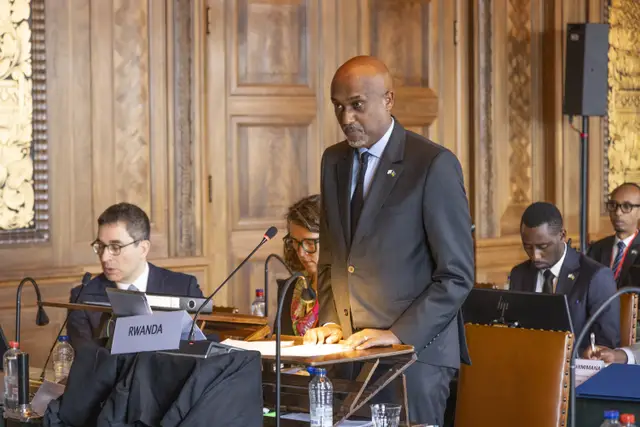
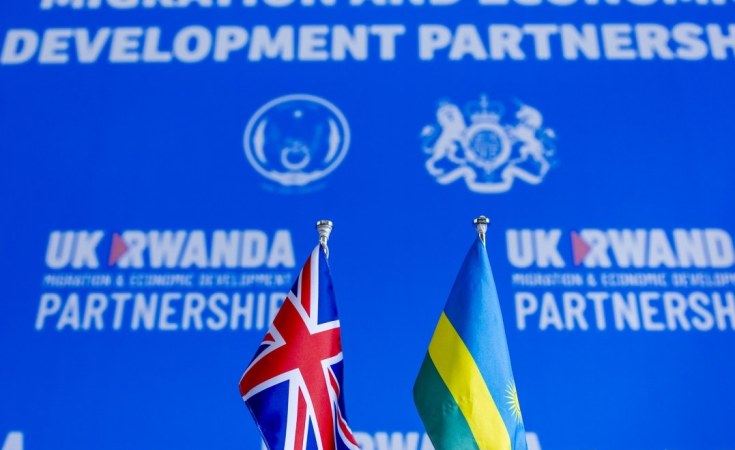
The International Arbitration Tribunal, based in the Netherlands, ruled that Rwanda is not entitled to compensation from the United Kingdom in relation to the termination of the migration partnership agreement between the two countries.
The panel was chaired by Peter Tomka of Slovakia. Other members included Mohamed Abdel Wahab and Joan Donoghue of the United States.
Rwanda had argued that £50 million due in the second year of the agreement remained an outstanding payment that the UK was legally obligated to make. It also sought either an additional £50 million for the third year of the agreement or £10.4 million calculated on a pro-rata basis for the period before the agreement was terminated.
In addition, Rwanda claimed that the UK had breached Articles 18 and 19 of the agreement and sought either £6 million in damages or a formal apology from the UK for what it described as a violation of Article 19.
The UK rejected all of Rwanda’s claims and asked the tribunal to dismiss them in their entirety.
In its final ruling, the tribunal rejected Rwanda’s request regarding the £50 million payment for the second year. However, the decision was not unanimous.
Professor Mohamed Abdel Wahab issued a dissenting opinion, arguing that the £50 million payment for the second year remained a legal obligation that the UK still owed Rwanda.
He relied on Article 13 of the Vienna Convention on the Law of Treaties, which outlines how exchanges of diplomatic documents between states may acquire legal significance.
According to Abdel Wahab, diplomatic correspondence exchanged in November 2024 did not demonstrate the clear mutual consent required to constitute a valid amendment to the agreement.
He stated that the absence of genuine agreement between the two parties was evident and, on that basis, concluded that the £50 million payment remained legally due to Rwanda.
Although his opinion did not prevail, it underscored the central legal question in the case: whether diplomatic exchanges could effectively remove a financial obligation established under a formal treaty.
Commenting on the outcome, Yolande Makolo said Rwanda respects the arbitration tribunal’s decision and considers the matter closed.
“We have taken note of the separate and dissenting opinion issued by Professor Mohamed Abdel Wahab, which demonstrates that the issues before the tribunal were complex and capable of different legal interpretations,” she said.
She added that the dissenting opinion found that the diplomatic exchanges of November 2024, on which the UK relied, did not legally alter the financial commitments agreed between the two countries.
Rwanda further stated that it remains committed to maintaining constructive relations with its international partners, guided by international principles and mutually beneficial cooperation.