

The Government of Rwanda has announced that after realizing the European Union had begun using its anti-terrorism mission in Cabo Delgado as a political tool, it held discussions with the Government of Mozambique, which agreed to cover the full cost of the mission instead of allowing it to stop.
The European Union had previously been providing €20 million in support for the mission, but disagreements over political issues have continued to affect that support.
The EU Ambassador to Mozambique, Antonino Maggiore, recently stated that the bloc now prefers to focus on training Mozambique’s military rather than continuing direct support for Rwanda’s mission.
“At the moment we are in discussions, because as I said the mission has now lasted four years and the objective is to discuss how it can be extended. It is a decision that will be taken by the 27 member states,” he said.
When asked whether the EU would continue funding the Rwanda Defence Force mission in Cabo Delgado, Maggiore replied, “At the moment, no.”
In a public statement, Minister Nduhungirehe highlighted the achievements of Rwanda’s military mission.
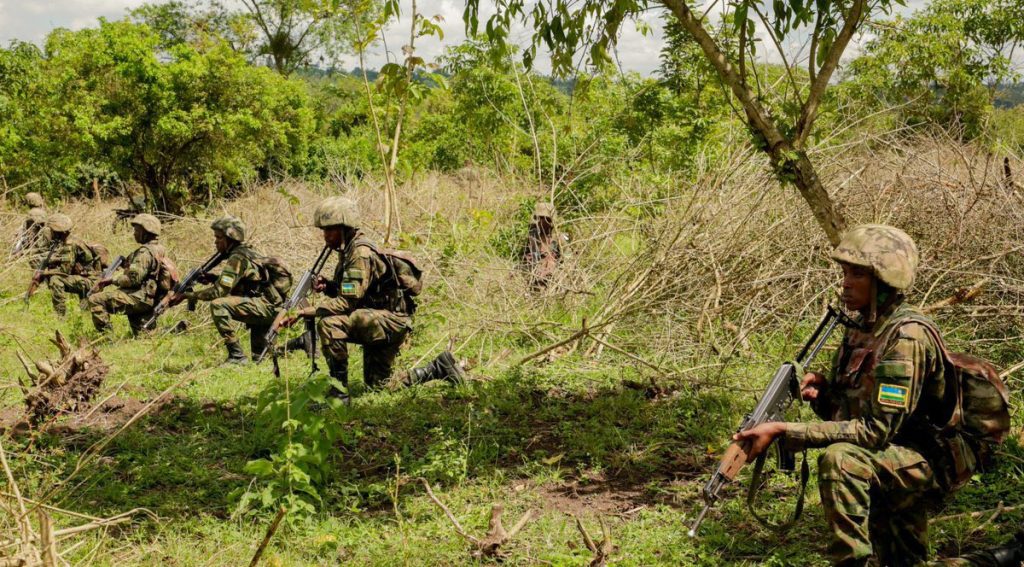
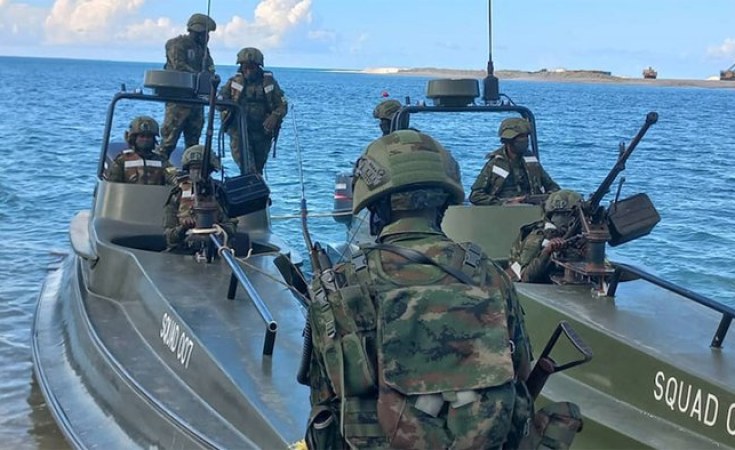
“In 2021, Rwanda’s security forces were deployed to Cabo Delgado at the invitation of the Government of Mozambique. Over the past five years, the mission has been successful: peace and stability have returned, families have gone back home, children returned to school, businesses reopened, Mozambique’s army has been trained and continues to receive training, and American and European companies have been able to safely resume their $50 billion gas investments,” he said.
He added that Rwanda’s security forces had also received financial support from the European Peace Facility, though it represented only a small portion of Rwanda’s overall spending in Mozambique and of the EU’s investments in Cabo Delgado.
Nduhungirehe further argued that despite the mission’s success, the European Union had turned it into a political issue for various reasons.
“Unfortunately, we noticed that Rwanda’s requests to the EU were met with hesitation and politicized by some EU countries, including two former colonial powers. The crucial support Rwanda provides to the people of Mozambique has been turned into a tool to criticize Rwanda, while some countries continue benefiting economically from our contribution in Cabo Delgado,” he said.
He explained that after observing these difficulties with European partners, Rwanda and Mozambique met and agreed that Mozambique would finance the RDF mission in Cabo Delgado so that it could continue.
“That is why this year Rwanda returned to the basics by choosing to deal directly only with the Government of Mozambique, which has committed and will continue to provide primary support to Rwanda’s security forces in Cabo Delgado. Cooperation between the two governments has gone well and will continue, while Rwanda’s work in Cabo Delgado remains appreciated by our sister nation Mozambique,” he stated.
Before these talks, Rwanda had warned that it was prepared to withdraw its troops from Mozambique if sustainable funding for the mission was not secured.
Minister Nduhungirehe had previously said Rwanda’s forces could not continue operating while constantly facing pressure or sanctions.
“We reminded them that Rwanda’s forces are serving Mozambique, the people of Mozambique, and the international community as a whole, including the companies investing there. They cannot continue this work while being constantly criticized, sanctioned, and pressured,” he said.
Rwandan troops were first deployed to Cabo Delgado in July 2021 at the request of the Mozambican government to help fight terrorism that had destabilized the province since 2017. Since then, several rotations of troops have been deployed.