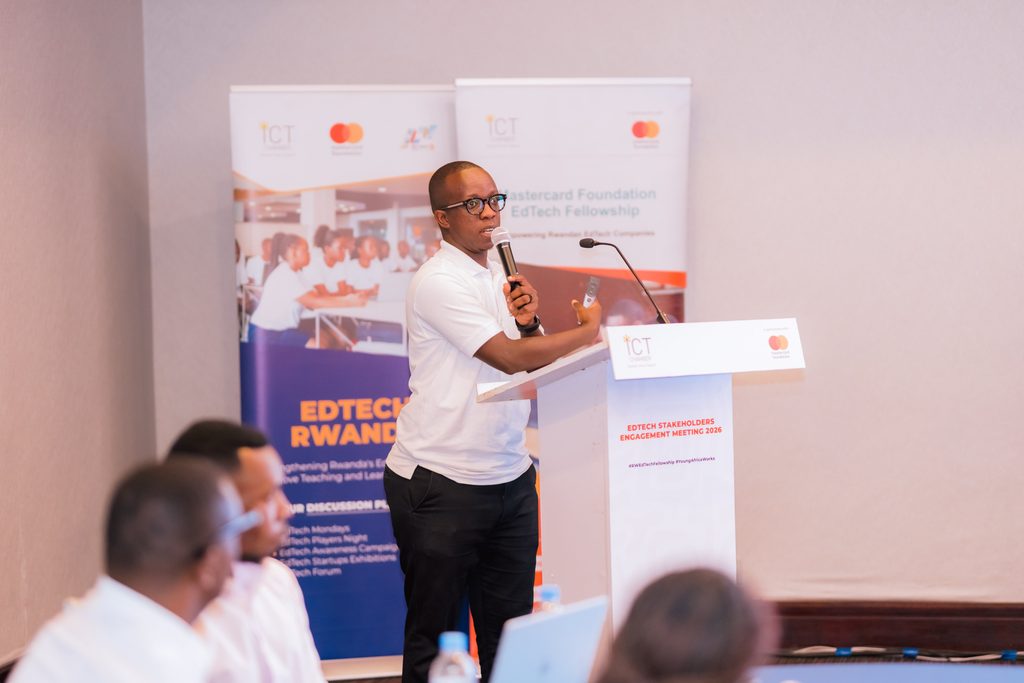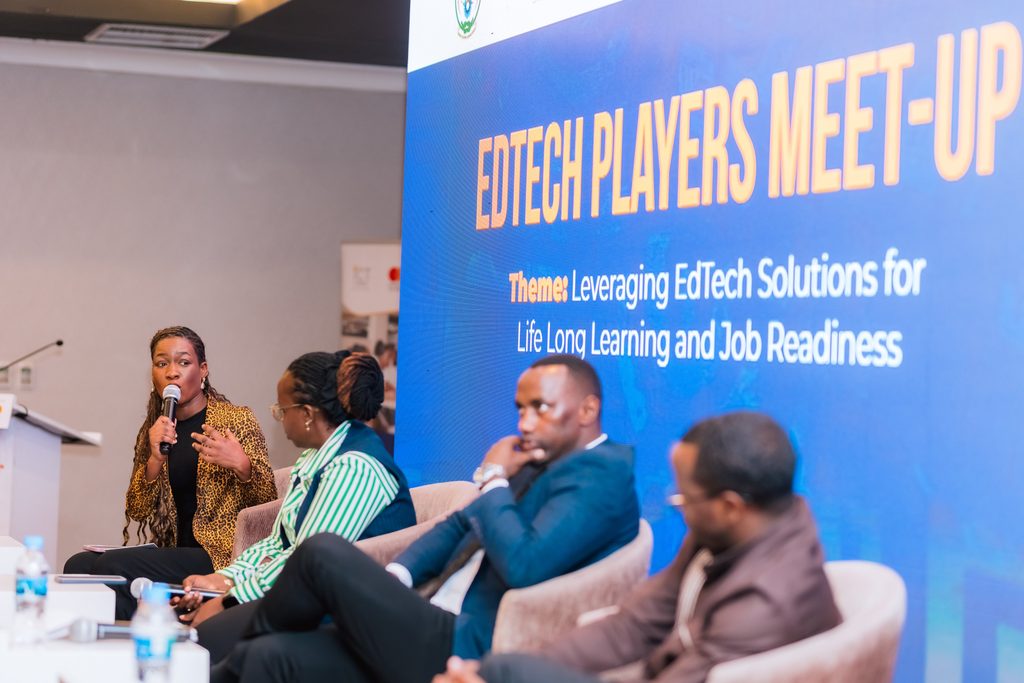
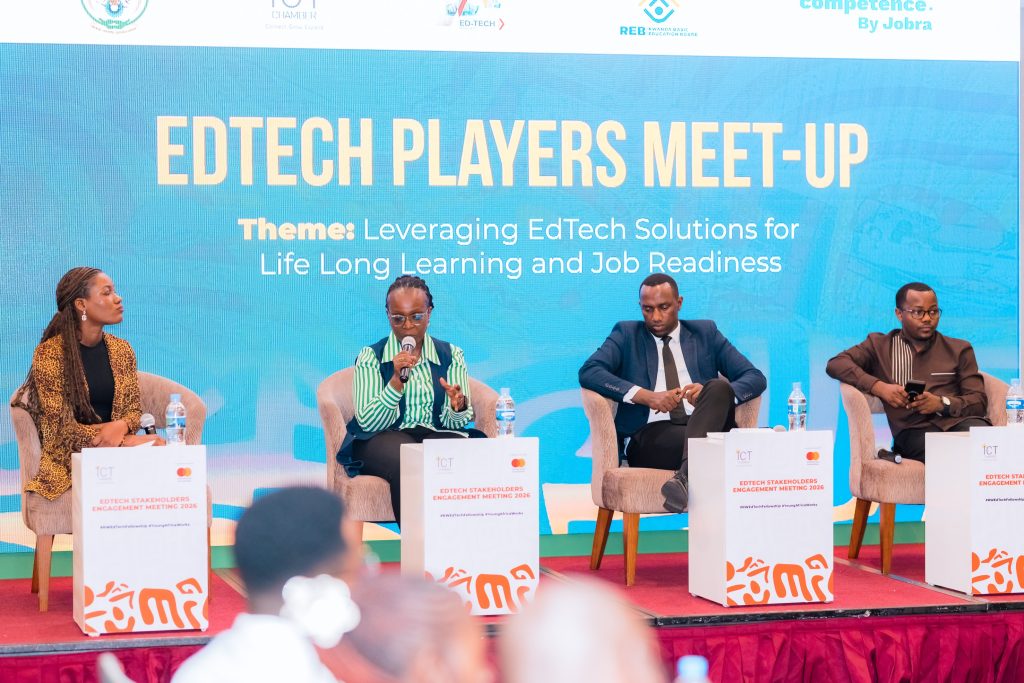

The companies presented their various technology solutions on October 2, 2026, during a meeting that brought together stakeholders in education technology. The event was attended by officials responsible for education and technology in government institutions, district education representatives and private-sector companies developing innovations in the sector.
The meeting aimed to strengthen collaboration and expand the use of technology in education across the country.
The Mastercard Foundation EdTech Fellowship is implemented by the Rwanda ICT Chamber in partnership with the Mastercard Foundation. The programme supports companies developing education technology solutions in Rwanda.
The first cohort is supporting eight companies: Zora Robotics Ltd, Soma Foundation Rwanda, Berulo Foundation, Creativity Lab, Nyereka Tech, Brain Ink, EdTech Solutions and Competence By Jobra. Each company is expected to deploy its technology in at least 10 schools, reaching more than 5,000 students in total.
Among the companies showcasing their solutions were Zora Robotics and Nyereka Tech, which demonstrated robots used in schools. Students are taught how to assemble the robots, programme them and use them as part of their learning.
Umutesi Delice, Project Manager at Zora Robotics, said the approach helps students learn by putting what they are taught into practice.
“We first teach students how to give instructions to a robot so that it can perform a task, how to programme it using code, and then we give them the different components and show them how to assemble them. For example, we have robots that teach and repeat lessons without getting tired, making it easier for students to understand,” she said.
The companies had already started introducing their solutions in schools before receiving support from the Mastercard Foundation EdTech Fellowship. They say they have already observed changes in the way students learn after adopting the technology.
Munyeshyaka Shadrach, founder of Nyereka Tech, developed a learning platform called Nedu App. He said the use of robots had significantly increased the number of practical activities students undertake to apply what they have learned.
“Currently, in the schools where we have introduced the robots, students can carry out up to 100 practical activities within three months using the robots, whereas previously they might have completed only three to five practical activities throughout an entire year,” he said.
Other technologies showcased at the event are designed to reduce the amount of time teachers spend marking examinations while helping individual students identify areas they have not understood and need to study further.
Ntwari David, a manager at Brain Ink, said the company’s technology uses artificial intelligence to mark examinations and explain to students why they received particular results. It also provides students with exercises based on areas they have not understood to help them improve.
He said data collected in collaboration with schools shows that Brain Ink has helped students understand 70% of the concepts they previously struggled with.
“Our system and the data we have collected with schools show that Brain Ink has helped students understand 70% of the concepts they did not previously understand. For example, there was a student who consistently scored below 50%. After using our platform for just six months, the student is now scoring around 75%,” he said.
Competence By Jobra also showcased its platform, which provides exercises and training to help people preparing to enter the labour market acquire the skills and competencies required for the jobs they seek.
To make books more accessible to students, SOMABOX demonstrated a device that stores educational materials and can be connected to students’ computers, allowing them to access and read the materials without an internet connection. The solution is intended to address challenges related to limited access to textbooks, including situations where many students have to share a single book, as well as shortages of learning materials in areas with limited internet connectivity.
The Berulo App, meanwhile, focuses on monitoring students’ learning, including identifying pupils who are absent from school and sharing that information with education officials so they can follow up in a timely manner. The system could help identify learning challenges at an early stage and support efforts to address them.
Gashumba Jack, Director of Education in Bugesera District, said the innovations showcased could help address some of the challenges facing the education sector.
“These partners have developed innovations that can help us address the challenges we face. For example, there is technology called Berulo that shows when a student is absent from school, allowing everyone to see the information, from the teacher up to me at the district level,” he said.
However, Gashumba expressed concern that the technologies could face challenges reaching all parts of the country.
Ntale Alex, CEO of the Rwanda ICT Chamber, said they intend to expand the use of the solutions and take them to schools in remote areas.
“Now we are going to reach those schools in remote areas and bring these projects to them so that they can also start using them. We want them to improve the learning of at least more than 40,000 children, make teachers’ work easier and also connect them with other technology companies from outside the country,” he said.
The Mastercard Foundation EdTech Fellowship also aims to improve learning outcomes for girls, students with disabilities and learners in rural areas by making it easier for them to access education technology.