
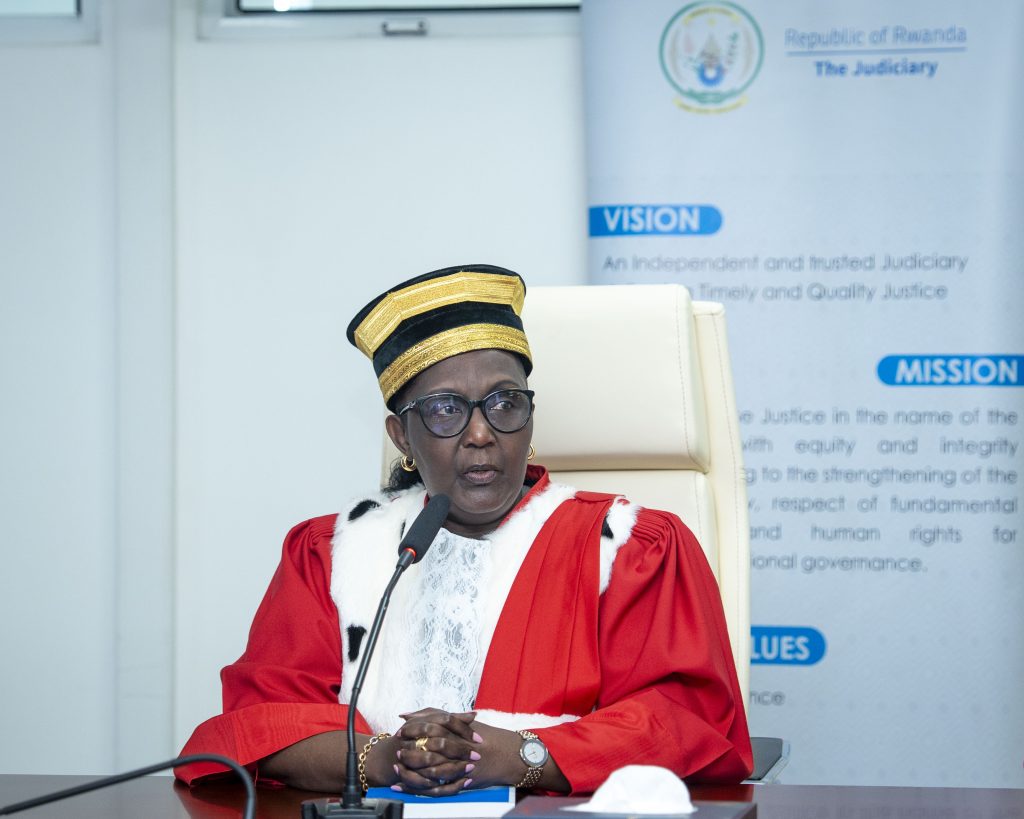

The Supreme Court of Rwanda has introduced new guidelines aimed at making court proceedings involving children more child-friendly and ensuring their protection throughout the process, from the registration and hearing of cases to the delivery of judgments.
Under the new guidelines, courts will, where possible, set specific hearing days for cases involving children and assign specially trained judges to handle them.
The guidelines apply to anyone under the age of 18, whether involved in a criminal or civil case.
Under the new procedures, prosecutors will be required to submit a detailed report on the child before a court can register and accept the case.
The report will be included in the case file, and failure to submit it will prevent the case from being registered by the court.
This requirement applies both to children accused of offences and children who are victims of offences.
The report must provide information about the child’s personal and family history, health, education, development and home environment, as well as the findings of any medical or psychological assessment conducted.
It must also provide recommendations on how the child can be reintegrated into society or supported in their recovery.
Courts will use the information when considering child-friendly ways of resolving cases and other measures aimed at protecting the child.
Pre-trial conference
Before a case involving a child is scheduled for hearing, the court registry will conduct a pre-trial conference using any available means, including technology.
The conference will help establish whether the case file is complete and whether the child is prepared to participate in the proceedings.
Judges and lawyers will not wear professional robes when hearing children’s cases
Judges, prosecutors and lawyers handling cases involving children will not wear their usual professional attire during children’s hearings.
They will also be required to use language that the child can understand and explain the case and all proceedings that will take place.
Security officers wearing official uniforms will not be allowed inside the courtroom during children’s hearings unless their presence is necessary for security purposes.
Children will be separated from adults during transportation and while waiting for hearings
A child accused of an offence and in detention will be kept separate from adults and transported to court separately from them.
Children summoned to court will also wait in a safe area separate from adults, both before and after their hearings.
They may be accompanied by a trusted adult and, where necessary, by a lawyer.
Children’s identities will be protected
The identity of a child accused of an offence, a child who is a victim of an offence or a child appearing as a witness will not be disclosed publicly or through the media.
People permitted to attend the proceedings will also be prohibited from publishing information that could reveal the child’s identity or other confidential information relating to the case.
Reintegration of children will be prioritised
The guidelines require courts to prioritise the reintegration and rehabilitation of children rather than focusing primarily on punishment.
Where possible, courts will encourage children and victims of offences to reach an agreement or resolve disputes amicably, except where the law provides otherwise.
Judges will also be required to consider the individual circumstances of each child and reflect those considerations in their decisions.
The new guidelines are intended to ensure that cases involving children are handled without unnecessary delays while establishing specific measures to protect children and uphold their rights throughout the judicial process.