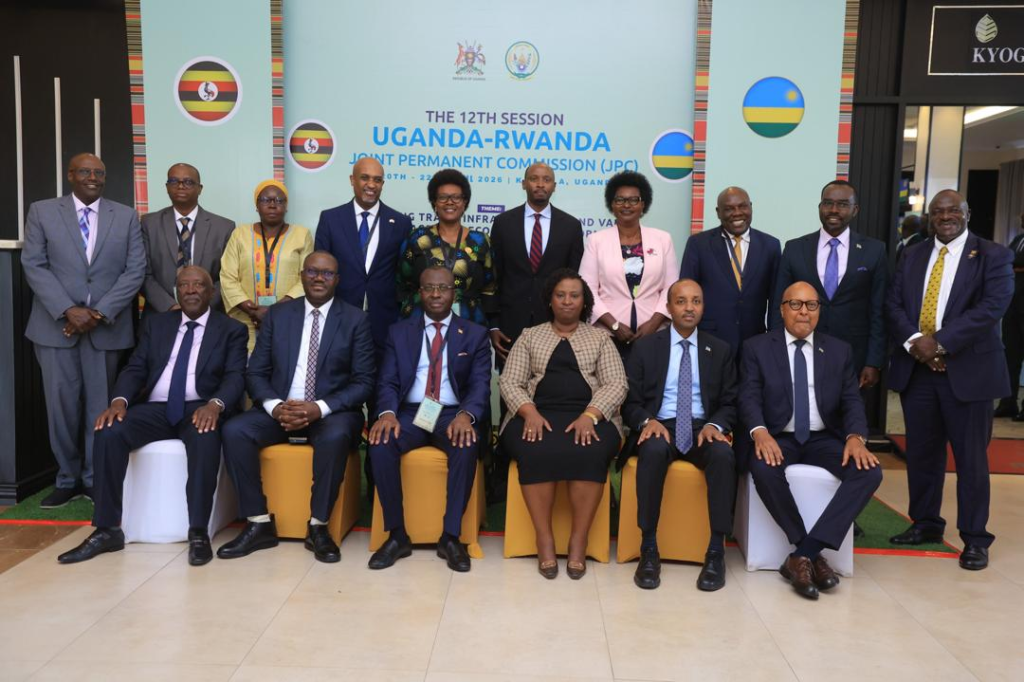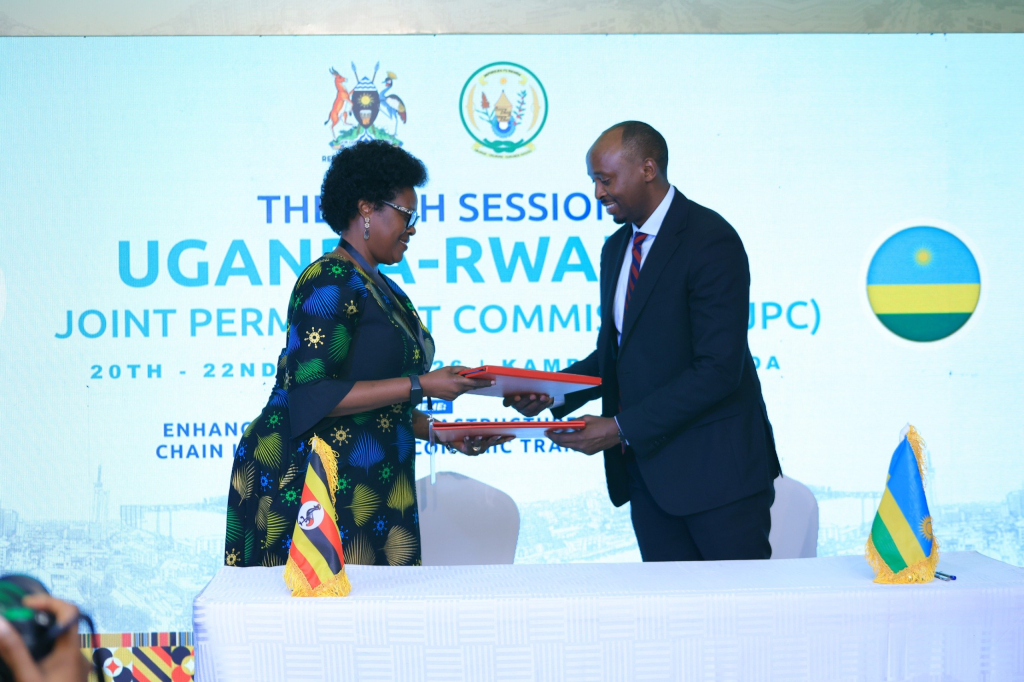

Earlier this week in Kampala, Rwanda and Uganda took another step in strengthening bilateral relations by signing four cooperation agreements aimed at deepening collaboration across key sectors, including health, agriculture, education, and local governance.
The agreements were concluded during the 12th session of the Joint Permanent Commission (JPC), a structured bilateral platform that brings together officials from both countries to review progress, address shared priorities, and advance joint development initiatives.
In the health sector, the Memorandum of Understanding was signed by Rwanda’s Minister of Health, Dr Sabin Nsanzimana, alongside his Ugandan counterpart, Dr Jane Ruth Aceng Ocero. The agreement focuses on strengthening preparedness for disease outbreaks, expanding capacity-building for health professionals, and harmonising public health priorities.
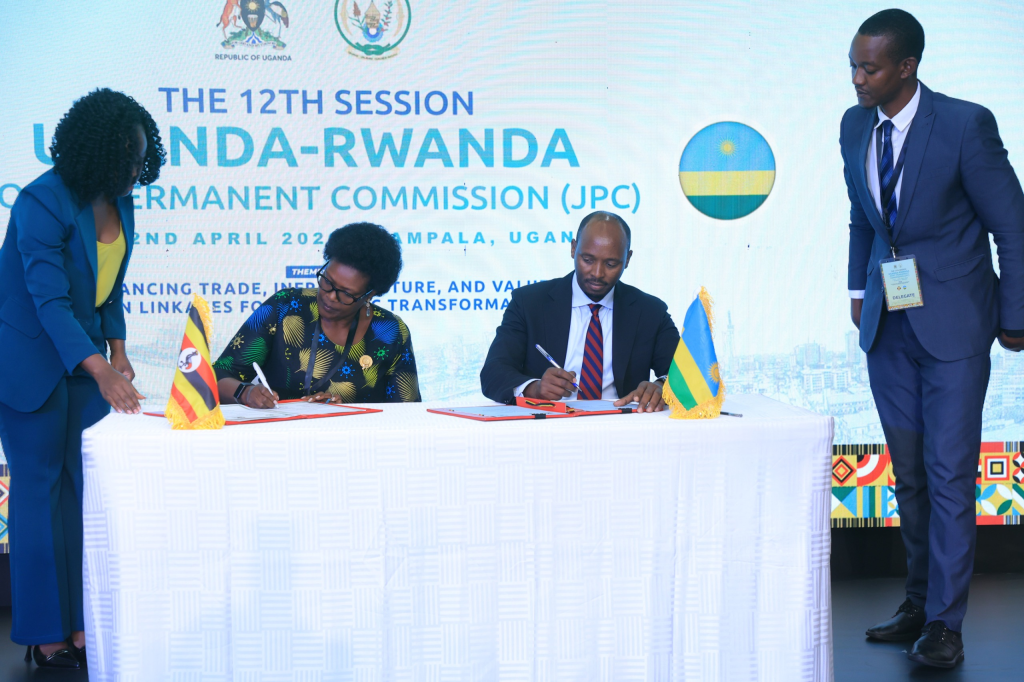
In addition, both sides highlighted that the partnership is expected to improve coordination in responding to regional and cross-border health challenges, thereby enhancing resilience within national health systems.
Beyond the health sector, the newly signed agreements also extend to agriculture, education, and local governance. Collectively, these areas reflect a broader commitment to improving service delivery, strengthening institutions, and promoting sustainable development in both countries.
At the opening of the talks earlier this week, delegations from Kigali and Kampala reiterated their shared commitment to expanding cooperation in strategic areas such as trade, infrastructure development, security, and human capital development.
Furthermore, officials emphasised that closer collaboration is essential for addressing common regional challenges while also unlocking new opportunities for economic growth and integration.
The Joint Permanent Commission has, over recent years, played a central role in rebuilding and reinforcing diplomatic and development ties between the two neighbours. As a result, it continues to serve as an important mechanism for dialogue, coordination, and dispute resolution.
Importantly, both governments stressed the need to move beyond agreements and ensure effective implementation. They underscored that translating commitments into concrete actions will be key to delivering real and measurable benefits to citizens on both sides of the border.