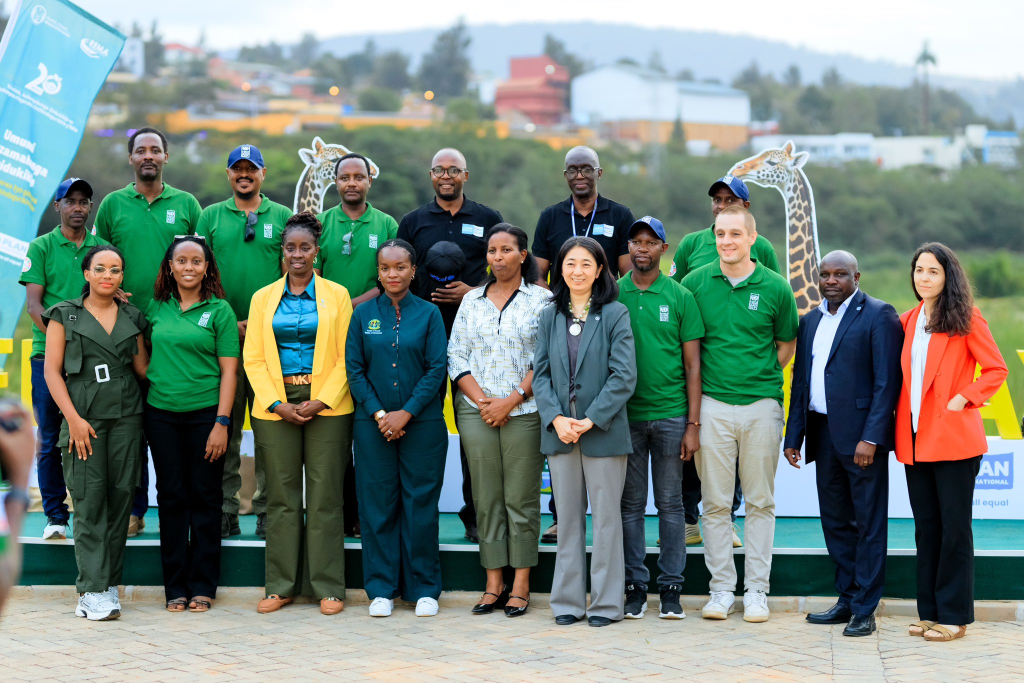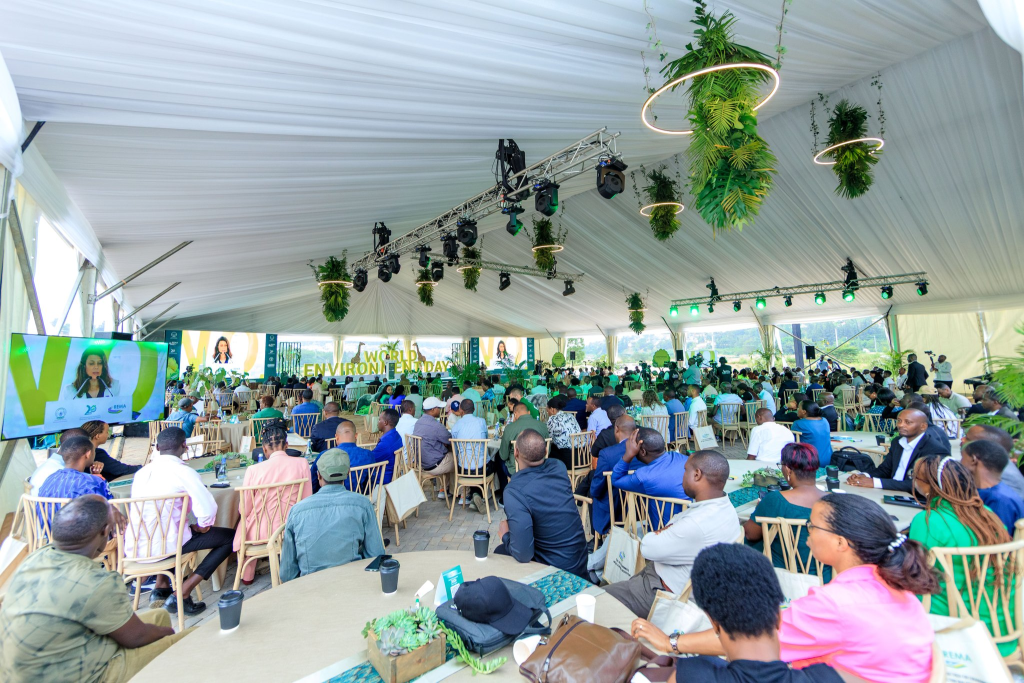

Kigali, Rwanda – Minister of Environment Dr. Arakwiye Bernadette joined government officials, international organizations, academics, environmental experts, development partners, youth, and residents as Rwanda marked World Environment Day 2026 on June 5, turning the celebration into a strong reaffirmation of the country’s commitment to climate action and sustainable development.
The high-level event, held at Gikondo Wetland in Kigali, brought together diverse stakeholders who gathered to celebrate Rwanda’s environmental achievements while also renewing commitments to accelerate ongoing climate initiatives. In addition, the occasion marked 20 years of the Rwanda Environment Management Authority (REMA), highlighting two decades of environmental governance, policy enforcement, and national climate coordination.
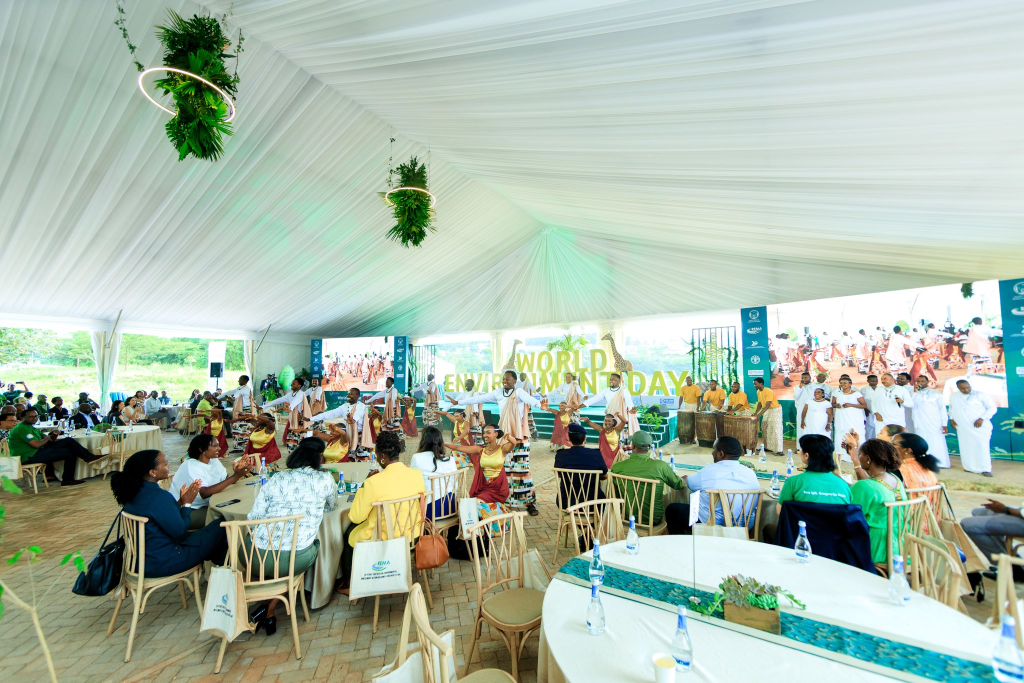
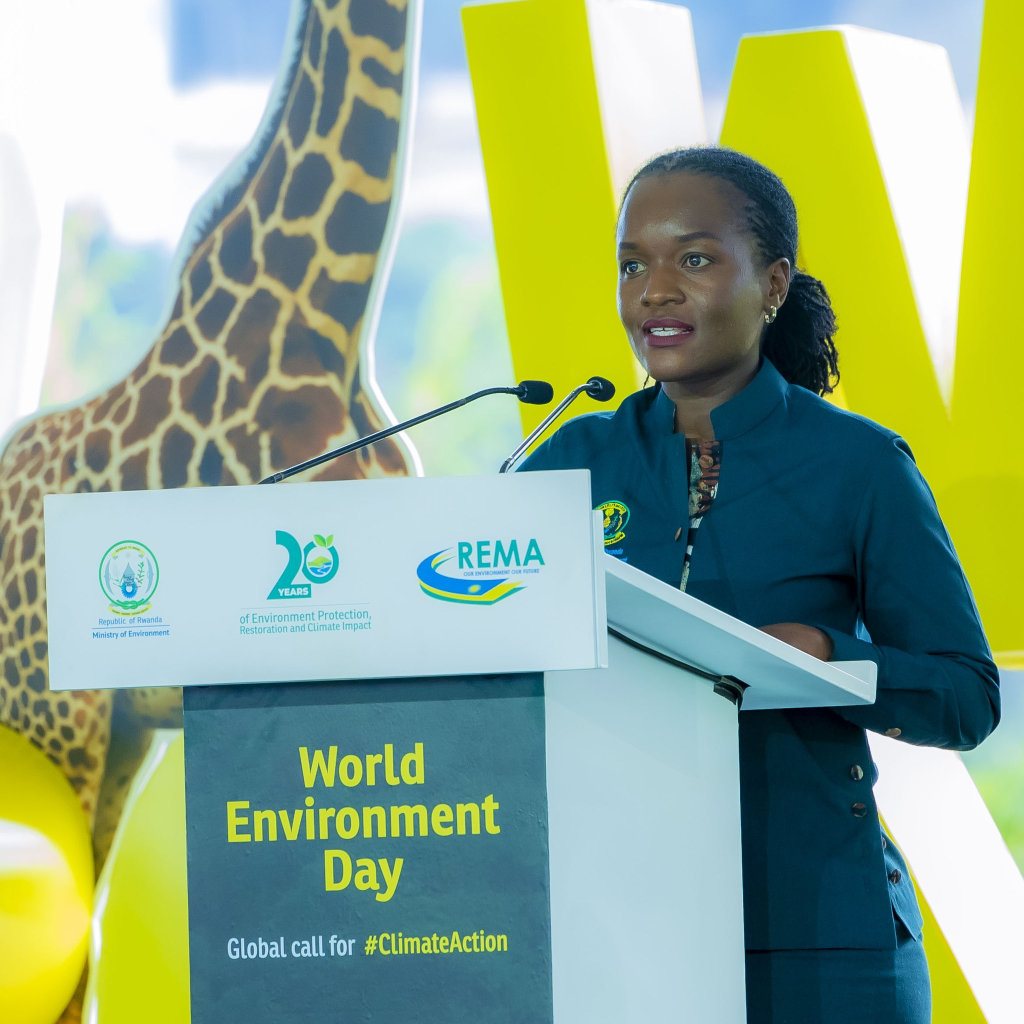
This year’s commemoration was held under the theme “A Global Call for Climate Action,” which underscores the urgent need for stronger global cooperation, increased climate finance, and collective action to address the growing impacts of climate change across the world.
Speaking during the event, Minister Arakwiye highlighted Rwanda’s progress in environmental restoration, noting that while important milestones have been achieved, the journey is still ongoing. She emphasized that the country’s environmental transformation continues to be driven by collaboration between government institutions, development partners, and local communities.
She pointed to major national initiatives such as wetland rehabilitation in Kigali and large-scale landscape restoration projects across the country, including the Green Gicumbi and Green Amayaga programmes. These initiatives, she noted, have restored degraded ecosystems, supported green job creation, strengthened climate resilience, and improved livelihoods for thousands of citizens.
The Minister also highlighted Rwanda’s growing investment in climate science and early warning systems, particularly the launch of the country’s first Automatic Upper-Air Observation Station in Huye District.
“This station will not only provide data but also help us turn information into services that support informed decision-making,” she said. “There is no better tool in climate action than having accurate and reliable data.”
She explained that improved climate data will significantly strengthen disaster preparedness, safeguard national investments, and enhance long-term development planning, while also positioning Rwanda as an important contributor to regional and global meteorological systems, advancing shared knowledge, resilience, and sustainable development across borders.
Furthermore, Minister Arakwiye outlined Rwanda’s key environmental priorities, which include sustainable landscape management, climate-smart agriculture, and sustainable urban development. She stressed that as Rwanda continues to urbanize, growth must be aligned with environmental protection.
“As Rwanda urbanizes, economic growth must go hand in hand with cleaner air, sustainable transport, responsible waste management, and environmentally sound industrial development,” she said.
She also reaffirmed Rwanda’s commitment to balancing environmental protection with economic development, stating that both must advance together for long-term sustainability.
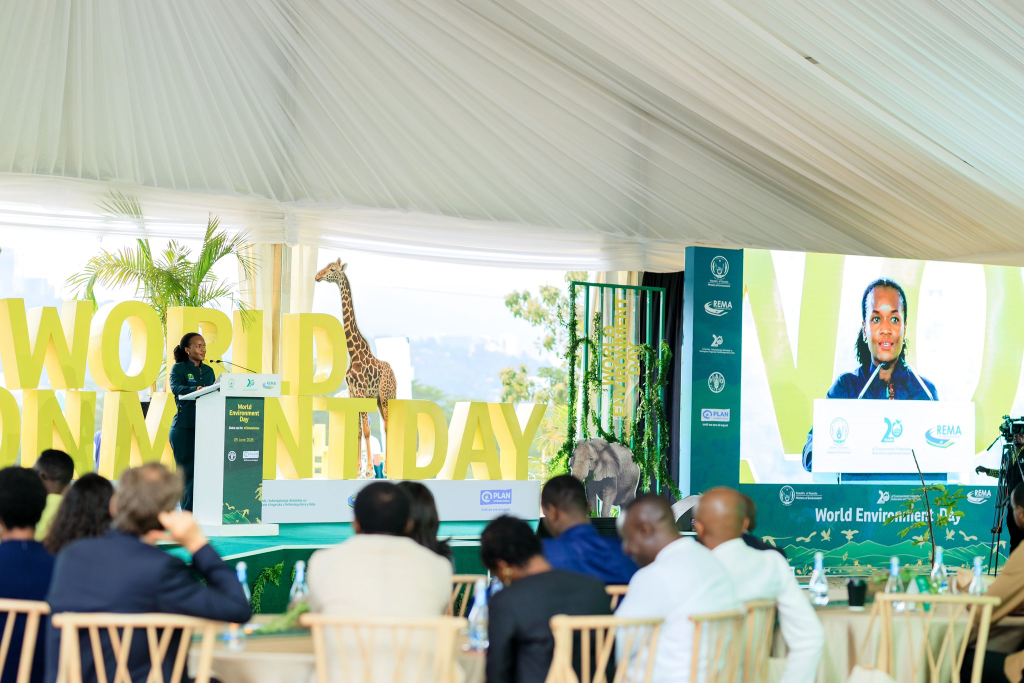
The Minister commended the Rwanda Environment Management Authority (REMA) for its 20 years of outstanding service in strengthening environmental compliance and advancing the implementation of national environmental policies. She highlighted that environmental regulations play a vital and positive role in guiding sustainable and responsible development, ensuring that economic progress goes hand in hand with the protection of natural resources for present and future generations.
In addition, she called on young people to become active drivers of environmental innovation and climate action, encouraging them to take leadership roles in shaping Rwanda’s green future. She also urged investors and development partners to increase support for climate-related initiatives.
According to the Minister, climate risk is increasingly becoming a business risk, requiring innovative financing mechanisms to bridge adaptation and mitigation gaps. She further underscored the importance of accelerating and expanding flexible climate finance, which will play a key role in empowering vulnerable communities, strengthening resilience, and advancing sustainable development opportunities.
Rwanda contributes minimally to global greenhouse gas emissions and continues to demonstrate strong leadership in climate action by proactively addressing climate impacts and strengthening national resilience. The Minister reaffirmed the country’s Nationally Determined Contribution (NDC) target of reducing emissions by 53% by 2035, reflecting Rwanda’s ambitious commitment to a low-carbon and sustainable development pathway.
She noted that achieving this ambitious goal will cost approximately US$12 billion, including US$5 billion for mitigation and US$7 billion for adaptation, reflecting Rwanda’s strong and forward-looking commitment to building a climate-resilient, sustainable, and low-carbon future, while also advancing green growth, innovation, and long-term national development opportunities.
This event showcases renewed commitments from all stakeholders to strengthen collaboration and accelerate climate action across the country, reflecting a continued drive toward practical solutions for environmental protection and sustainable development. Rwanda’s celebration of World Environment Day alongside REMA’s 20-year milestone underscores a shared national vision of building a greener, more resilient, and sustainable future for all, guided by cooperation, innovation, and long-term environmental stewardship.