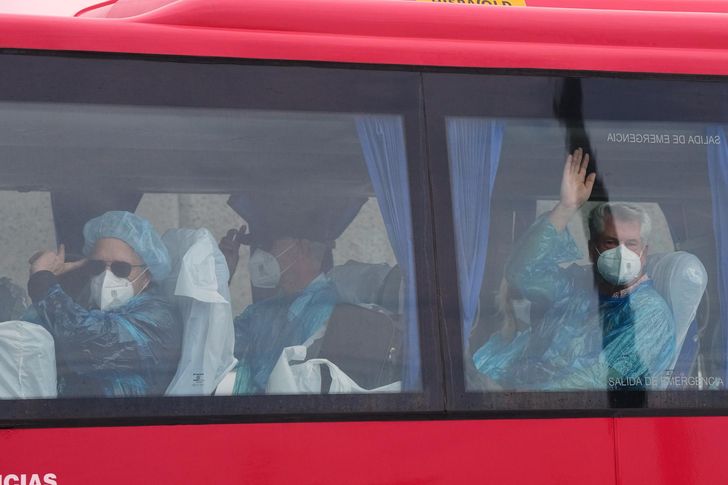

About 150 people were aboard the M/V Hondius cruise ship on a voyage to Antarctica when several passengers began dying. Authorities later discovered that Hantavirus was responsible for the deaths.
The ship had departed from Argentina in March 2026 and remained stranded at sea after several countries refused to allow it to dock, fearing passengers could spread the disease.
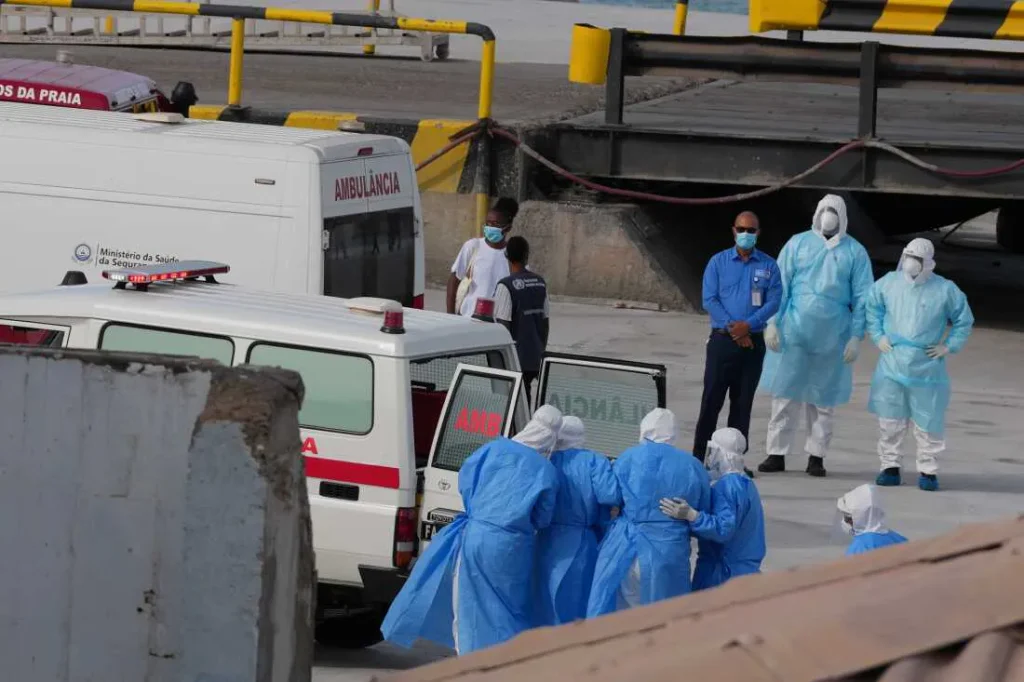
Fourteen Spanish passengers were the first to be evacuated. They were transferred from Tenerife, one of Spain’s Canary Islands, to Madrid, where they will first undergo quarantine.
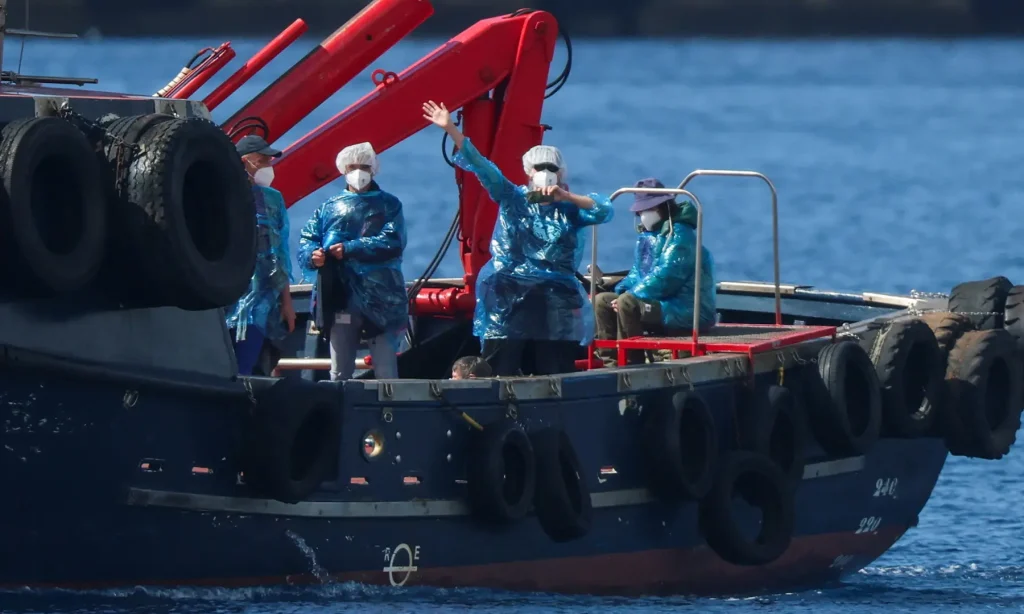
Passengers from the ship are being evacuated based on nationality, meaning each country is responsible for rescuing its own citizens.
Spain’s Minister of Health, Mónica García, said the operation was successful and that the evacuated passengers showed no signs of Hantavirus infection.
The MV Hondius arrived at the port of Granadilla in the early hours of May 10, nearly a month after the first case was detected onboard.
Passengers from the Netherlands, Greece, Germany and other countries were expected to follow, while British and American citizens were also scheduled for evacuation. Australian passengers are expected to be repatriated on May 11.
The World Health Organization (WHO) has recommended that all passengers remain in quarantine for at least 42 hours. The United Kingdom plans to keep its citizens in isolation for 72 hours before deciding on further measures.
The first victim, a Dutch man who was among the tourists participating in a world cruise, died on April 11 while the ship was heading toward the Tristan da Cunha islands.
His body remained aboard the vessel until April 24, when it was removed after the ship reached St Helena Island in the South Atlantic Ocean.
His wife left the ship to accompany the body, but she later fell ill and died only three days afterward.
Dutch authorities later confirmed that the woman had contracted Hantavirus, a virus commonly spread by rodents. On May 2, a third passenger from Germany also died aboard the ship.

Another passenger from the United Kingdom became critically ill and was urgently evacuated to South Africa for treatment, where doctors confirmed he had also contracted Hantavirus.
Since then, the WHO and the countries involved have been monitoring the situation closely. Investigations found that the strain responsible for the outbreak is the Andes virus.
This is the only known type of Hantavirus capable of spreading from person to person, although such transmission is considered very rare and usually requires prolonged close contact.
Hantavirus is a disease caused by viruses commonly carried by rodents, especially rats and mice.
People can become infected by inhaling air contaminated with rodent urine, droppings or saliva.
The virus can also spread through touching contaminated surfaces and then touching the mouth, nose or eyes, or by consuming contaminated food or water.
Symptoms may appear between one and eight weeks after exposure and include high fever and chills, headaches, muscle and joint pain, fatigue, stomach pain, nausea, diarrhea and vomiting.
In severe cases, patients may develop coughing, breathing difficulties, chest pain and serious respiratory illness.
The name “Hantavirus” comes from the Hantan River in South Korea, where the virus was first identified by Dr. Ho-Wang Lee in 1978.